Twins at Birth: How North and South Dakota Became States
On November 2, 1889, North Dakota and South Dakota entered the Union as the 39th and 40th states — and the president hid which one came first.
They were born on the same day, minutes apart, and to this day nobody knows which twin came first. On November 2, 1889, North Dakota and South Dakota became the 39th and 40th states — and President Benjamin Harrison made sure history could never settle the birth order.
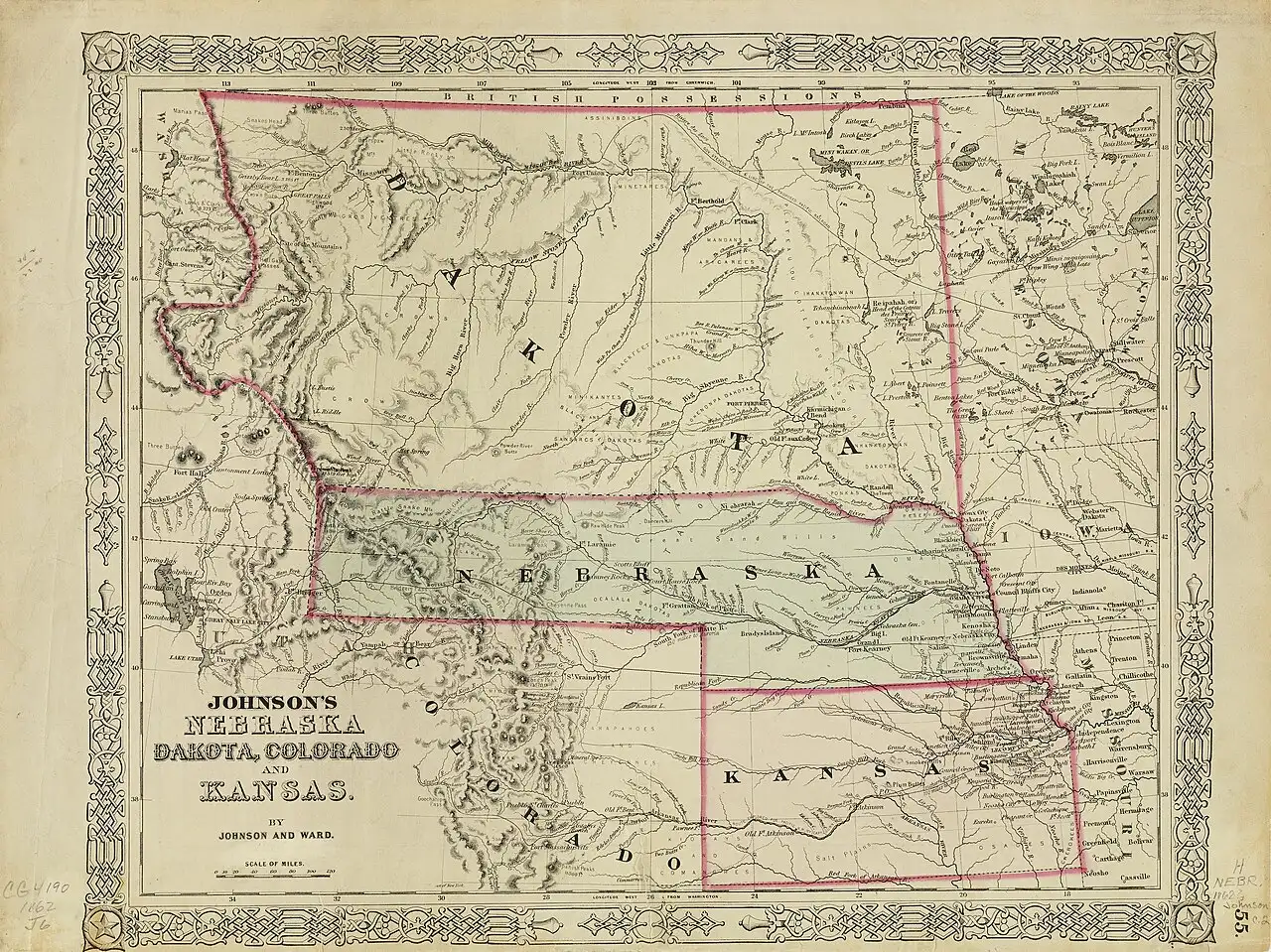
The story starts with a territory too big to govern. Dakota Territory, organized in 1861, sprawled across the northern plains — the vast expanse labeled DAKOTA on the 1862 map above. As railroads pushed west and settlers poured in, the territory's population boomed past half a million. But its northern and southern halves had different economies, different capitals, and different ambitions, and both wanted statehood on their own terms.
The boom that made statehood possible was one of the great land rushes in American history. Railroads — the Northern Pacific, the Great Northern, the Milwaukee Road — laid track across the plains in the 1870s and 1880s, and settlers followed by the tens of thousands: Scandinavians, Germans, and others planting wheat on the open prairie. The territory's population multiplied several times over during the 1880s, and towns like Fargo, Bismarck, and Sioux Falls sprang from the grass. A territory that had been an afterthought of the Civil War era was suddenly too populous, too rich, and too divided to stay a territory.
Congress obliged with the Enabling Act of 1889, authorizing the territory to split along the 46th parallel and form two states. That summer, delegates met in two separate constitutional conventions — at Bismarck in the north, at Sioux Falls in the south — and both drafted constitutions, both ratified by voters that fall.
Then came the signing. On November 2, 1889, President Harrison sat down with the two statehood proclamations — and, not wanting to play favorites, shuffled the papers so that no one would know which he signed first. The order of the signatures was lost to history. By long-standing convention, North Dakota is listed as the 39th state and South Dakota as the 40th, purely because "N" comes before "S" in the alphabet.
The Dakotas were not alone for long. Six days later, Montana joined as the 41st state, and Washington followed on November 11 as the 42nd — four new stars on the flag in nine days, the biggest burst of statehood since the Civil War era.
The two Dakotas have been friendly rivals ever since, arguing over everything from the best pheasant hunting to which one is truly "first." But on the question that started it all, the historical record is permanently silent — exactly as President Harrison intended.
Photo: A.J. Johnson, public domain (via Wikimedia Commons).