Static Into History: KDKA and the First Commercial Radio Broadcast
On November 2, 1920, Pittsburgh's KDKA broadcast the Harding–Cox election returns — the first licensed commercial radio broadcast in history.
The returns came in by telephone, and a lone announcer read them into a microphone made from a tin can. On the night of November 2, 1920, as America elected Warren G. Harding president, a Pittsburgh radio station did something no licensed station had ever done: it broadcast to the public, on a schedule, as a business.
The station was KDKA, owned by the Westinghouse Electric company. Westinghouse engineer Frank Conrad had been tinkering with a powerful amateur transmitter from his garage, playing music and talking into the night, when a department store noticed that customers wanted to buy radios just to hear him. Westinghouse saw the future and applied for a commercial license. The government obliged, and KDKA was born.
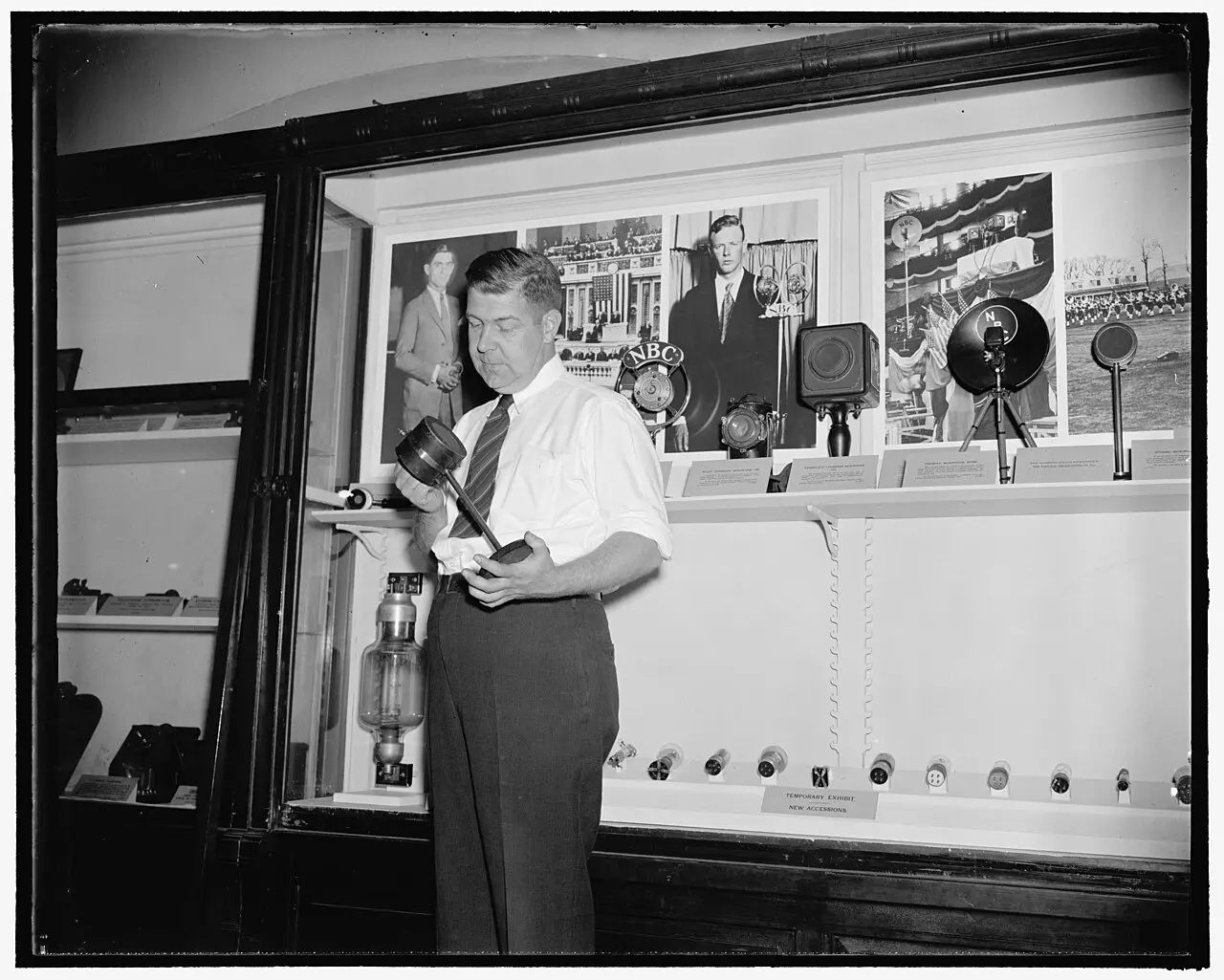
For its debut, Westinghouse chose election night. From a small shack on the roof of its East Pittsburgh plant, announcer Leo Rosenberg took telephone reports of the Harding–Cox results and read them over the air, over and over, into the small hours. His microphone was famously crude — a carbon telephone mouthpiece stuffed into a tin can, remembered ever since as the "tomato can" microphone. The man above is holding that very microphone, photographed when it was presented to the Smithsonian Institution in 1938.
Few people heard it live. There were only a few hundred radio receivers in the Pittsburgh area, most of them built by hobbyists. But the broadcast proved the idea: radio as a scheduled public service, funded by the sale of receivers, rather than point-to-point chatter between amateurs. Within a year, Westinghouse had sister stations on the air in Newark, Chicago, and Springfield, Massachusetts. By the end of 1922, more than 500 stations were broadcasting across America.
Was it truly the first? Rival claims exist — a Detroit station and others had aired regular programs earlier — but KDKA's November 2, 1920 broadcast is the one history remembers: the first to operate under a commercial license, with a regular schedule, as a deliberate public service. The Federal Communications Commission and the engineering profession have both recognized it as the milestone.
The tomato can is long retired, but its descendants are everywhere — in every car dashboard, every podcast, every voice that has ever ridden the airwaves to strangers in the dark. It all started with election returns, read by one man, into a can, on a November night in Pittsburgh.
Photo: Harris & Ewing / Library of Congress, public domain (via Wikimedia Commons).