The Pope Who Came to America to Plead for Peace
On October 4, 1965, Pope Paul VI spent one whirlwind 14-hour day in New York — the first reigning pope ever to set foot in the United States — to beg the world's leaders for peace.
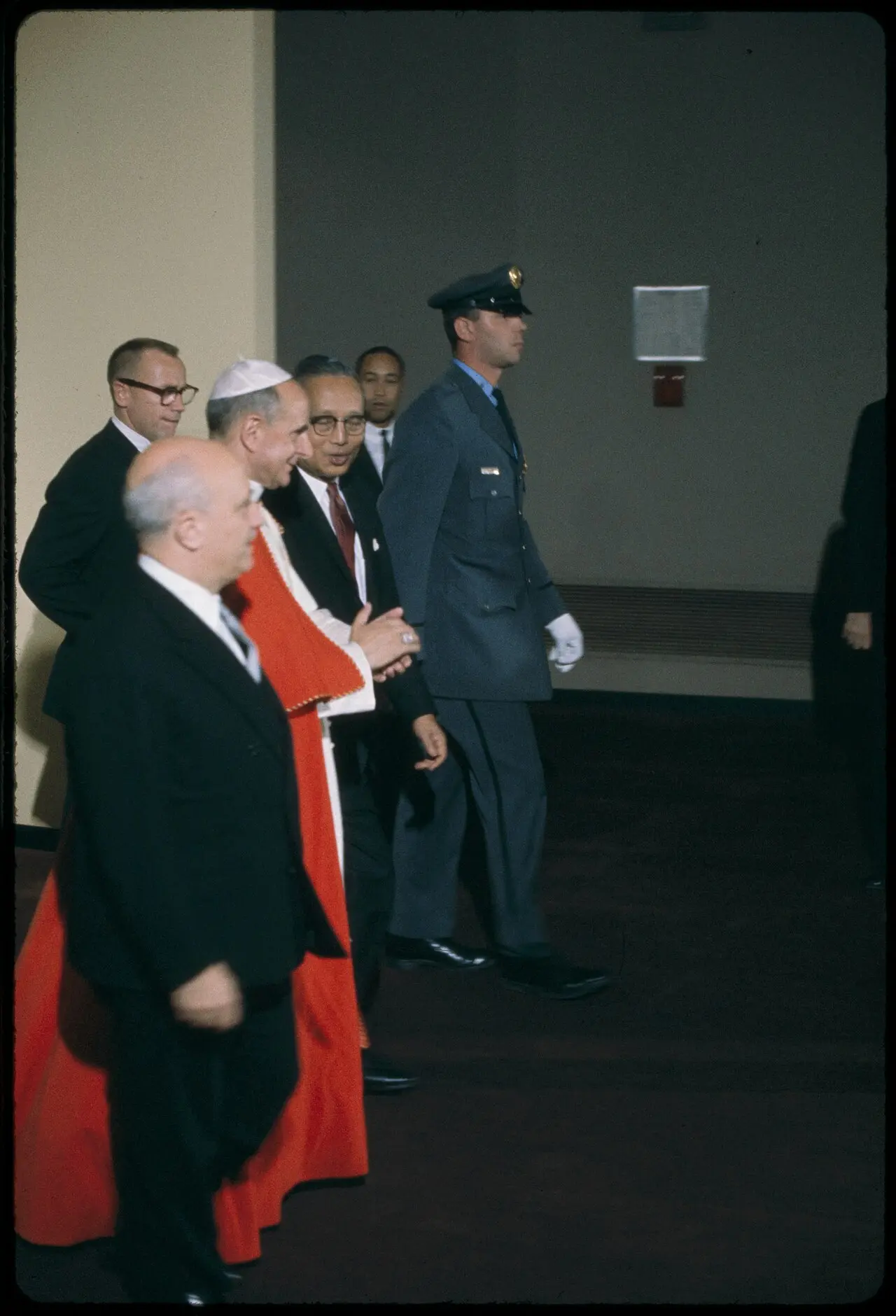
On the morning of October 4, 1965, an Alitalia jet touched down at New York's Kennedy Airport carrying a passenger no pope had ever been before. Pope Paul VI had come to America — the first reigning pontiff in history to set foot in the United States, and the first to visit the Americas at all. He had fourteen hours. He intended to spend them begging the world to stop fighting.
The invitation had come from United Nations Secretary-General U Thant, and the timing was no accident. The Vietnam War was escalating, and a war between India and Pakistan had erupted just weeks earlier. Paul VI — a quiet, scholarly man who had become pope two years before and was steering the Second Vatican Council's modernization of the Catholic Church — believed the moment demanded a moral voice on the world stage. He would address the UN General Assembly directly, the first pope ever to do so.
What followed was one of the most choreographed days in New York's history. A 24-mile motorcade carried the Pope into Manhattan, where some 55,000 people lined the streets to greet him at St. Patrick's Cathedral. He met privately with President Lyndon B. Johnson at the Waldorf Astoria. At 3 p.m. he stood before the General Assembly and delivered his plea: "No more war; war never again!" — an appeal for peace, disarmament, and cooperation among nations that echoed around the globe.
Then he was off again: a prayer service at the tiny Church of the Holy Family, the UN's parish church; Mass for tens of thousands at Yankee Stadium; a final stop at the Vatican pavilion of the World's Fair in Queens to see Michelangelo's Pietà. By nightfall he was back at Kennedy Airport and gone. Fourteen hours on the ground. An estimated one million people had seen him in person; some 100 million watched on television — at the time, one of the largest audiences in broadcast history.
The visit changed the papacy itself. Paul VI was the first pope to leave Italy since 1809, and his globe-trotting earned him the nickname "the Pilgrim Pope." He opened a door his successors walked through again and again: John Paul II, Benedict XVI, and Francis all followed him to the United States and to the United Nations podium. The traveling pope — now so familiar we barely notice — began that October day in New York.
Popes had watched the modern world from Rome for centuries; Paul VI decided the modern world needed to be met face to face. His fourteen hours in America didn't end any war — but they established that the voice of the Vatican would be heard in the councils of the nations, not just in churches. When today's pope speaks on war and peace, he is standing where Paul VI stood: at the intersection of faith and diplomacy, in front of the whole world.
Photo: Bernard Gotfryd, public domain (Library of Congress), via Wikimedia Commons.