Gemini 12: The Flight That Taught Astronauts to Work in Space
On November 11, 1966, Gemini 12 launched with James Lovell and Buzz Aldrin, whose 5.5 hours of spacewalks proved astronauts could work outside a capsule.
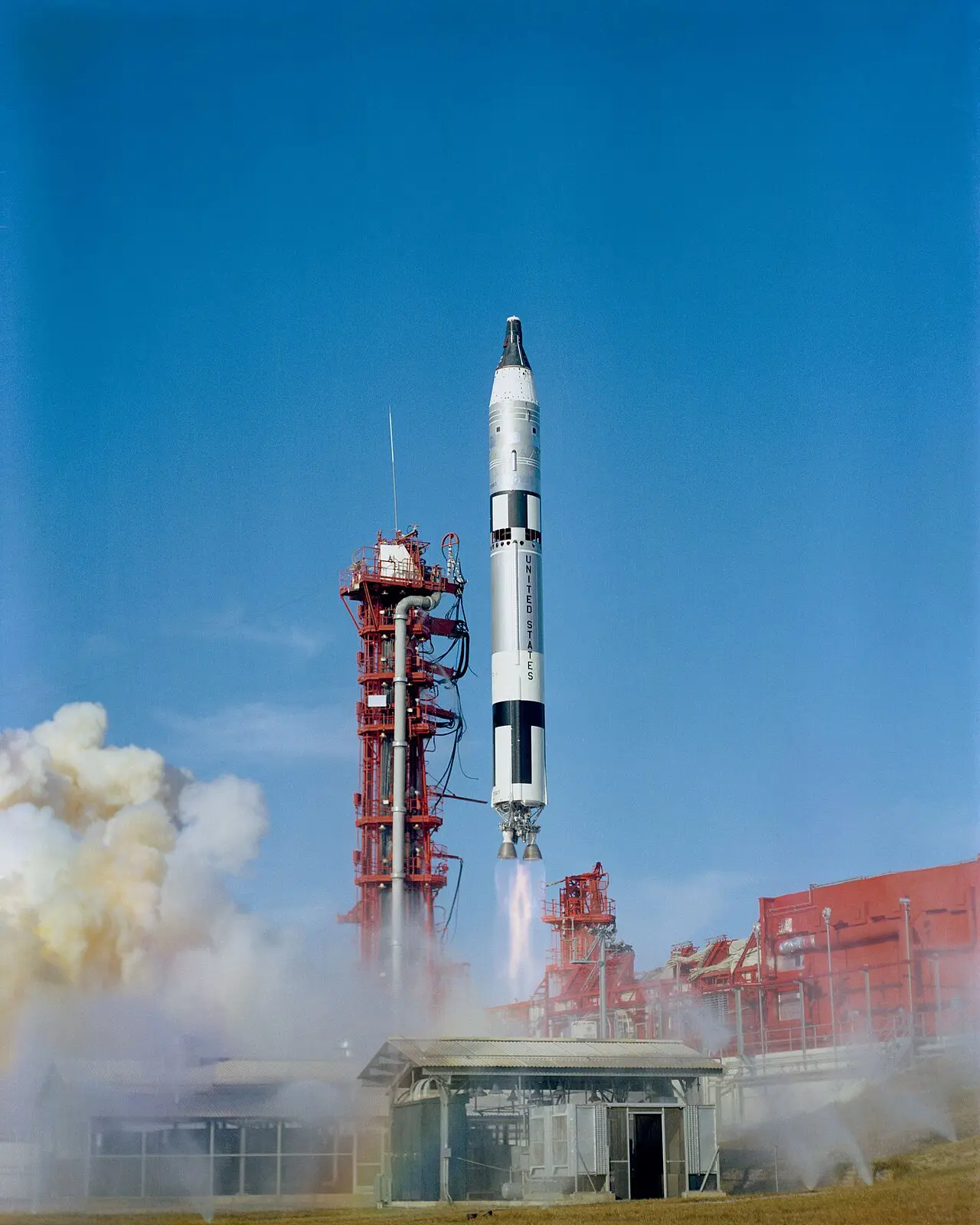
On November 11, 1966, two men rode a pillar of fire into orbit carrying a make-or-break question: could a human being actually do useful work outside a spacecraft?
By 1966, Project Gemini — NASA's bridge between the first Mercury flights and the Apollo Moon landings — had nearly run its course. It had proven rendezvous, docking, and long-duration flight. But one goal still stood unsolved, and it was the one Apollo needed most. The spacewalks so far had been near-disasters: exhausted astronauts, overheated suits, fogged visors, bodies tumbling helplessly in the void. If men couldn't labor outside a capsule, men couldn't walk on the Moon. Gemini 12, the program's tenth and final crewed flight, was the last chance to get it right.
The crew was chosen for exactly this problem. Command pilot James A. Lovell Jr. was a veteran of the record 14-day Gemini VII mission. His pilot, Edwin E. "Buzz" Aldrin Jr., was a rookie — but a rookie who had written his MIT doctoral thesis on the mathematics of orbital rendezvous.
Liftoff came at 3:46 p.m. EST from Launch Complex 19 at Cape Kennedy, the Titan II booster hurling the little Gemini capsule skyward. Their target, an Agena docking vehicle, had launched just 1 hour and 39 minutes earlier — the quickest turnaround between two American orbital launches ever attempted.
Then the trouble started. The rendezvous radar failed. Undaunted, Aldrin fell back on his thesis: sextant sightings, printed charts, and the onboard computer. Lovell flew the spacecraft by hand, and on the third orbit they docked with the Agena — the program's fifth rendezvous and fourth docking, done the hard way.
The spacewalks were the main event, and Aldrin made them look routine. On November 12 he stood up in the open hatch for 2 hours and 29 minutes. On November 13 came the big one: 2 hours and 6 minutes fully outside, tethered to the capsule, turning bolts, cutting wires, connecting cables, photographing star fields, retrieving a micrometeorite collector. On November 14, one more stand-up EVA of 55 minutes. Total: 5 hours and 30 minutes outside the spacecraft.
The difference was preparation. Aldrin had trained underwater — a brand-new technique — and the capsule bristled with new handrails, Velcro patches, and foot restraints. Working calmly, his heart rate steady and his suit cool, he proved what the program had doubted: with the right restraints and the right training, a human being could do real work in the vacuum of space.
The flight packed in more besides: the first successful photographs of a solar eclipse taken from space, on November 12; fourteen scientific experiments; a tethered station-keeping exercise with the Agena; and a fully computer-controlled reentry. On November 15 the capsule splashed down in the Atlantic just 4.8 kilometers from its target point, and Lovell and Aldrin were hauled aboard the aircraft carrier USS Wasp. The whole flight had lasted 3 days, 22 hours, and 34 minutes.
Gemini 12 was the 18th crewed American spaceflight — and the end of an era. The program closed having met every one of its goals, and NASA could commit to Apollo with confidence. Less than three years later, Buzz Aldrin would step onto the surface of the Moon. The spacewalk that made it possible had been rehearsed, in full, on a November week in 1966 — by the man with the doctorate and the sextant, proving outside a tiny capsule that astronauts could work among the stars.
Photo: NASA, public domain (via Wikimedia Commons).