“Wonderful Things”: Howard Carter Finds King Tut's Tomb
On November 4, 1922, Howard Carter's workmen uncovered a hidden staircase in the Valley of the Kings — the first steps down to the intact tomb of Tutankhamun.
On November 4, 1922, a workman's pick clinked against something hard beneath the desert rubble of the Valley of the Kings. Howard Carter had his men clear the spot. It was a step — the first of sixteen cut-stone steps descending into the dark. A sealed doorway waited at the bottom. It had waited more than three thousand years.
Carter had been digging in Egypt since he was seventeen, arriving in 1891 as an artist's assistant and working his way up through the great excavations of the age. In 1907, a wealthy English aristocrat, George Herbert, the 5th Earl of Carnarvon, hired him to supervise digs in the Valley of the Kings. Carter was convinced that the tomb of a little-known boy pharaoh, Tutankhamun, still lay undiscovered somewhere in the valley. For the better part of fifteen years, interrupted by World War I, he searched — and found nothing. Carnarvon's patience, and his checkbook, were wearing thin.
That November, Carter's team was clearing an area beneath the entrance of a later pharaoh's tomb when the steps appeared. Carter immediately wired Carnarvon in England: come at once. Then he did what the best archaeologists do — he waited, guarding the site, until his patron arrived three weeks later.
On November 26, with Carnarvon and a small party looking on, Carter chiseled a tiny breach in the top corner of the sealed doorway and held a candle to the hole. Carnarvon, peering over his shoulder, asked the famous question: “Can you see anything?” Carter's reply has echoed through history: “Yes, I see wonderful things.”
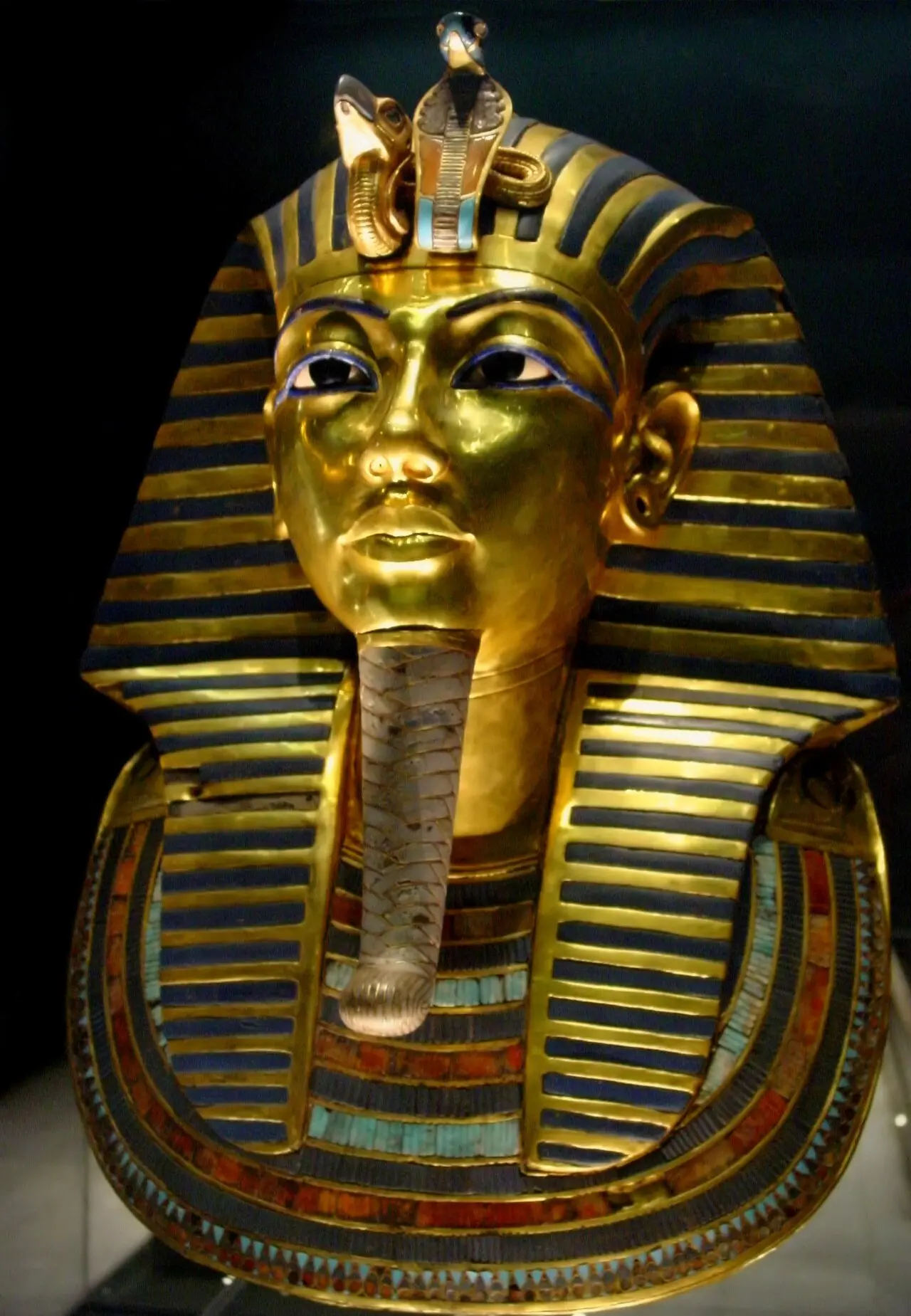
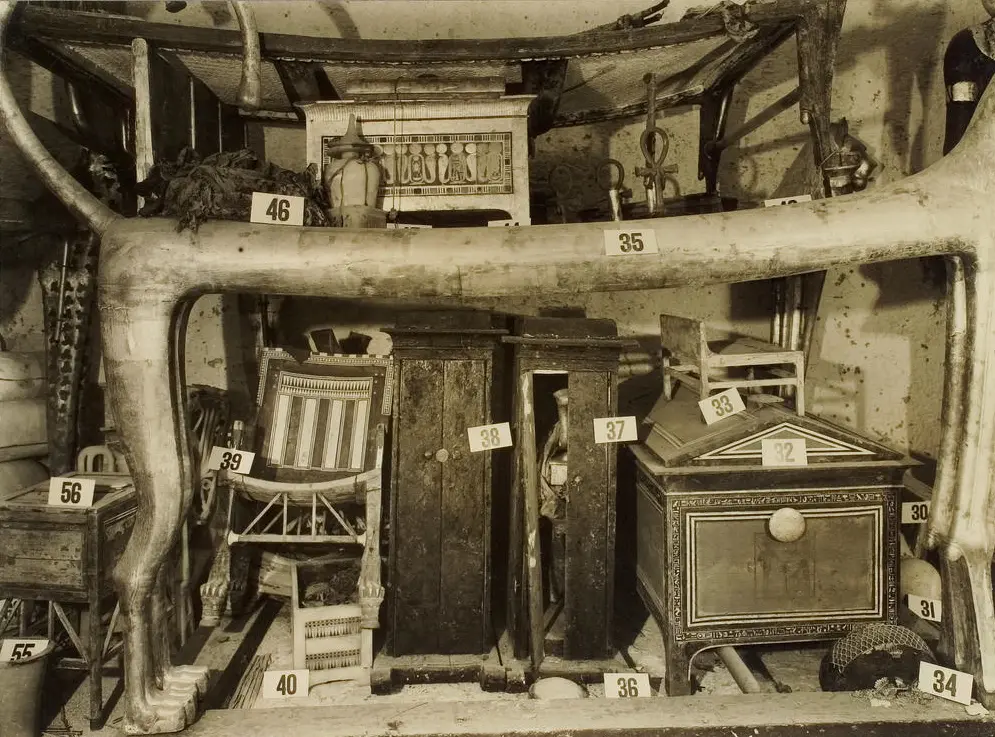
What he saw was the antechamber of the only near-intact royal burial ever found in Egypt — more than 5,000 objects crammed into four small rooms: golden shrines, chariots, furniture, jewelry, a solid-gold coffin, and the pharaoh's famous gold funerary mask. Where every other pharaoh's tomb had been stripped by ancient robbers, Tutankhamun's had been hidden under rubble for most of its existence and largely escaped. Carter and his team would spend the next decade carefully cataloguing and conserving every fragile piece — a feat of documentation that Egyptologists still admire a century later.
The discovery electrified the world. “Tutmania” swept through fashion, film, and design; newspapers covered every development. For Egyptians — who had just won partial independence from Britain — the boy king's treasures became a powerful symbol of national pride. And when Lord Carnarvon died of an infection the following spring, the press whispered of a pharaoh's curse — a legend that has never quite died.
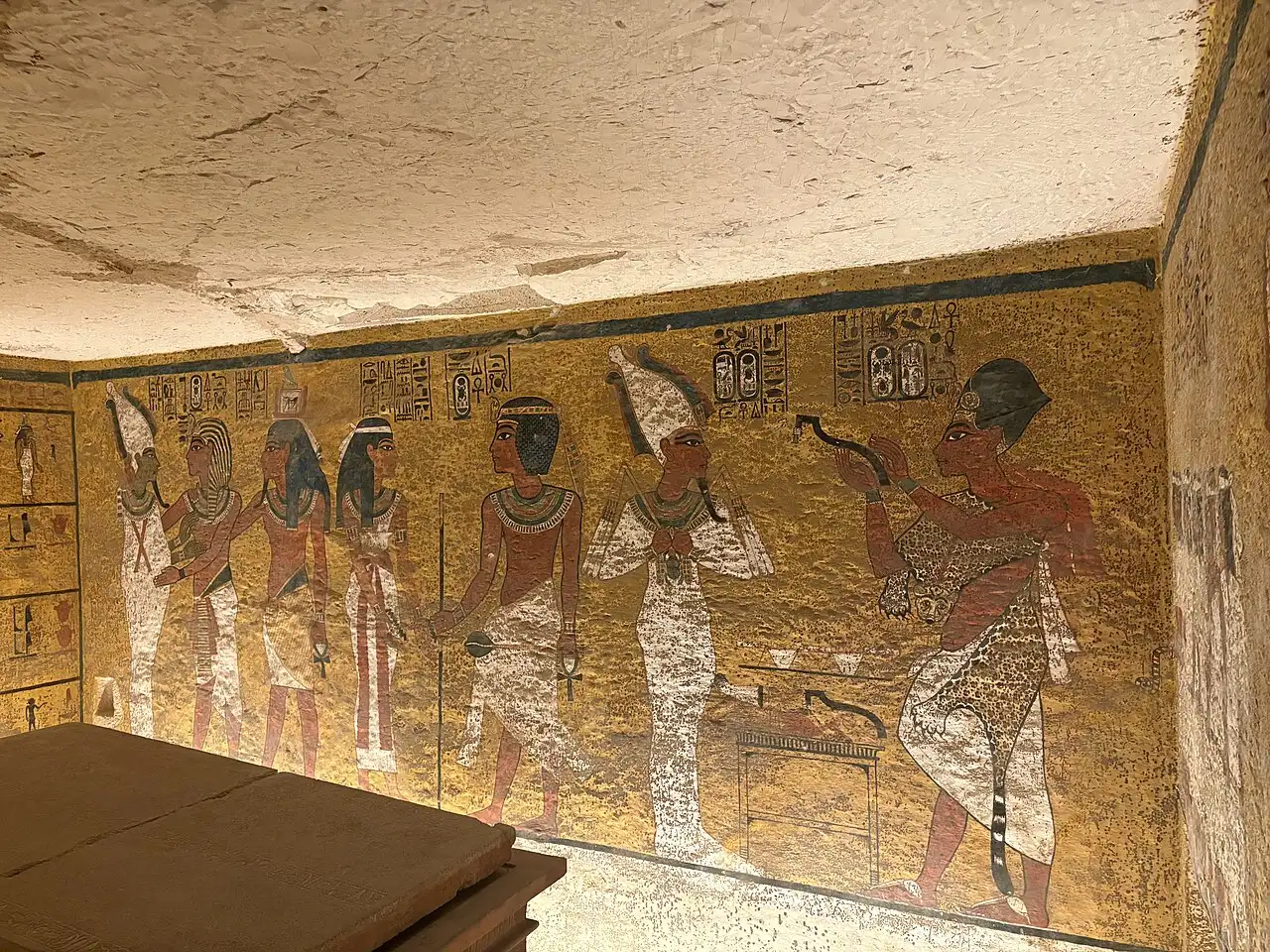
Before 1922, Tutankhamun was a footnote — a boy who took the throne at about nine, ruled about ten years, and died in his late teens. After 1922, he became the most famous pharaoh who ever lived. His tomb gave the world its only complete picture of what a New Kingdom pharaoh carried into the afterlife, and its treasures — now gathered at the Grand Egyptian Museum near the Giza pyramids — still draw millions. All because, on a November day in 1922, a pick struck a buried step.
Photo: Walaa, public domain (via Wikimedia Commons).
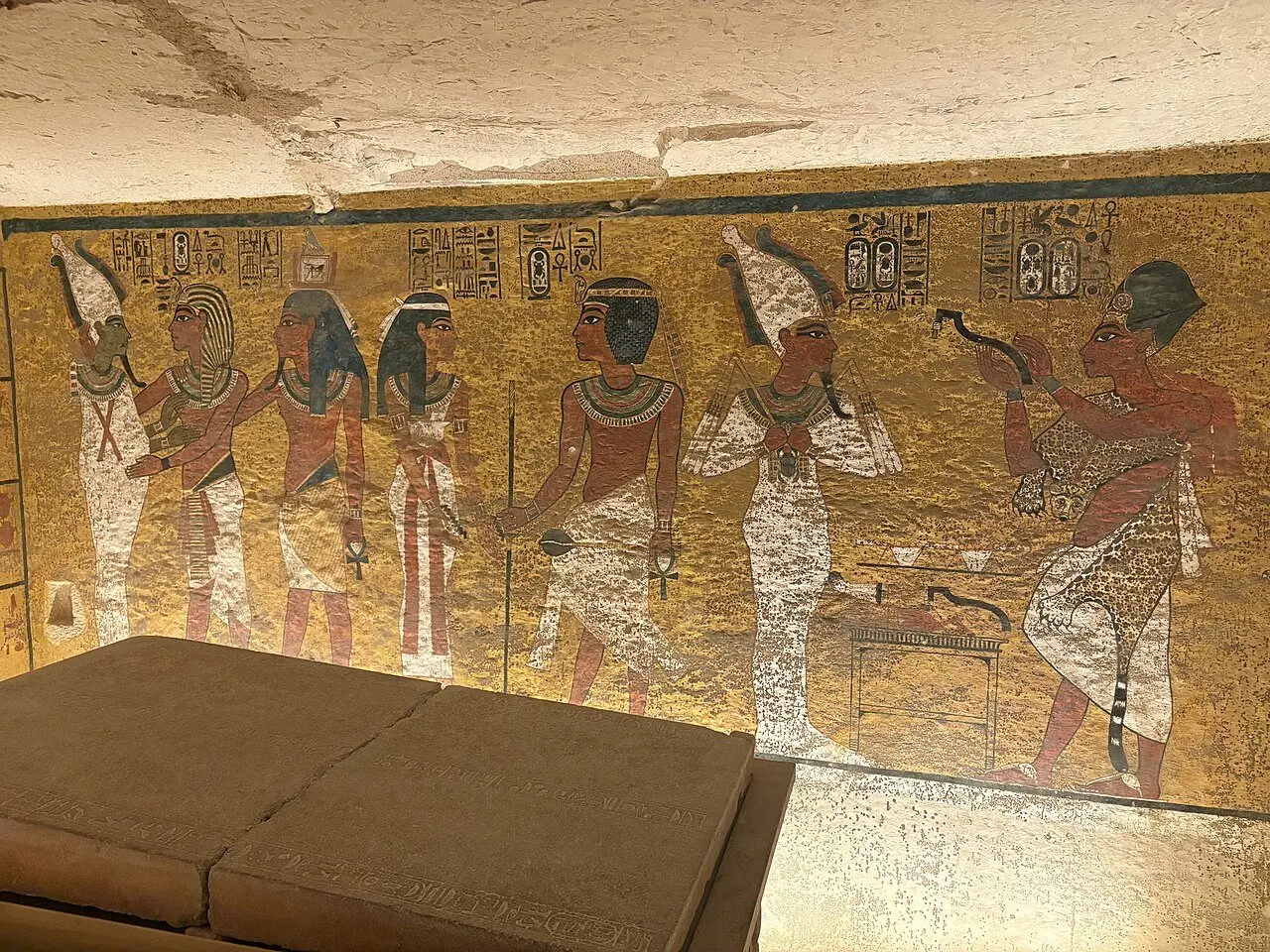
More images (via Wikimedia Commons): Harry Burton's photograph of the tomb's antechamber (public domain); the mask of Tutankhamun (Bjørn Christian Tørrissen, CC BY-SA 3.0); the burial chamber of KV62 (Walaa, public domain).