'Whirlwind': The Dawn Soviet Tanks Returned to Budapest
On November 4, 1956, the Soviet Union launched Operation Whirlwind against Budapest, crushing Hungary's revolution and sending some 200,000 refugees fleeing west.
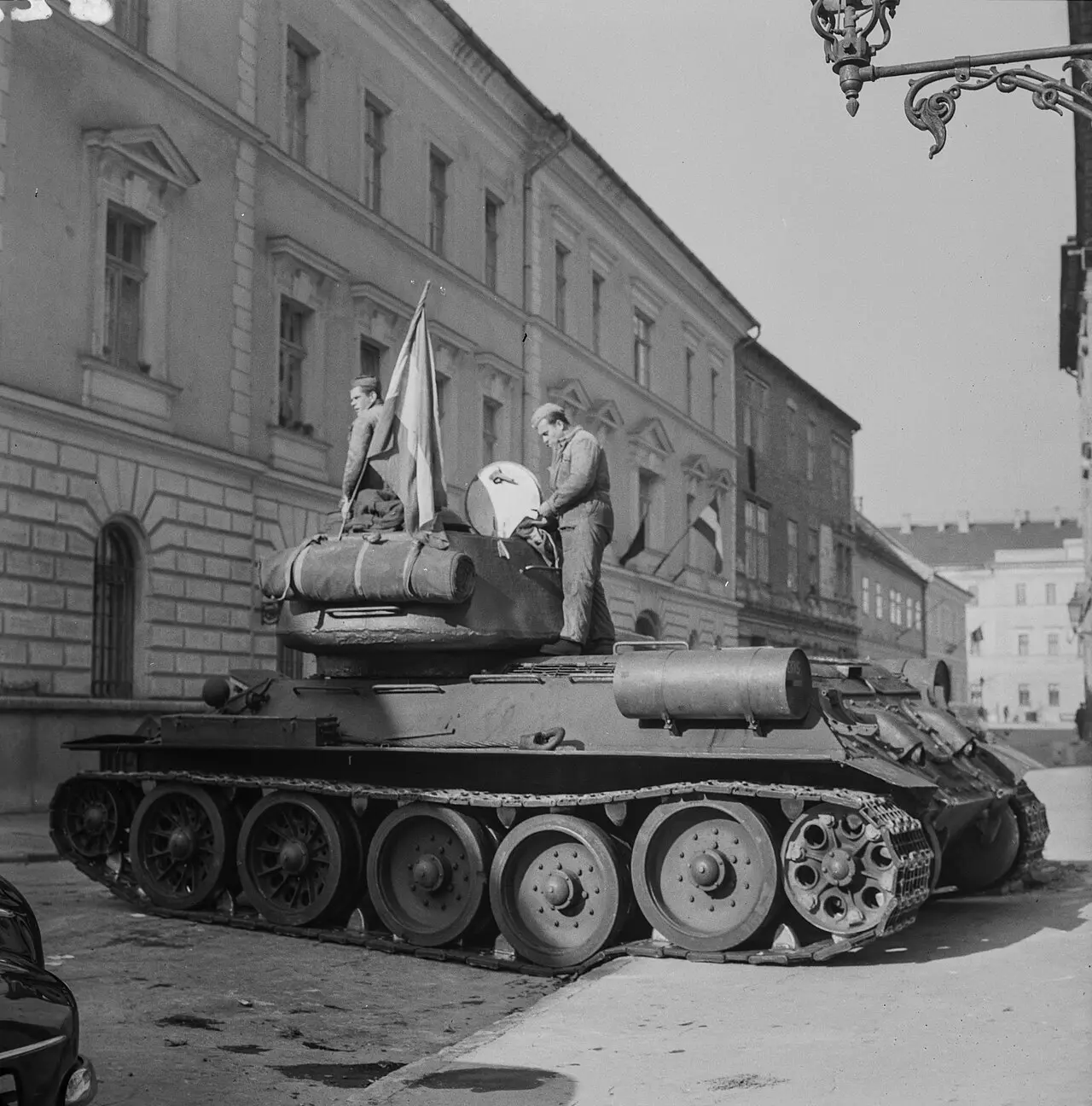
At 5:20 on the morning of November 4, 1956, Hungarian Prime Minister Imre Nagy went on the radio with a final, desperate broadcast. Soviet forces were attacking Budapest, he announced, and his lawful government would remain at its post. Minutes later the radio station fell silent. The revolution was being crushed in real time, and the world could only listen as it happened.
Twelve days earlier, on October 23, students marching through Budapest had ignited a nationwide uprising against Soviet domination. Protesters toppled Stalin's statue, workers formed councils, and the hated secret police were disarmed. Nagy, a reformist communist, became premier and made the fateful decision: on November 1 he declared Hungary neutral, withdrew from the Warsaw Pact, and appealed to the United Nations. Moscow read it as a defection and prepared its answer.
The answer was Operation Whirlwind. On the night of November 3, Soviet troops encircled Budapest while Hungary's defense minister, Pál Maléter, was lured to "negotiations" at the Soviet command in Tököl — and arrested. At dawn, some seventeen Soviet divisions, with T-54 tanks, heavy artillery, and air support, struck the capital. In the town of Szolnok, János Kádár proclaimed a new "Revolutionary Worker-Peasant Government" that obligingly invited the Soviets in.
Budapest fought back with almost nothing. Teenagers with Molotov cocktails ambushed tanks in narrow streets; the fiercest resistance came at the Corvin Passage and in the working-class district of Csepel. But artillery pounded the barricades flat, and by November 10 the last pockets of resistance were gone. Roughly 2,500 Hungarians and some 700 Soviet soldiers were killed in the November fighting, and an estimated 200,000 Hungarians fled the country, most streaming across the border into Austria.
Nagy sought refuge in the Yugoslav embassy. Lured out with false promises of safe passage, he was arrested on November 22, secretly tried, and executed in June 1958. Kádár's regime imprisoned thousands more. The West, distracted by the Suez Crisis erupting the same week, watched and did nothing — a lesson Eastern Europe would not forget.
Yet the revolution refused to die quietly. The refugees carried Hungary's story to the world, and the image of a small nation standing up to an empire became one of the Cold War's defining symbols. When communism finally fell in 1989, Hungarians reburied Nagy with full honors — the revolution's vindication, thirty-three years late.
Photo: Jack Metzger / ETH-Bibliothek Zürich, CC BY-SA 4.0 (via Wikimedia Commons).