444 Days: The Morning Students Seized America's Embassy in Tehran
On November 4, 1979, Iranian students stormed the U.S. Embassy in Tehran and seized 52 Americans, beginning a 444-day hostage crisis that defined a presidency.
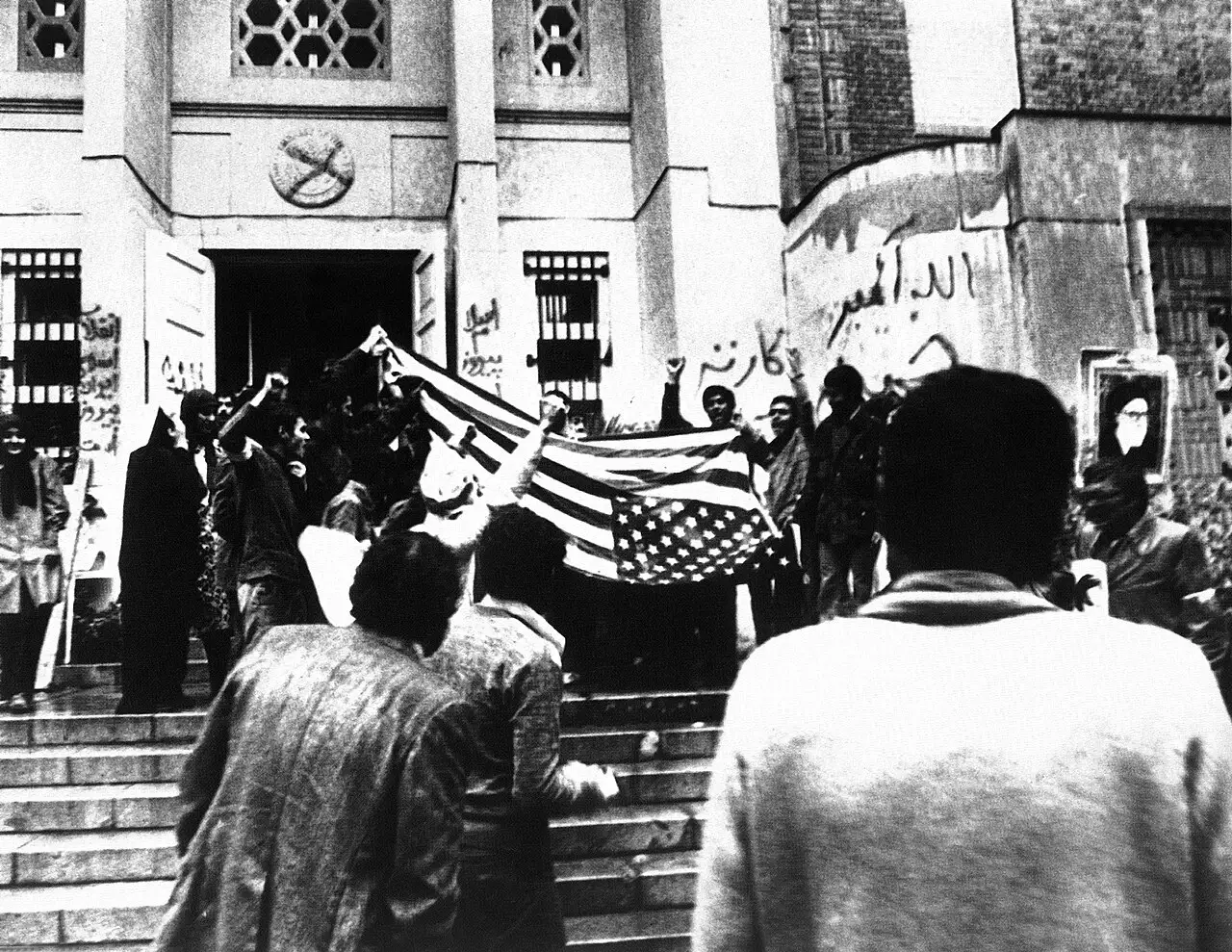
On the morning of November 4, 1979, several hundred Iranian students scaled the walls of the United States Embassy compound in Tehran. The small Marine guard was overwhelmed within hours. By the end of the day the students held the building, its shredded files, and dozens of American diplomats and staff. What the students' leaders later said was meant as a brief sit-in had become a seizure of sovereign American ground — and it would last 444 days.
The fuse had been lit weeks earlier. Iran's revolution had toppled the Shah in January 1979, and when President Jimmy Carter allowed the ailing ex-monarch into the United States for cancer treatment, revolutionary anger boiled over. The students called themselves the Muslim Student Followers of the Imam's Line. They demanded the Shah be returned to Iran to stand trial for the crimes of his rule. Iran's new leader, Ayatollah Ruhollah Khomeini, endorsed the takeover, and what began as a student action became state policy.
Dozens of Americans were taken that day. After a handful of early releases, 52 hostages remained in captivity for the duration — diplomats, Marines, and CIA staff, blindfolded, paraded, and held in isolation for more than a year. Washington answered with sanctions and broken diplomacy, and American television began a nightly ritual of counting the days. The crisis became the inescapable backdrop of American life.
In April 1980, Carter ordered a rescue. Operation Eagle Claw sent helicopters and transport planes to a desert staging ground code-named Desert One, but sandstorms and mechanical failures forced the mission to abort — and during the withdrawal, a helicopter collided with a transport aircraft, killing eight American servicemen. The wreckage, displayed on Iranian television, deepened the humiliation. Carter himself later said the failure to free the hostages played a major role in his defeat that November.
Freedom finally came through negotiation, not force. Under the Algiers Accords, the hostages were released on January 20, 1981 — minutes after Ronald Reagan took the oath of office and Carter, the president who had lived the crisis day by day, left the White House.
The embassy never reopened. Its compound in Tehran, covered in revolutionary murals, became a museum Iranians call the "Den of Espionage." U.S.-Iran relations never recovered from those 444 days; the two countries have had no formal diplomatic relations since. For America, the crisis left a permanent lesson about the limits of power — and a scar that still shapes policy nearly half a century later.
Photo: Government of the Islamic Republic of Iran, public domain (via Wikimedia Commons).