The World Says No: The UN Condemns Apartheid
On November 6, 1962, the UN General Assembly passed Resolution 1761, condemning South Africa's apartheid policies and urging a worldwide economic and military boycott.
On November 6, 1962, the United Nations General Assembly did something it had never done so forcefully before: it put a member state's entire system of government on trial. Resolution 1761 condemned South Africa's apartheid policies, declared them a threat to international peace, and called on every nation on earth to boycott the country — economically, diplomatically, and militarily.
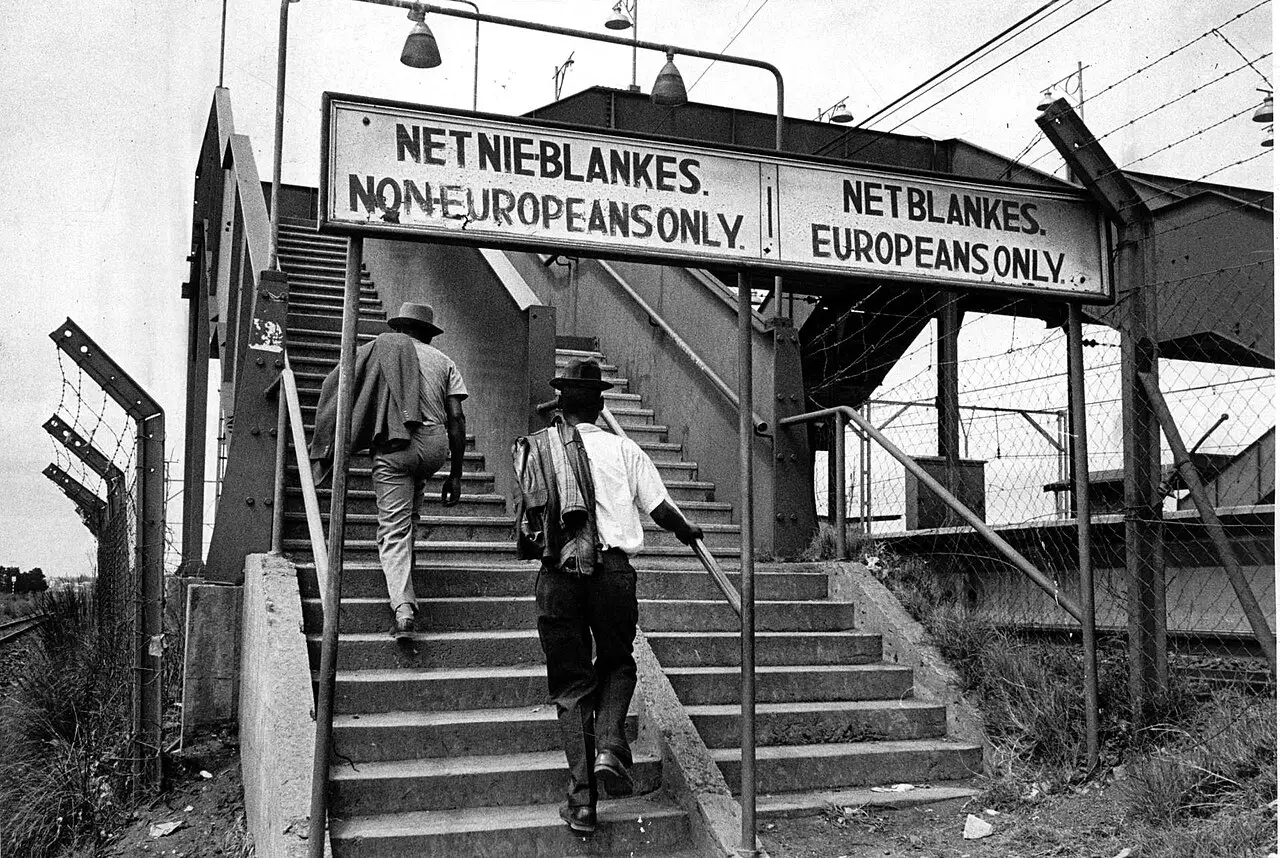
Apartheid — Afrikaans for "apartness" — had been law since 1948. It was government-mandated racial segregation enforced with bureaucratic precision: Black South Africans, the vast majority of the population, were confined to impoverished townships and rural "homelands," barred from white neighborhoods without passes, and stripped of political rights, while a white minority held nearly all the land and wealth. Signs like the one above — separate entrances, separate benches, separate lives — were the system's everyday face.
The world had been slow to act. But the Sharpeville massacre of March 1960, when police killed 69 unarmed Black demonstrators and wounded more than 180, turned global opinion. Resolution 1761 was the breakthrough: it deemed apartheid a violation of South Africa's obligations under the UN Charter, requested member states to break diplomatic relations, cease trade (arms in particular), and deny passage to South African ships and aircraft — and it created the UN Special Committee against Apartheid to keep the pressure on.
South Africa had been warned before. As early as 1946, India — newly independent under Jawaharlal Nehru's interim government — had severed trade relations over its racial policies, the first country in the world to do so. By 1962, with the Sharpeville dead barely two years buried, that trickle of protest had become a tide.
The resolution was non-binding, and at first the great Western powers wanted no part of it; they boycotted the new committee and kept trading. But 1761 was the wedge. In 1963 the Security Council urged an arms embargo; in 1973 the UN declared apartheid a crime against humanity; in 1974 South Africa was suspended from the General Assembly. Through the 1980s, sanctions, divestment campaigns, and internal resistance tightened the vise.
The end came within a generation of that November vote. Under President F.W. de Klerk, the remaining apartheid laws were repealed in 1991; in 1994 South Africa held its first fully free elections, and Nelson Mandela — imprisoned for 27 years — became president. Resolution 1761 didn't end apartheid by itself. But on November 6, 1962, the world finally said, on the record, that a system built on racial domination was intolerable — and never took it back.
Photo: Ernest Cole, public domain (via Wikimedia Commons).