Out of the Mud: Canada Takes Passchendaele
On November 6, 1917, the Canadian Corps captured the ruins of Passchendaele village, bringing to a close one of the First World War's bloodiest and most controversial offensives.
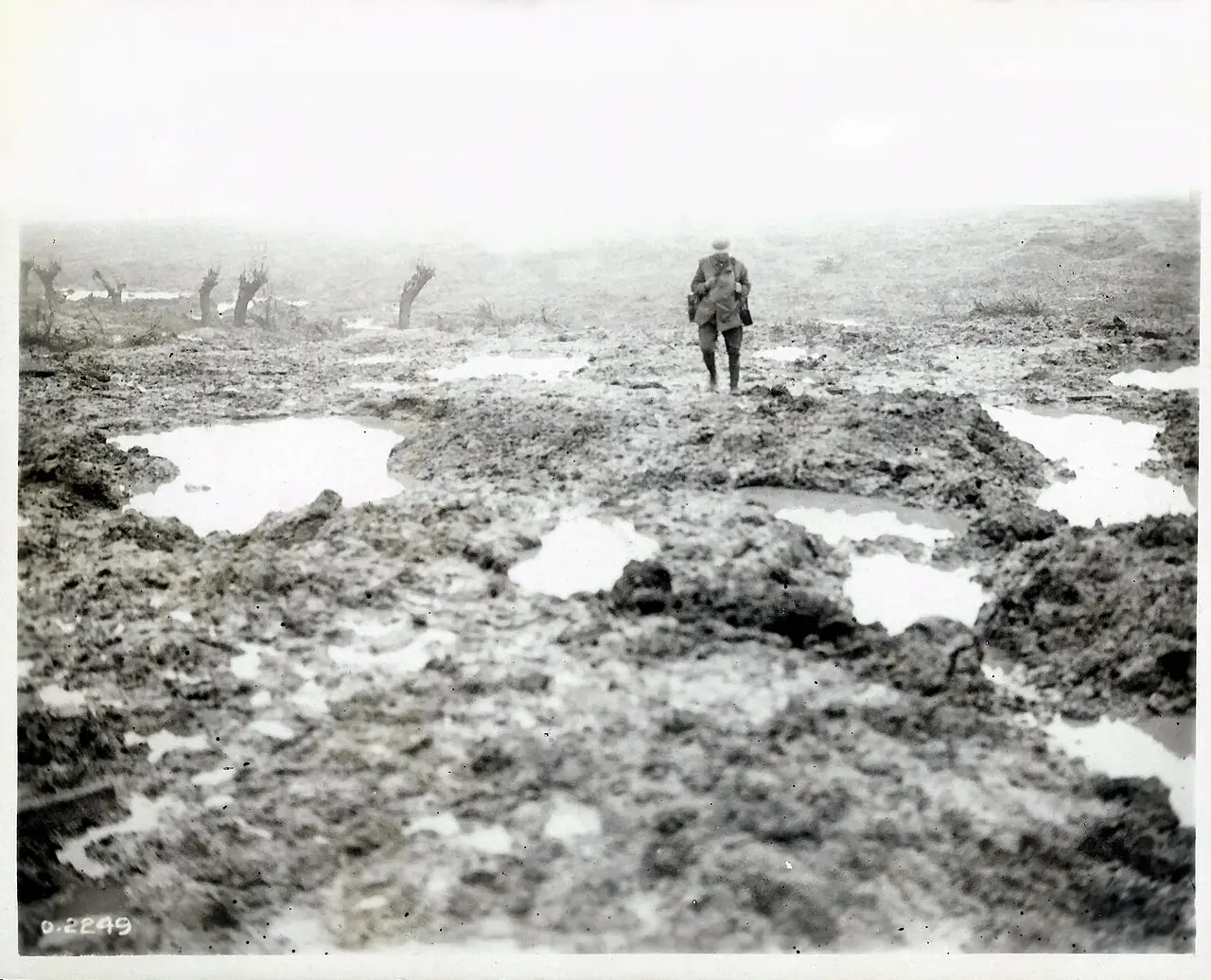
On November 6, 1917, after three months of slaughter in a sea of mud, Canadian troops walked into what was left of the Belgian village of Passchendaele. There was almost nothing to walk into — the village was rubble, the church a stump, the ridge a churned wasteland of water-filled craters. But taking it ended one of the most grueling battles of the First World War.
The offensive the British called the Third Battle of Ypres had begun on July 31, 1917, with high hopes. British commander Sir Douglas Haig aimed to break through German lines and drive to the Belgian coast. Instead, the heaviest rains in decades fell on farmland whose drainage had been shattered by shelling. Tanks sank to their turrets. Men drowned in shell holes. The battlefield became a swamp that swallowed everything — guns, horses, and soldiers alike.
Wave after wave went in: British, then Australian and New Zealand divisions in September and October, gaining bloody yards at terrible cost. Finally Haig turned to the Canadian Corps under General Arthur Currie — the army's shock troops. Currie objected to the operation as unjustifiably costly, but under pressure he accepted, demanding extra artillery. His men attacked in three grim phases: October 26, October 30, and then the final push.
On November 6, the Canadians took the ridge and passed through the ruins of the village. Currie had warned beforehand that the attack would cost some 16,000 casualties — and he was right almost to the man, a prediction that hangs over the battle like an epitaph. A final assault on November 10 secured the line, and the battle was over. The butcher's bill was staggering: more than 4,000 Canadians dead and nearly 12,000 wounded in just over two weeks, and roughly half a million casualties on both sides across the whole campaign — for a gain of about eight kilometers of mud.
Passchendaele became the very symbol of futile sacrifice, the battle historians invoke when they speak of generals spending lives for nothing. Yet for Canada, it was also a forging: the Corps that took the ridge had planned and fought as a unified national army, and the victory — costly beyond measure — became a cornerstone of Canadian identity. The mud of Flanders holds them still, beneath the white stones of Tyne Cot, the largest Commonwealth war cemetery in the world.
Photo: William Rider-Rider, public domain (via Wikimedia Commons).