The Two-Page Report That Unmasked a Pandemic
On June 5, 1981, the CDC published a report of five pneumonia cases in Los Angeles — the first official warning of what would become the HIV/AIDS pandemic.
It was a dry, clinical document — the kind that lands on doctors' desks every week and is usually read and filed. This one described five cases of pneumonia in Los Angeles. And it was the first published warning of what would become one of the worst pandemics in human history.
On June 5, 1981, the Centers for Disease Control and Prevention published a report in its Morbidity and Mortality Weekly Report — the agency's bulletin for tracking disease across the country. Between October 1980 and May 1981, doctors at three Los Angeles hospitals had treated five young, previously healthy men for a rare form of pneumonia caused by a fungus called Pneumocystis carinii. The disease almost never appeared in healthy people — only in patients whose immune systems were already destroyed by illness. Yet these five had no such history. By the time the report was published, two of the five had already died.
The editorial note that accompanied the report chose its words carefully: the cases suggested "cellular-immune dysfunction related to a common exposure" and "a disease acquired through sexual contact." It was the first official account of what we now call HIV/AIDS — though nobody yet knew what caused it, what to call it, or how far it would spread. Local clinicians and the Epidemic Intelligence Service officer stationed in Los Angeles had prepared the report and submitted it for publication in early May.
The alarm worked. Within a month, the same bulletin reported similar cases in New York City and California — and this time the mysterious illness also appeared as a rare skin cancer called Kaposi's sarcoma. By June 1981, the CDC had assembled a task force to hunt for the cause and define the new disease. In 1983, before the virus itself was even identified, the CDC issued recommendations to slow its spread. The little weekly bulletin went on to publish more than 400 reports on HIV and AIDS, becoming the world's primary record of the epidemic.
Why does a 1981 medical bulletin still matter? Because it shows how science catches a catastrophe: someone notices the unusual, writes it down, and publishes it. Five sick young men in one city could have gone unnoticed. Instead, a short report turned a cluster of unexplained cases into a global public-health response. The disease would go on to infect more than 60 million people and take some 30 million lives — until effective treatment in the mid-1990s turned HIV from a death sentence into a manageable condition. But the fight began with five cases, one report, and doctors who refused to look away.
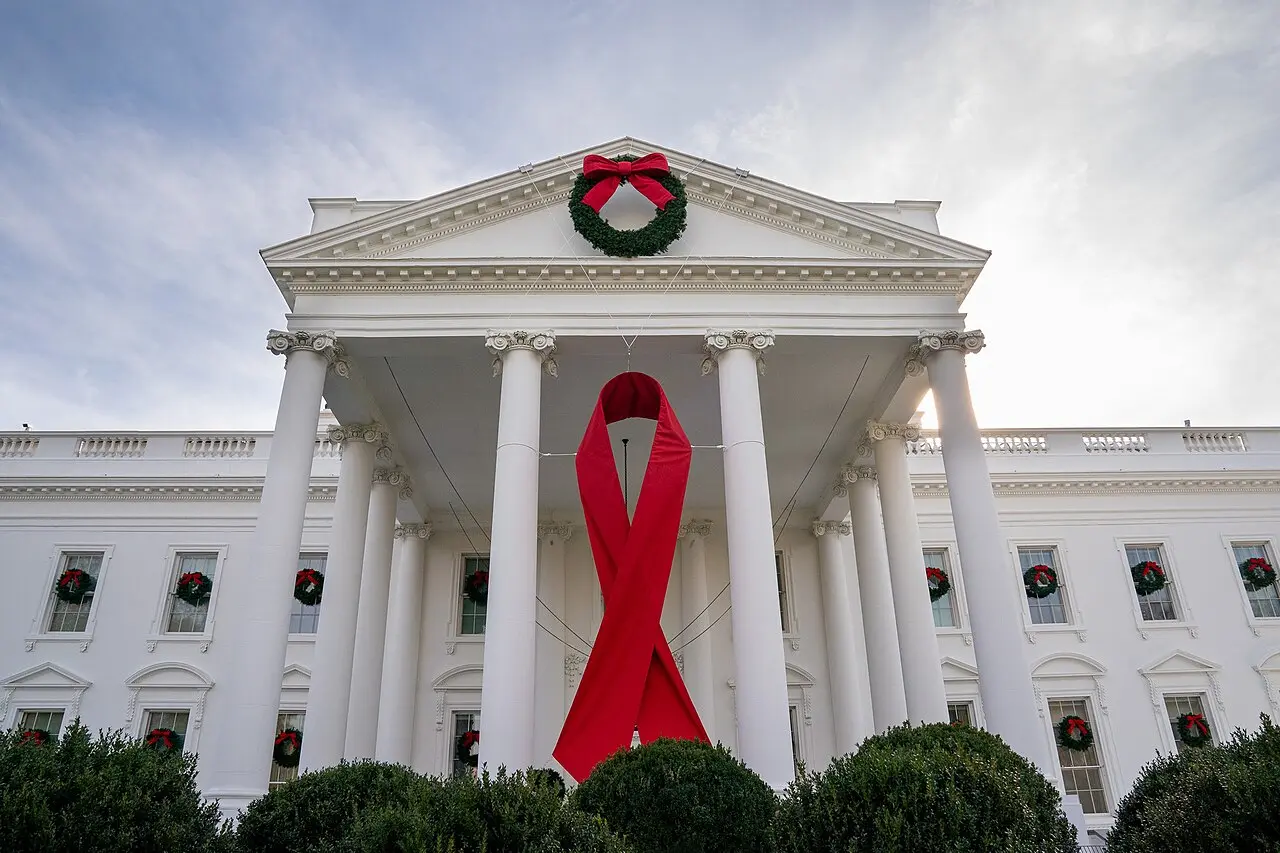
Photo: White House, public domain (via Wikimedia Commons).