
Eleven Minutes That Rebuilt a Continent
On June 5, 1947, George C. Marshall used a Harvard commencement speech to propose the largest economic aid program in history — the Marshall Plan.
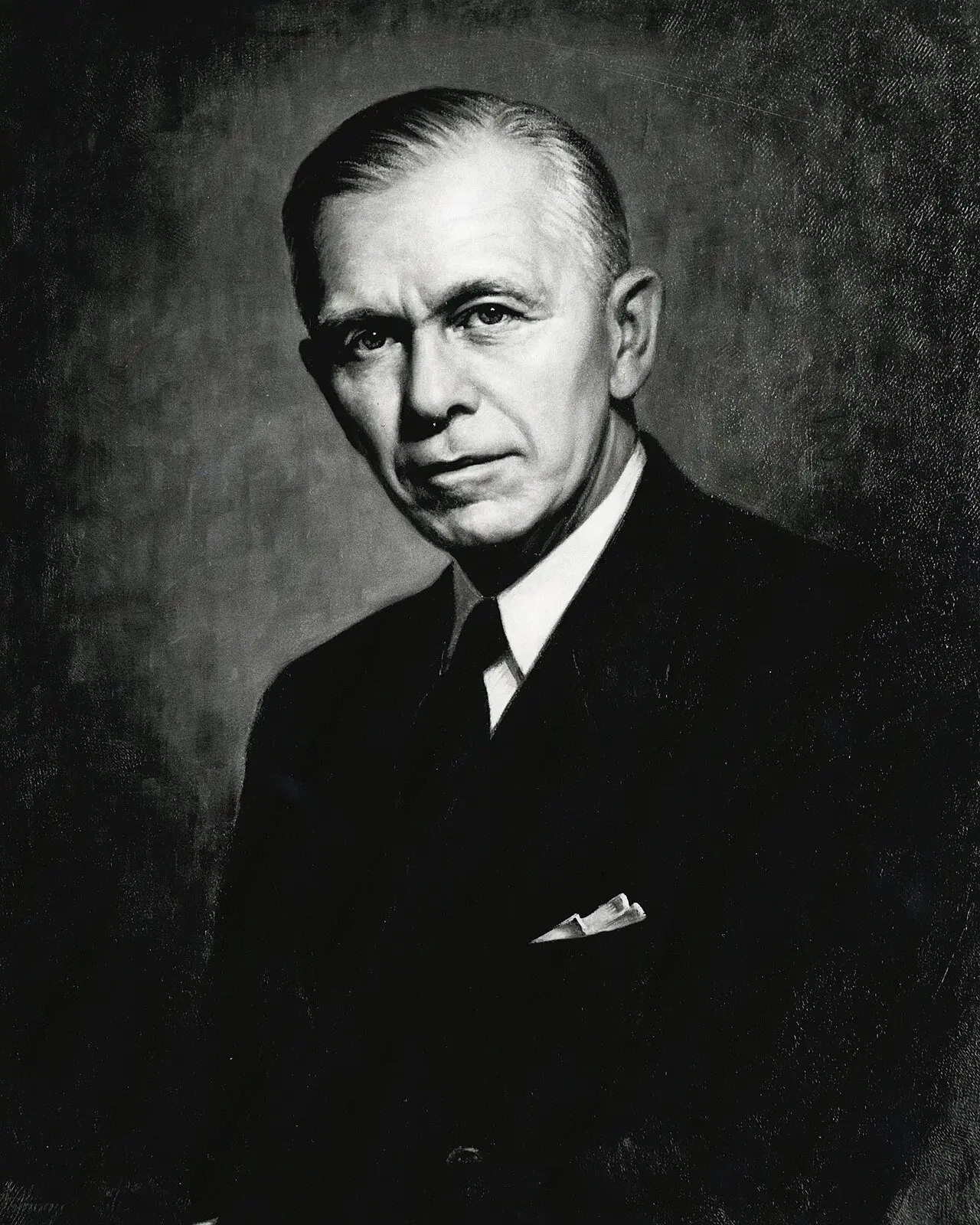
The speech lasted less than eleven minutes. Almost nobody in the audience realized they had just witnessed history.
On June 5, 1947, U.S. Secretary of State George C. Marshall stood before Harvard University's graduating class — he was there to receive an honorary degree — and laid out a plan to save Europe. Two years after World War II, the continent was in ruins: factories destroyed, currencies collapsing, food desperately short after one of the harshest winters on record. American officials feared that economic collapse would breed political chaos — and that large communist parties active in several key European countries would fill the vacuum.
Marshall's answer was staggering in its scale and generosity. The United States, he said, was prepared 'to assist in the return to normal economic health in the world, without which there can be no political stability and no assured peace.' America would help rebuild Europe — but with a condition that showed real wisdom: the initiative had to come from the Europeans themselves, working together as partners, not beggars.
The reaction was immediate. Within five weeks, representatives of 16 nations gathered in Paris to draw up a joint recovery plan. President Truman carried the proposal — officially the European Recovery Program — to Congress that December, and on April 3, 1948, he signed it into law. Over the next four years, the United States delivered about $13 billion in aid, well over $100 billion in today's dollars, in grants, loans, and equipment that primed the pump of European industry. Industrial production across the participating countries grew by an average of 41 percent. Marshall had even offered the aid to the Soviet Union and its allies; Stalin denounced the plan as a trick and refused.
The results were extraordinary. Economies stabilized, the cooperation the plan demanded helped lay the groundwork for the institutions that would become the European Union, and communism's advance in Western Europe was checked not by armies, but by full stomachs and working factories.
The man behind it was no stranger to large undertakings. Marshall, a retired five-star general, had organized America's massive military buildup in World War II as Army chief of staff. In 1953 he received the Nobel Peace Prize — the only career American military officer ever to win it. He died in 1959 and is buried at Arlington National Cemetery.
Why it matters: the Marshall Plan was the moment America decided that its own security depended on other nations' prosperity — and acted on it at enormous scale. It turned former enemies into allies, rescued a continent, and proved that the most powerful weapon in the Cold War might be generosity. All of it began with an eleven-minute speech on a June morning in Cambridge, Massachusetts.
Photo credit: U.S. Department of State — official portrait of George C. Marshall as Secretary of State (public domain, via Wikimedia Commons).