The Right Man in the Right Place: Thurgood Marshall's Historic Nomination
On June 13, 1967, President Lyndon Johnson nominated Thurgood Marshall to the Supreme Court, putting the first Black justice on America's highest court.
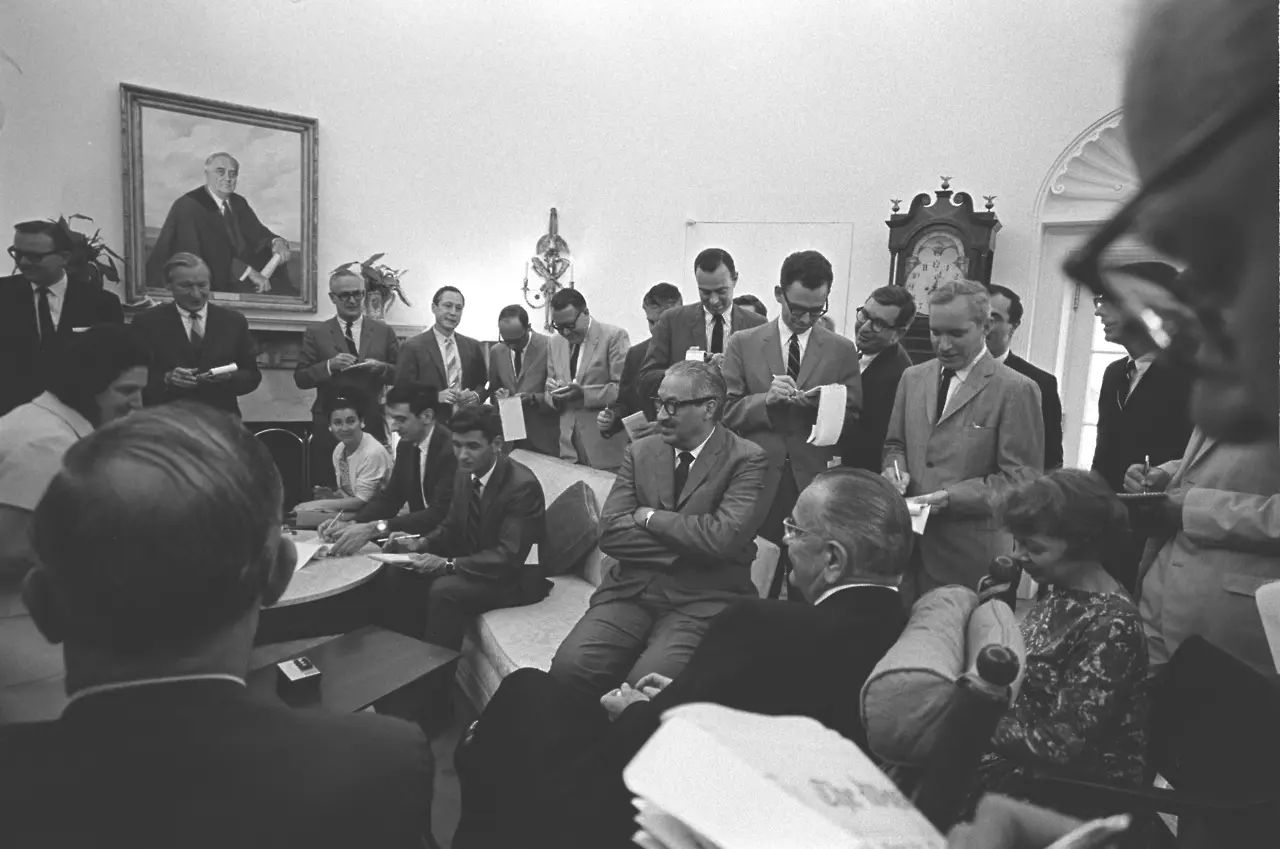
For 178 years, every justice who had ever sat on the United States Supreme Court had been a white man. On June 13, 1967, President Lyndon B. Johnson walked into the White House Rose Garden and changed that with a single announcement.
Johnson nominated Thurgood Marshall, then a federal appeals court judge, to fill the seat being vacated by retiring Associate Justice Tom C. Clark. Calling the choice "the right thing to do, the right time to do it, the right man and the right place," Johnson sent the formal nomination to the Senate that same day.
Marshall had earned the moment many times over. Born in Baltimore in 1908, the great-grandson of enslaved people, he had himself been turned away from the University of Maryland's law school because he was Black — and then, as a young lawyer, represented the local NAACP chapter in the lawsuit challenging the school's segregation policy. He graduated from Howard University's law school in 1933 and went on to lead the NAACP's legal campaign against segregation for more than two decades.
As the NAACP's chief counsel, Marshall argued 32 cases before the Supreme Court and won 29 of them, including the landmark Brown v. Board of Education decision of 1954, which struck down "separate but equal" in public schools and helped ignite the civil rights movement. In 1961 President John F. Kennedy named him to the U.S. Court of Appeals, and in 1965 Johnson made him the nation's first Black solicitor general.
The confirmation was a fight. During five days of Senate Judiciary Committee hearings, Southern senators hostile to Marshall's civil rights record grilled him relentlessly — South Carolina's Strom Thurmond alone put more than sixty questions to him about obscure points of constitutional history, in what Time magazine called a "Yahoo-type hazing." The committee still reported the nomination favorably, and on August 30, 1967, the full Senate confirmed Marshall by a vote of 69 to 11. He took the oath of office on October 2, becoming the first African American justice in the Court's history.
Marshall served on the Court for 24 years, until his retirement in 1991, remaining its conscience on civil rights, equal justice, and the death penalty until his death in 1993. A federal courthouse in New York now bears his name. His nomination proved that the doors he had spent a lifetime battering down from the outside could finally open from within — and that the highest court in the land belonged to all Americans.
Photo: Yoichi Okamoto, public domain (via Wikimedia Commons).