"Patriotism Is Not Enough": The Execution of Edith Cavell, 1915
On October 12, 1915, British nurse Edith Cavell was executed by a German firing squad in Brussels for helping Allied soldiers escape — leaving words that still define moral courage.
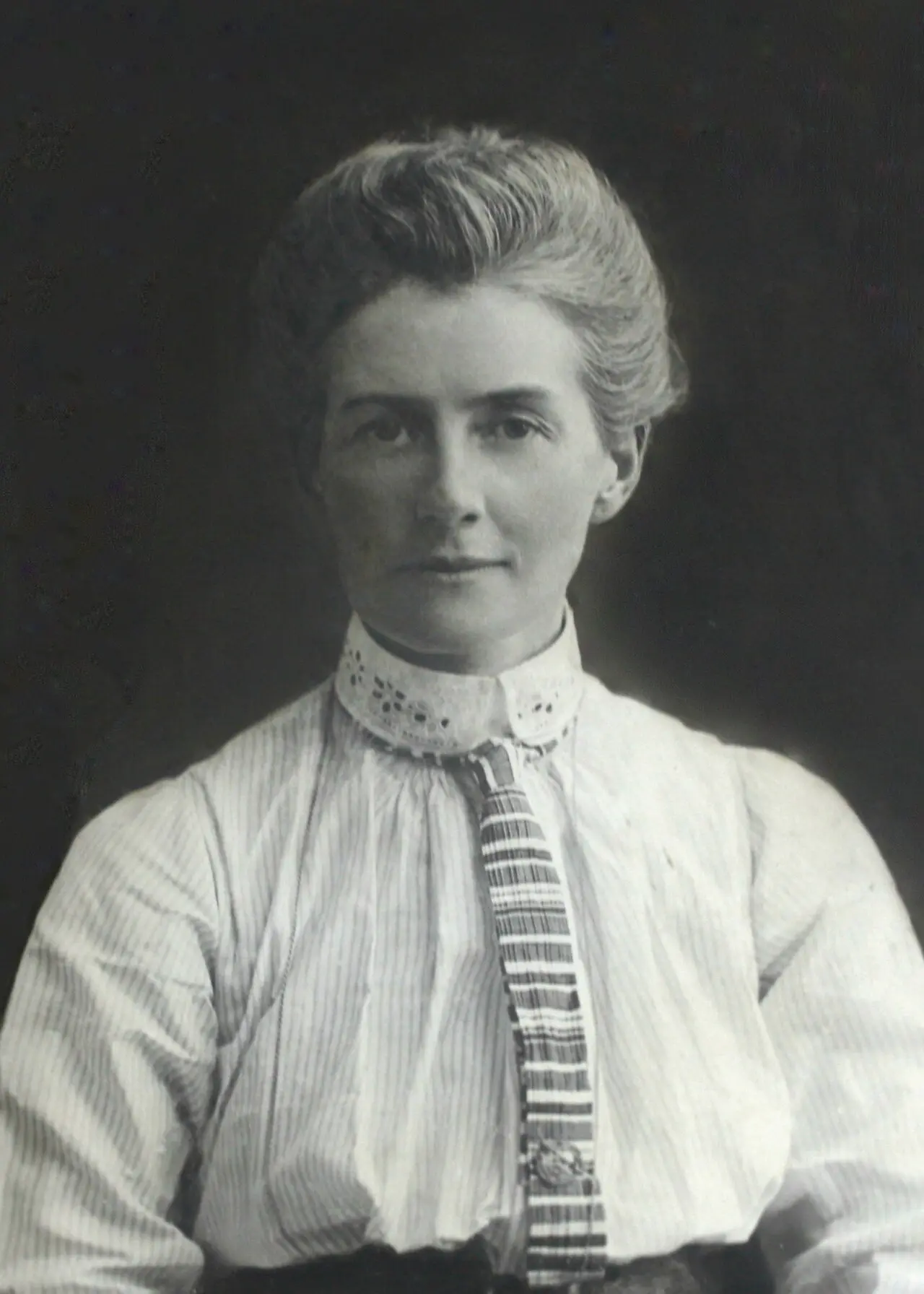
At dawn on October 12, 1915, a British nurse walked out of a Brussels prison and into history. She was forty-nine years old. She had spent the night writing in her diary, and she went to her death, by every account, with complete calm. Her name was Edith Cavell, and the words she left behind are still quoted today.
Cavell had come to Belgium years before the war to pioneer modern nursing, running a training school in Brussels. When Germany invaded in 1914, her hospital treated wounded soldiers from both sides without distinction — German and Allied alike. But Cavell did more than nurse. As the occupation hardened, she joined a secret network that sheltered stranded Allied soldiers and smuggled them across the border into neutral Holland — some two hundred men, guided to safety through enemy territory.
It was extraordinarily dangerous work. In August 1915, a collaborator posing as a soldier in need of help betrayed the network, and Cavell was arrested and sent to Saint-Gilles prison. At her court-martial she did not deny what she had done. Her aim, she said, had been to help men who asked for her help to reach the frontier — and had she not helped them, they would have been shot. Under German military law, her actions meant death.
The world tried to save her. The American minister in Brussels, Brand Whitlock — the United States was still neutral in 1915 — pleaded with the German authorities, warning that executing a nurse would outrage the world. Diplomats from neutral Spain joined him. The Germans refused.
On the night of October 11, an English chaplain, the Reverend Gahan, sat with her in her cell. What she told him that night became her epitaph. "Patriotism is not enough," she said. "I must have no hatred or bitterness towards anyone." It was a startling thing for a condemned woman to say — no anger, no plea, only a principle: that the work she had done, saving lives on every side, mattered more than the flag those lives served under.
At dawn on October 12, Cavell was taken to the Tir national, the Brussels military firing range, and shot alongside a fellow resister, Philippe Baucq. She was 49.
The reaction was explosive. The execution was condemned around the world; in Britain and America, her name became a rallying cry — "Remember Edith Cavell" — and her story drove thousands to enlist. Propagandists used her ruthlessly, but the core of her story needed no embellishment: a woman who had risked everything to save strangers, and who faced death without hatred.
In 1919 her body was brought home. After a memorial service at Westminster Abbey, she was buried at Norwich Cathedral, near the Norfolk village where she was born. The Church of England still commemorates her every October 12, and her words are carved on her memorial in London, steps from Trafalgar Square.
Edith Cavell's story matters because of that sentence she spoke in a prison cell. In the middle of the bloodiest war the world had ever seen, she insisted that loyalty to one's country was not the highest virtue a person could hold — and that even toward the people about to kill her, she would carry no bitterness. It is a harder standard than patriotism. That is why we still remember her name.
Photo: public domain portrait of Edith Cavell (via Wikimedia Commons).