A Birthday Crown: Pedro I Becomes Emperor of Brazil, 1822
On October 12, 1822 — his 24th birthday — Prince Pedro was acclaimed Dom Pedro I, Constitutional Emperor of Brazil, completing an independence won when the prince switched sides.
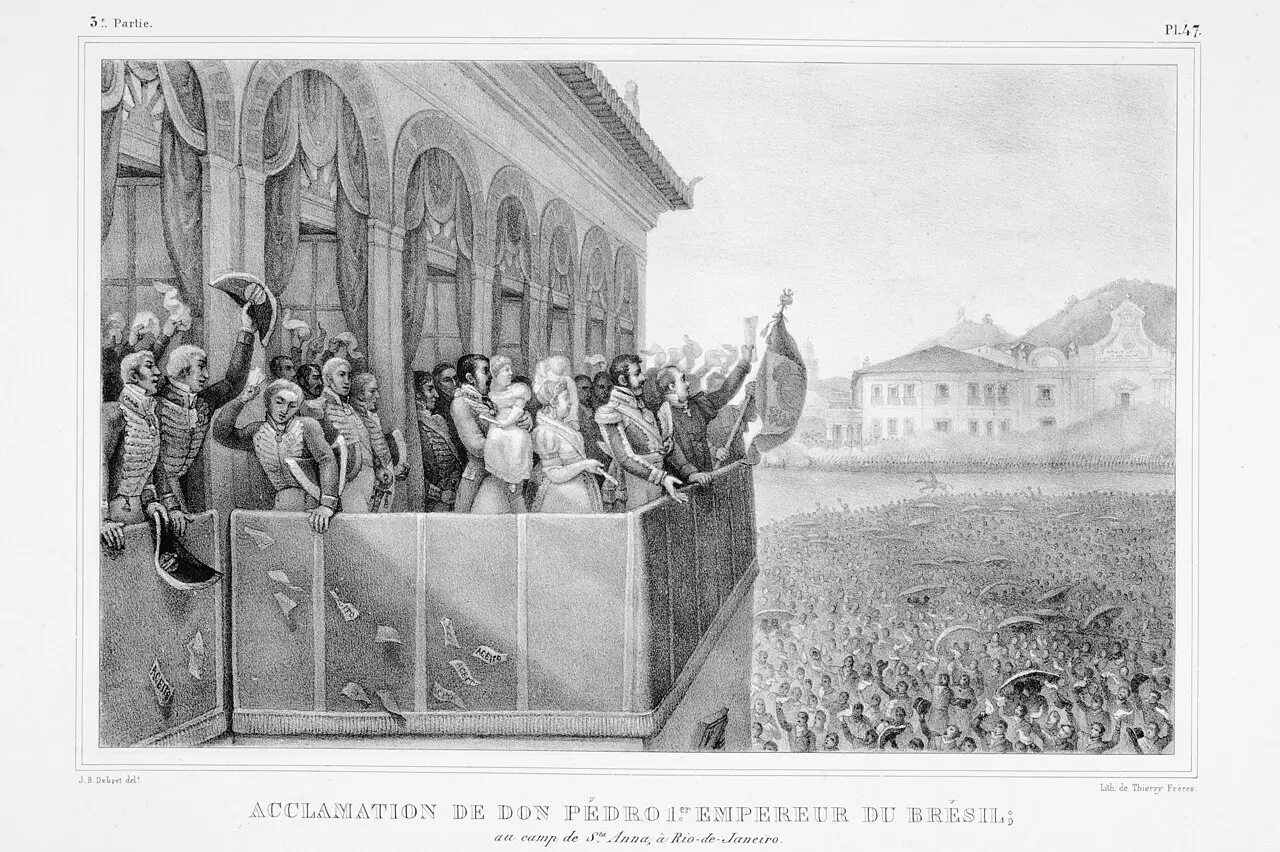
On his twenty-fourth birthday, a Portuguese prince stood on a balcony in Rio de Janeiro and was proclaimed emperor of a brand-new country. The crowd below roared its approval. Brazil — a colony for three centuries — had just become an empire, and it had happened almost without firing a shot.
The story began fifteen years earlier, when Napoleon invaded Portugal. Rather than surrender, the entire Portuguese royal court did something unprecedented: it fled across the Atlantic to its richest colony, Brazil, making Rio de Janeiro the seat of the Portuguese Empire. When King João VI finally returned to Lisbon in April 1821, he left his son and heir, Prince Pedro, behind as regent.
That might have been the end of it. But the parliament in Lisbon, the Cortes, wanted to turn back the clock — stripping Brazil of the autonomy it had enjoyed since the court's arrival and dragging the colony back under Portugal's thumb. Brazilians, who had grown used to self-rule, were furious. And Pedro, a hot-tempered young man of twenty-three, made a fateful choice: he would side with Brazil.
On September 7, 1822, beside the Ipiranga stream near São Paulo, Pedro raised his sword and declared Brazil's independence from Portugal — the famous "Grito do Ipiranga," with its cry of "Independence or death!" But declaring independence and securing a nation are different things. Pedro needed legitimacy, and he needed it fast.
He found it five weeks later, on October 12 — his own birthday. At the Campo de Santana in Rio de Janeiro, before a cheering crowd, Pedro was acclaimed "Dom Pedro I, Constitutional Emperor and Perpetual Defender of Brazil." It was, in a sense, a coronation by popular demand: the title of emperor, rather than king, was deliberately chosen to echo the Roman tradition of acclamation by the people — and Napoleon's example — instead of the old Portuguese dynastic line. He would be formally crowned on December 1, but October 12 marked the true beginning of his reign and of the Empire of Brazil.
There was still fighting to do. Portuguese garrisons loyal to Lisbon held out in several provinces, and it took until March 1824 for Brazilian forces to defeat them all. Portugal itself recognized Brazil's independence in 1825. But compared to the long, bloody wars that had torn Spanish America apart, Brazil's path to independence was remarkably swift — because the prince who was supposed to keep it a colony had switched sides.
Pedro's empire lasted until 1889, when his son Pedro II was overthrown and Brazil became a republic. But the October day matters for what it reveals: nations are not only born in battle. Sometimes they are born when a birthday crowd shouts a new title at a young prince on a balcony — and the prince, to everyone's surprise, accepts.
Engraving: Jean-Baptiste Debret, "Acclamation de Don Pedro 1er Empereur du Brésil" (the acclamation at the Campo de Santana, Rio de Janeiro), public domain (via Wikimedia Commons).