"Lo": The First Word Ever Sent on the Internet
On October 29, 1969, a UCLA student tried to type "login" to a computer 350 miles away — and crashed the network after just two letters.
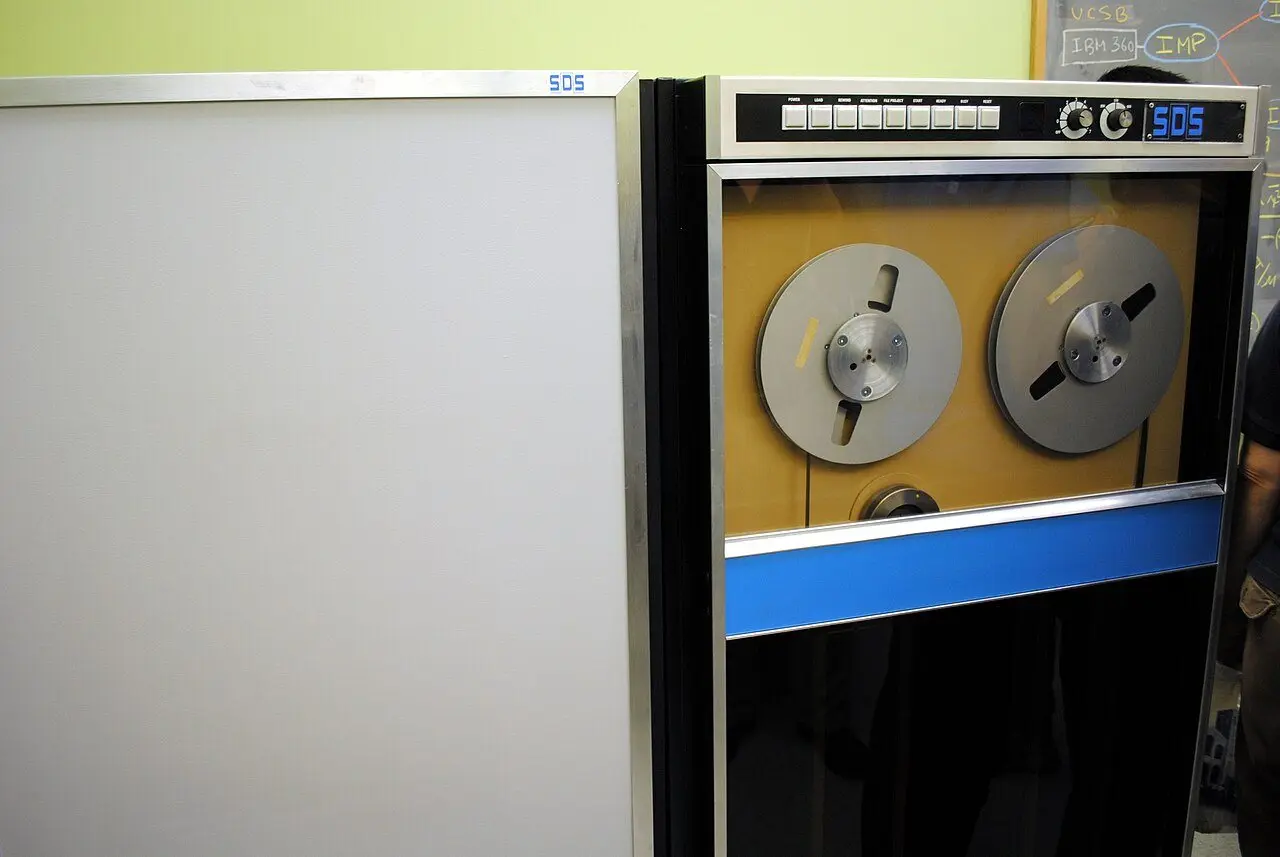
Late on the evening of October 29, 1969, two young programmers sat at computer terminals 350 miles apart, talking to each other on the telephone. Charley Kline was at UCLA. Bill Duvall was at the Stanford Research Institute. Kline was trying to do something no one had ever done before: log in to a computer over the new experimental network called ARPANET.
"The first thing I typed was an L," Kline later recalled. Over the phone, Duvall told him he had received it. Kline typed the O. "And he got the O." Then Kline typed the G — and the system crashed.
Two letters had made it across. The message was supposed to be "login." What got through was simply "lo."
The attempt, supervised by UCLA professor Leonard Kleinrock, is recorded in the project's log book in Kline's own hand: "29 Oct 69 22:30 Talked to SRI Host to Host." At 10:30 that night, the first host-to-host message in history had been sent — and it was an accident. The bug was fixed in about an hour, and Kline logged in cleanly before going home.
Kleinrock liked to point out that "lo" was about as good a piece of accidental poetry as a government-funded research project could hope for. "'L' and 'O' is 'hello,'" he said, "and a more succinct, more powerful, more prophetic message we couldn't have wished for."
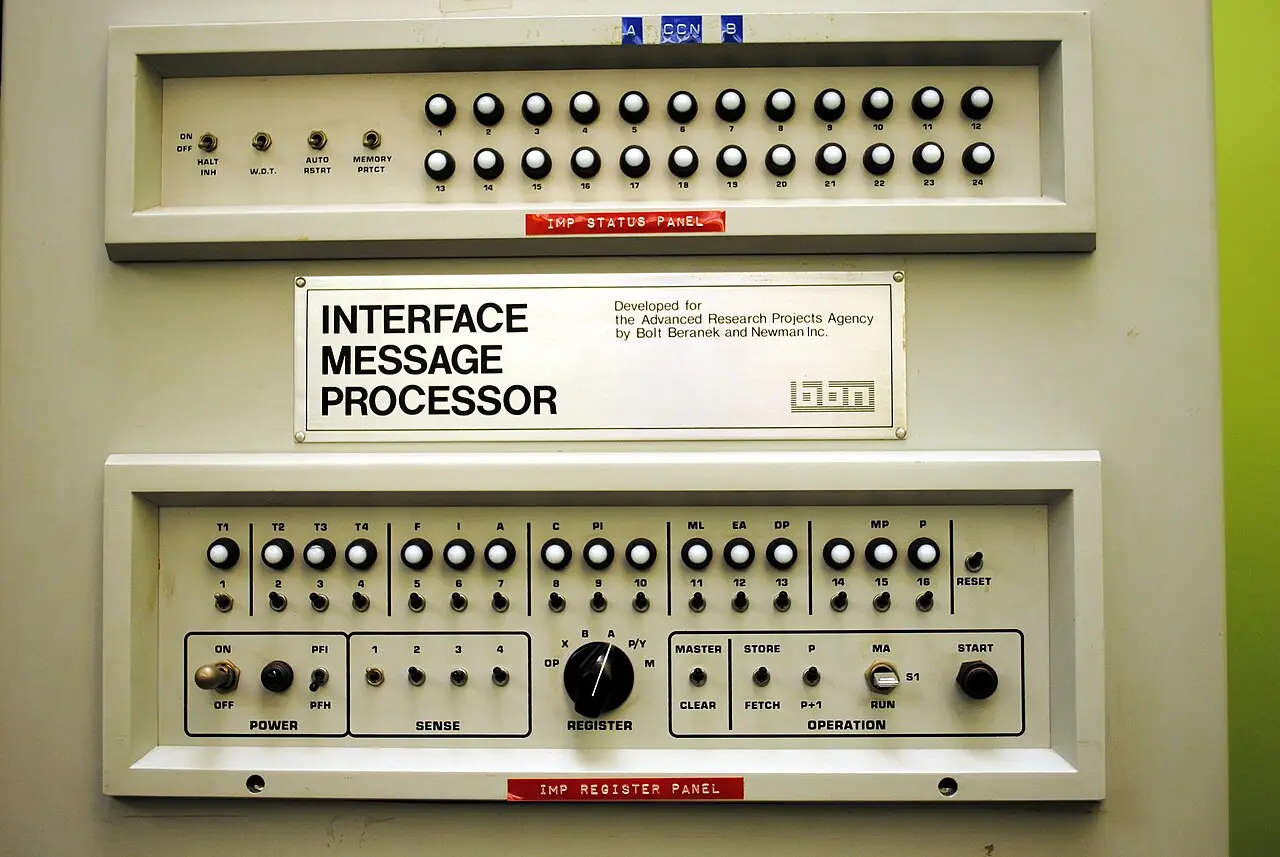
ARPANET was built by the U.S. Advanced Research Projects Agency (now DARPA) to connect researchers' computers so they could share resources and information. Its radical idea was packet switching — breaking data into small packets that could travel independently across the network and be reassembled at the other end — the same principle that still moves every email, photo, and video you send today.
On packet switching, Vint Cerf and Bob Kahn would later build TCP/IP — the common language that lets different networks talk to each other, the true foundation of the internet as we know it. ARPANET itself was finally decommissioned in 1990, by which time its ideas had completely outgrown it.
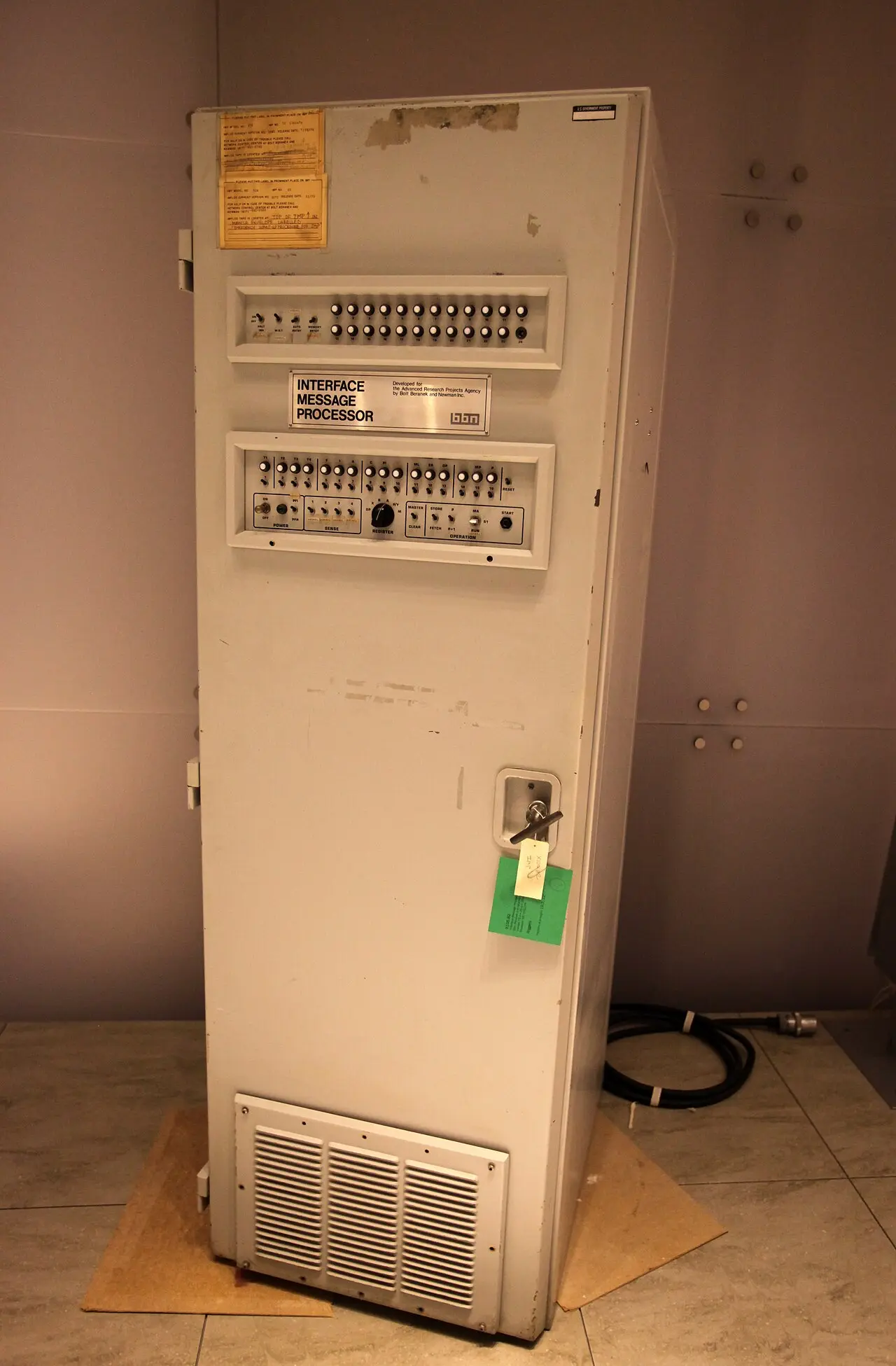
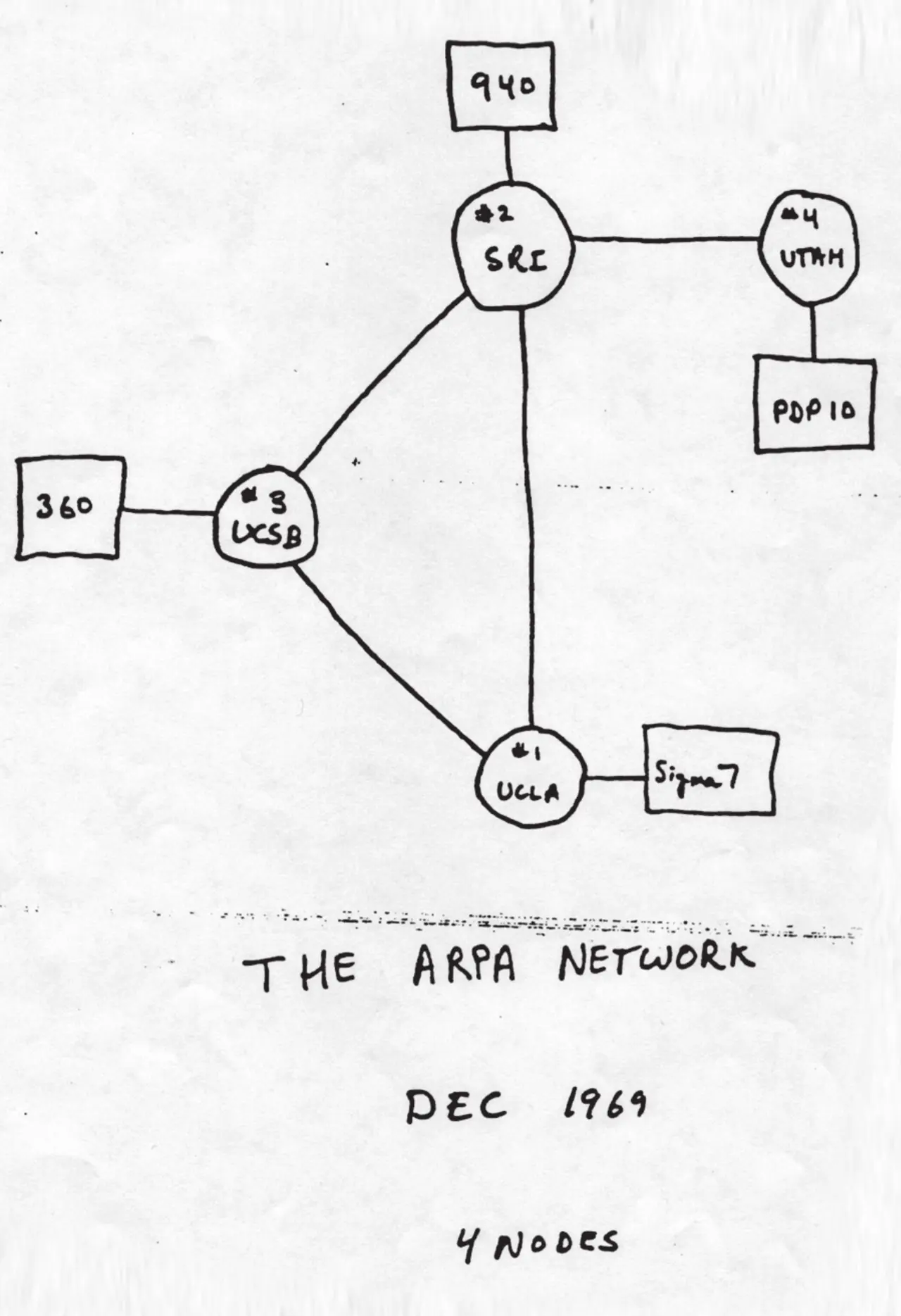
By the end of 1969, four computers were connected: UCLA, Stanford, UC Santa Barbara, and the University of Utah. In 1971, Ray Tomlinson sent the first email. From there the network grew — into a global system that would one day carry trillions of messages every single day.
Every text, every post, every video call traces back to that night in 1969, when two people crashed a computer 350 miles away and accidentally said hello to the future.
Photo: Andrew "FastLizard4" Adams, CC BY-SA 2.0 (via Wikimedia Commons).
More images (via Wikimedia Commons): a sketch of the ARPANET in December 1969 (DARPA, public domain); the front panel of an Interface Message Processor (FastLizard4, CC BY-SA 3.0); the first ARPANET router (Steve Jurvetson, CC BY 2.0).