A Republic from an Empire's Ashes: Turkey Is Born
On October 29, 1923, Turkey's parliament proclaimed a republic with Mustafa Kemal as its first president, closing six centuries of Ottoman rule.
On October 29, 1923, in the assembly hall of Turkey's Grand National Assembly in Ankara, the deputies did something no Ottoman ruler had ever contemplated: they voted their empire out of existence and a republic into it.
The motion was short. Turkey would henceforth be a republic. And its first president, elected that same day, was the man who had made the vote possible: Mustafa Kemal, the general who had led the Turkish War of Independence.
Four years earlier, the Ottoman Empire — six centuries old — lay in ruins. Defeated in the First World War, it had been carved up by the victors: Greek troops occupied the west, French and British forces held other regions, and the 1920 Treaty of Sevres reduced Turkish sovereignty to a rump. Mustafa Kemal, a decorated Ottoman officer, refused to accept it. From 1919 he organized a nationalist resistance, rallying soldiers and civilians to drive out the occupiers. By 1922 the Greeks had been defeated and expelled; in July 1923 the Treaty of Lausanne recognized the new Turkey's borders and sovereignty. The previous November, the assembly had already abolished the sultanate itself.
But a republic — a state whose legitimacy flowed from its citizens rather than a dynasty — was the real revolution. Over the next fifteen years, Mustafa Kemal, whom parliament would honor in 1934 with the surname Ataturk, 'Father of the Turks,' remade the country from the top down: a secular civil code replaced religious law, the Arabic script gave way to a Latin alphabet, women won the vote in 1934, and the fez — the very symbol of the old order — was outlawed.
October 29 became Republic Day, which Ataturk called Turkey's most important holiday. A century later it still is: every year, Turks fill the streets with flags and portraits of the founder, celebrating the day their country chose ballots over sultans.
Even the choice of capital was part of the statement. The republic's seat of government was not imperial Istanbul but Ankara, a dusty Anatolian railway town the nationalists had held through the war — a deliberate break with the Ottoman past. In October 2023, Turkey marked the republic's centenary with parades, concerts, and a naval review, one hundred years after the day the deputies stood and voted an empire into history.
The republic was born of war and built by decree, and historians still debate the cost of its top-down transformation. But the fact of it is beyond dispute: on a single October day in Ankara, one of history's great empires formally became a modern nation-state — and the map of the Middle East has never been the same.
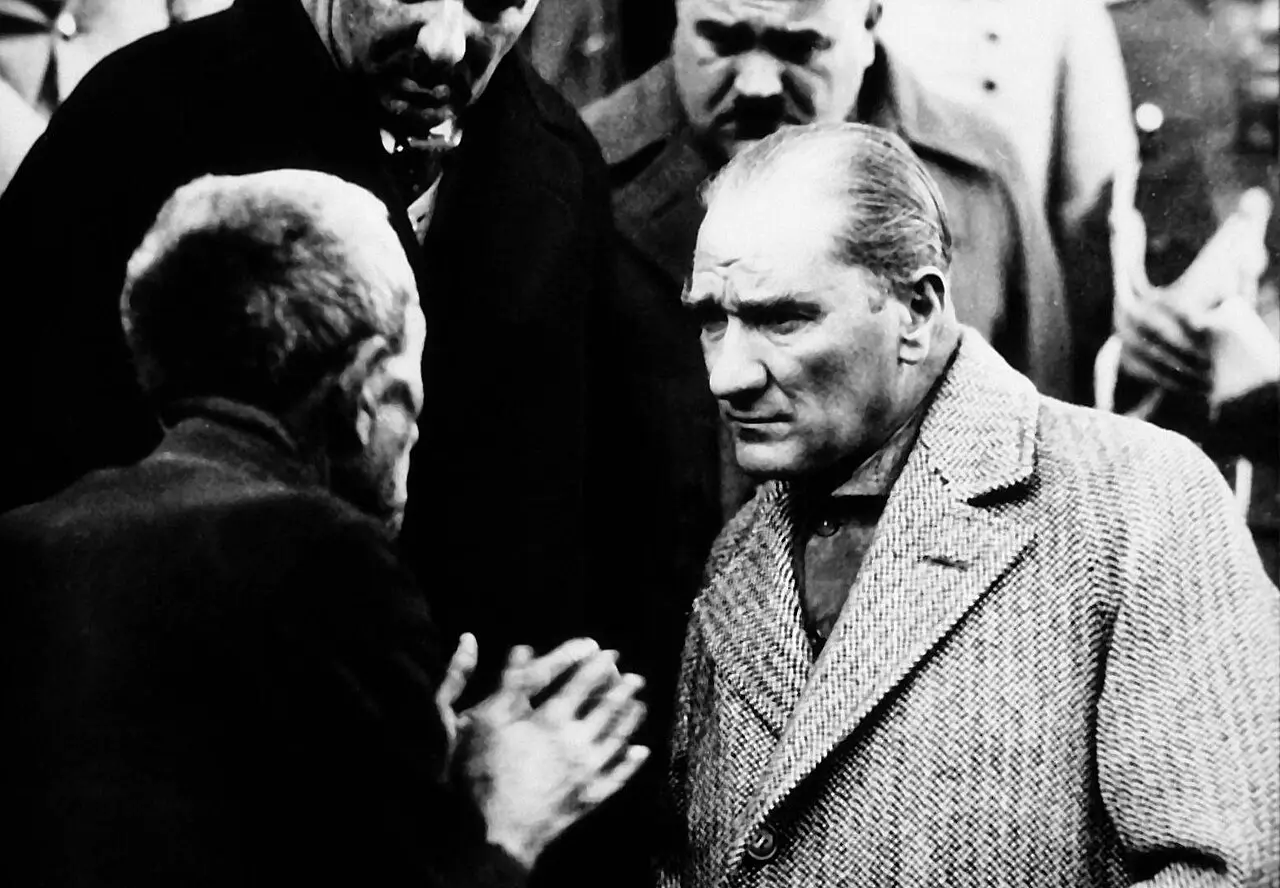
Photo: Mustafa Kemal Ataturk listening to a citizen in Tokat, 1930 — photographer unknown, public domain (via Wikimedia Commons).