50 Million Tons of TNT: The Tsar Bomba Detonates
On October 30, 1961, the Soviet Union detonated the most powerful nuclear weapon ever built over Novaya Zemlya, a blast thousands of times stronger than Hiroshima.
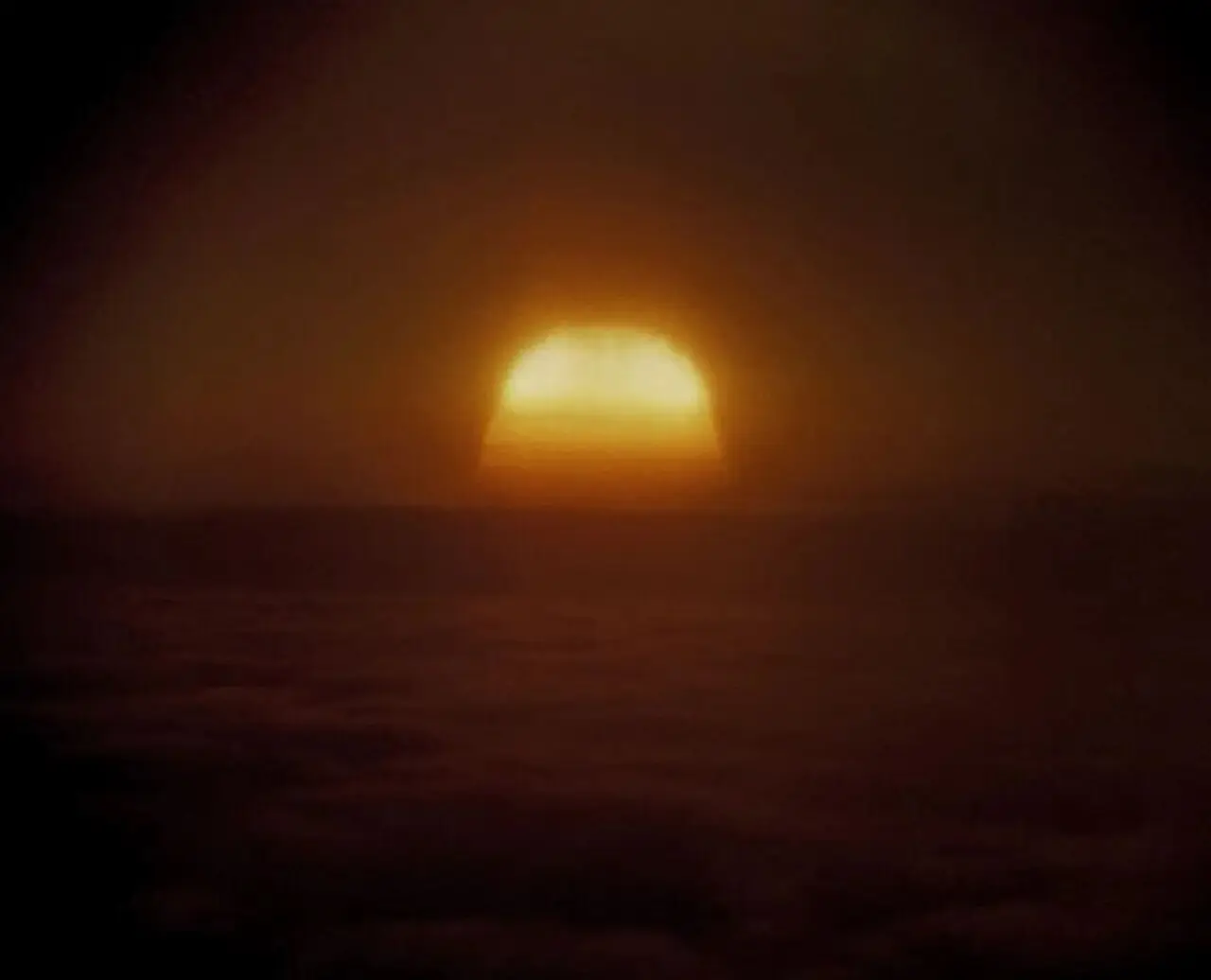
At 11:32 on the morning of October 30, 1961, a Soviet bomber released a single weapon over the frozen islands of Novaya Zemlya — and then turned and ran for its life.
The bomb weighed 27 tons and was eight meters long, so big it couldn't fit inside the plane's bomb bay. A giant parachute slowed its fall, giving the crew precious minutes to escape. Then it detonated, 4,000 meters above the Arctic tundra, with a force of 50 million tons of TNT.
Nothing like it had ever happened before, and nothing like it has happened since. The fireball was eight kilometers across — it touched the ground and nearly reached the altitude the bomber had just fled. The mushroom cloud climbed more than 60 kilometers into the sky, brushing the edge of space. The flash was seen a thousand kilometers away. Windows shattered 900 kilometers from the blast. The shockwave circled the entire planet — three times. The explosion was thousands of times more powerful than the bomb that destroyed Hiroshima.
They called it the Tsar Bomba: the king of bombs. Soviet physicists led by Andrei Sakharov had designed and built it in barely fourteen weeks, on the direct order of Nikita Khrushchev, as the ultimate demonstration of Soviet power at the height of the Cold War. It had originally been designed even larger — a 100-megaton monster — but the scientists halved the yield, partly to spare the bomber crew and limit the fallout.
The man who dropped it was Major Andrei Durnovtsev, flying a specially modified Tu-95 bomber. He released the bomb, then turned the plane and ran at full throttle — and still the shockwave caught him, dropping the aircraft a thousand meters before he regained control. He and his crew survived; the parachute had done its job.
Here is the strange truth about the biggest explosion in human history: it was never meant to be used. The bomb was too huge to deliver in war, too indiscriminate to aim at anything. It was theater — terrifying, deliberate theater, staged to make the other side flinch.
It worked, in a way its makers may not have intended. The sheer scale of the Tsar Bomba helped convince both superpowers that the arms race had no sane endpoint. Less than two years later, the United States, the Soviet Union, and Britain signed a treaty banning nuclear tests in the atmosphere, in space, and underwater. The age of ever-bigger bombs was over — ended, in part, by the biggest bomb of all.
Photo: The Tsar Bomba fireball over Novaya Zemlya, October 30, 1961 — public domain (via Wikimedia Commons).