'Ali, Bomaye!': The Rumble in the Jungle
On October 30, 1974, 32-year-old underdog Muhammad Ali knocked out the unbeaten George Foreman in Kinshasa to reclaim the world heavyweight title.
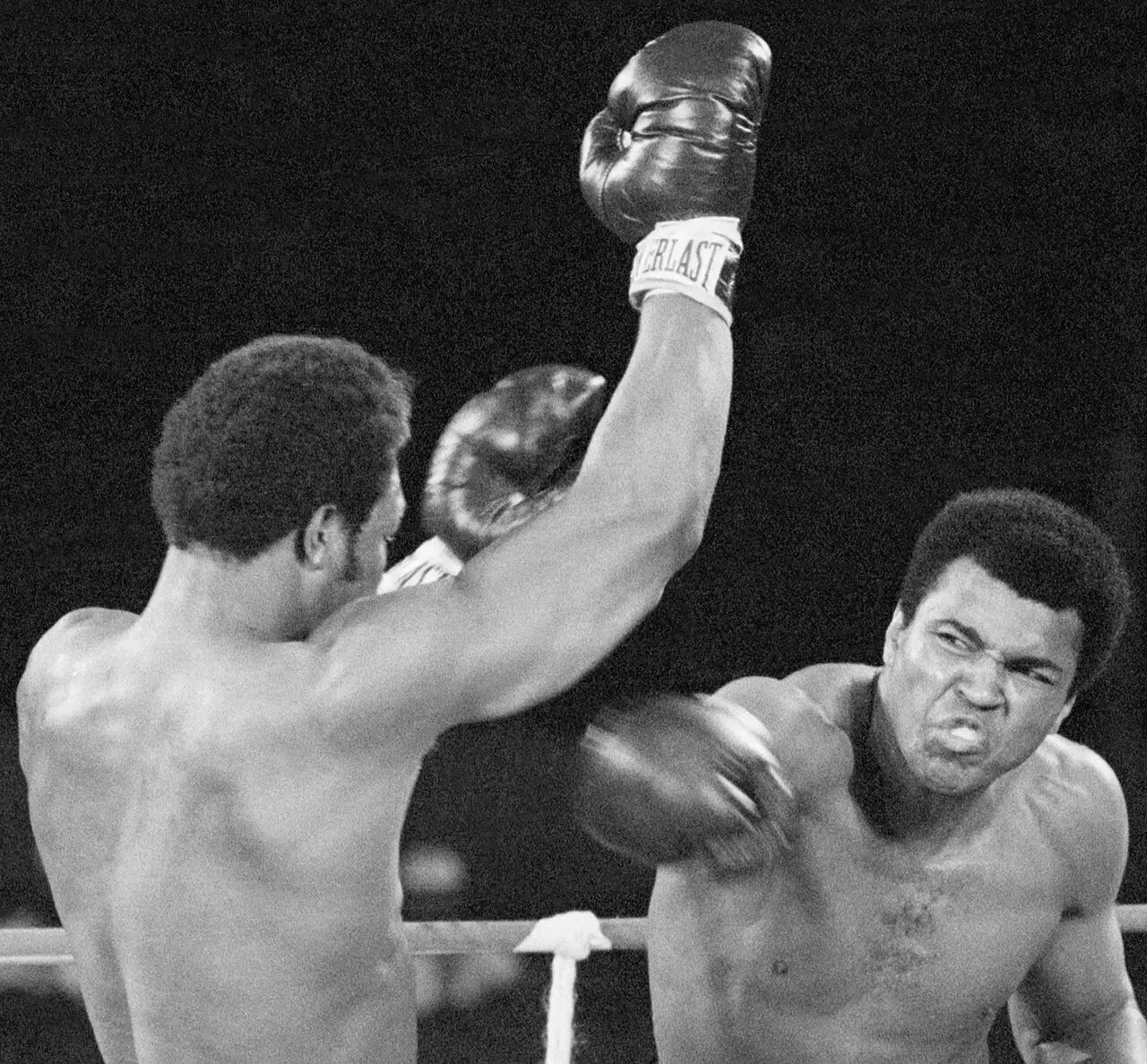
The fight started at four in the morning. That was the only way to do it: the promoters needed the bout to air in American prime time, so on October 30, 1974, some 60,000 people packed into the 20th of May Stadium in Kinshasa, Zaire, in the dark before dawn, to watch Muhammad Ali try to take back the heavyweight championship of the world.
Almost nobody thought he could. Across the ring stood George Foreman, 25 years old, undefeated in forty fights, the most feared puncher alive. Two years earlier Foreman had knocked down Joe Frazier six times in two rounds. Ali, at 32, was a 4-to-1 underdog — an aging ex-champion who'd already lost twice and whose famous footwork seemed a memory.
What happened instead became boxing legend. From the second round, Ali did the unthinkable: he backed himself against the ropes, covered up, and let Foreman hit him. Round after round, Foreman pounded Ali's arms and body while the crowd chanted 'Ali, bomaye!' — 'Ali, kill him!' Ali called it rope-a-dope. He was letting the younger man punch himself out.
By the eighth round, Foreman's punches had lost their snap. Ali came off the ropes, landed a crisp combination — and the undefeated champion went down. Foreman struggled up on his knees, but the count ran out. Muhammad Ali was heavyweight champion again: only the second man in history, after Floyd Patterson, to win back the title.
The 'Rumble in the Jungle' — bankrolled by Zaire's government and promoted by Don King, with each fighter earning a then-unheard-of $5 million — was watched by an enormous worldwide television audience, the biggest of its era. Decades later it inspired the Oscar-winning documentary 'When We Were Kings.'
Ali would call it his greatest night. The defeat was Foreman's first in 41 professional fights, and it shattered the younger man's aura of invincibility overnight. Ali, meanwhile, left Kinshasa with the championship he had lost seven years earlier — and with a victory that endures not merely as an upset, but as a masterclass in turning weakness into a weapon. The smartest fighter in the ring doesn't always have to be the strongest one; sometimes he just has to be the one with the better plan.
Decades later, the fight inspired the Oscar-winning documentary 'When We Were Kings.' The 'Rumble in the Jungle' — bankrolled by Zaire's government and promoted by Don King, with each fighter earning a then-unheard-of $5 million — remains the standard by which every heavyweight super-fight is measured.
Photo: Muhammad Ali lands a right hand on George Foreman during the Rumble in the Jungle, Kinshasa, 1974 — United Press International, public domain (via Wikimedia Commons).