Twenty-Two Minutes a Side: The Day the LP Record Was Born
On June 21, 1948, Columbia Records unveiled the 33 1/3 rpm long-playing record at the Waldorf Astoria, launching the album era.
At a press conference in New York's Waldorf Astoria hotel, Columbia Records executives did something that seems ordinary now: they played an entire movement of a symphony without getting up to flip the record. It was June 21, 1948, and the long-playing record had just been born.
Before the LP, music came on 78-rpm shellac discs that held only three or four minutes per side and shattered if you looked at them wrong. Listening to a symphony meant juggling a stack of fragile discs, changing them every few minutes. Columbia's president, Edward Wallerstein, dreamed of hearing a whole movement on a single side, and he pushed the company's engineers to make it happen.
The technical work fell to a team led by CBS Laboratories research chief Peter Goldmark, with engineers William S. Bachman and Howard H. Scott doing most of the experiments. Research had begun in 1939, paused during World War II, and resumed in 1945. Columbia executive Goddard Lieberson championed the project and introduced the finished format to the world at the Waldorf Astoria.
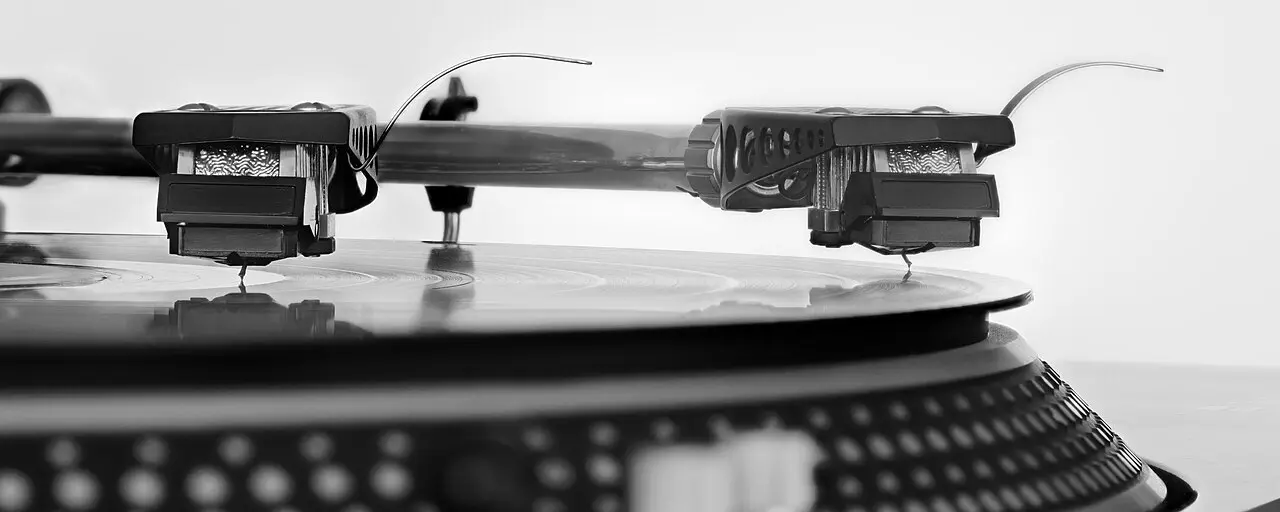
The LP was a marvel of miniaturization: a microgroove roughly three-thousandths of an inch wide, spinning at 33 1/3 revolutions per minute, pressed on durable vinyl. A 12-inch disc could hold 22 minutes of music per side — about six times what a 78 could manage. Columbia launched it in two sizes, 10-inch and 12-inch, with 133 recordings ready on day one. The very first 12-inch LP, catalog number ML 4001, was Mendelssohn's Violin Concerto in E minor, performed by Nathan Milstein with the New York Philharmonic under Bruno Walter. The popular series kicked off with Frank Sinatra's The Voice of Frank Sinatra.
Rival RCA Victor struck back almost immediately with its own format, the 7-inch 45-rpm single, touching off the "war of the speeds." Within a few years the battle lines were drawn: the LP became the home of albums, the 45 the home of singles. Columbia even copyrighted the term "LP" itself.
The LP changed how music was made, not just sold. For the first time, artists could think in forty-minute arcs instead of three-minute bursts — the foundation of the album era that would later give the world everything from Kind of Blue to Sgt. Pepper. And remarkably, after cassettes, CDs, and streaming all took their turns, vinyl never died: the format born at the Waldorf Astoria is still being pressed, bought, and loved today.
Photo: Franz van Duns, CC BY-SA 4.0 (via Wikimedia Commons).