
The Day a Private Spaceship Reached Space
On June 21, 2004, SpaceShipOne became the first privately built and funded spacecraft to carry a person into space.
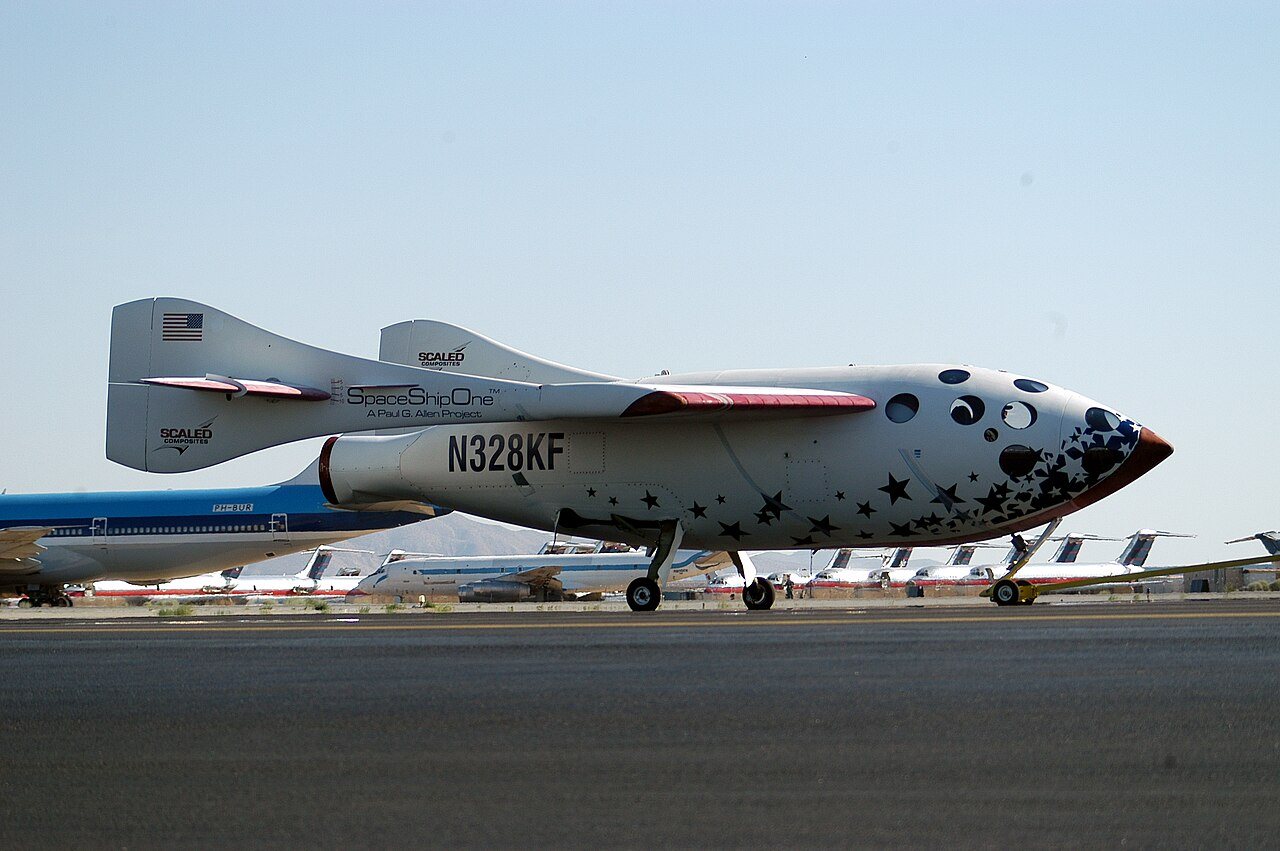
On the morning of June 21, 2004, a crowd gathered in the California desert to watch history — or a very expensive crash. Sitting on the runway at Mojave was a stubby white spaceship with short, stubby wings, built not by NASA and not by any government, but by a small team of dreamers in a hangar. Its name was SpaceShipOne, and that day it would try to do what only governments had ever done: carry a person into space.
The ship was the brainchild of aircraft designer Burt Rutan and his company, Scaled Composites. The entire project was bankrolled by Microsoft co-founder Paul Allen, who spent an estimated $25 million of his own money. There was no government funding and no government equipment — Rutan later said the government didn't even know a manned space program was underway. Their goal was the $10 million Ansari X Prize, offered to the first private team that could fly a reusable crewed craft above 100 kilometers — the edge of space — twice in two weeks.
SpaceShipOne couldn't take off on its own. It was carried to about 50,000 feet beneath the wing of a larger carrier plane, the White Knight, then released to fire its rocket. That morning, with test pilot Mike Melvill at the controls, the motor lit and the little ship shot upward. It climbed past 100 kilometers — reaching an apogee of 100.124 kilometers, more than 62 miles up — and for a few minutes Melvill floated in weightlessness, looking down at the curve of the Earth. Twenty-four minutes after takeoff, SpaceShipOne glided back to a landing at Mojave. The flight wasn't perfect — the team later acknowledged problems during the flight — but they were corrected, and the door to private spaceflight had been kicked open.
Someone in the crowd held up a homemade sign that read "SpaceShipOne, Government Zero." Rutan loved it so much he later displayed it with the ship. That fall, SpaceShipOne flew to space twice more — on September 29 with Melvill and October 4 with pilot Brian Binnie — and won the $10 million Ansari X Prize. Today the ship hangs in the Smithsonian's National Air and Space Museum, in the Milestones of Flight gallery, between Charles Lindbergh's Spirit of St. Louis and Chuck Yeager's Bell X-1.
Before that June morning, human spaceflight belonged exclusively to governments — the United States, Russia, and China. SpaceShipOne proved a small private team could do it too, for a fraction of the cost. Looking back, Rutan said he would not be surprised if people identified that flight as "the moment that the era of commercial spaceflight started." He was right: the companies carrying tourists and astronauts to space today all trace their lineage to that stubby white ship over the Mojave Desert.
Photo credit: Don Ramey Logan, CC BY-SA 3.0, via Wikimedia Commons — the photograph shows test pilot Mike Melvill just after climbing out of SpaceShipOne following the June 21, 2004 flight.