The Quick Brown Fox That Stopped a War
On August 30, 1963, the Moscow–Washington hotline went live — and the first message ever sent between the nuclear superpowers was a typing test.
In October 1962, the world spent thirteen days wondering if it would survive the month. Soviet nuclear missiles had been discovered in Cuba, ninety miles from Florida, and President John F. Kennedy and Soviet Premier Nikita Khrushchev played their standoff through a communications system from another century.
Diplomatic messages traveled by telegraph and radio, encrypted, transmitted, decrypted, and translated — a process that routinely took six hours or more. Khrushchev's 3,000-word opening letter took more than twelve hours to reach Kennedy's desk, and by the time it was decoded, a second, angrier message had already arrived. The two most powerful men on Earth were trying to defuse a nuclear crisis by shouting through molasses.
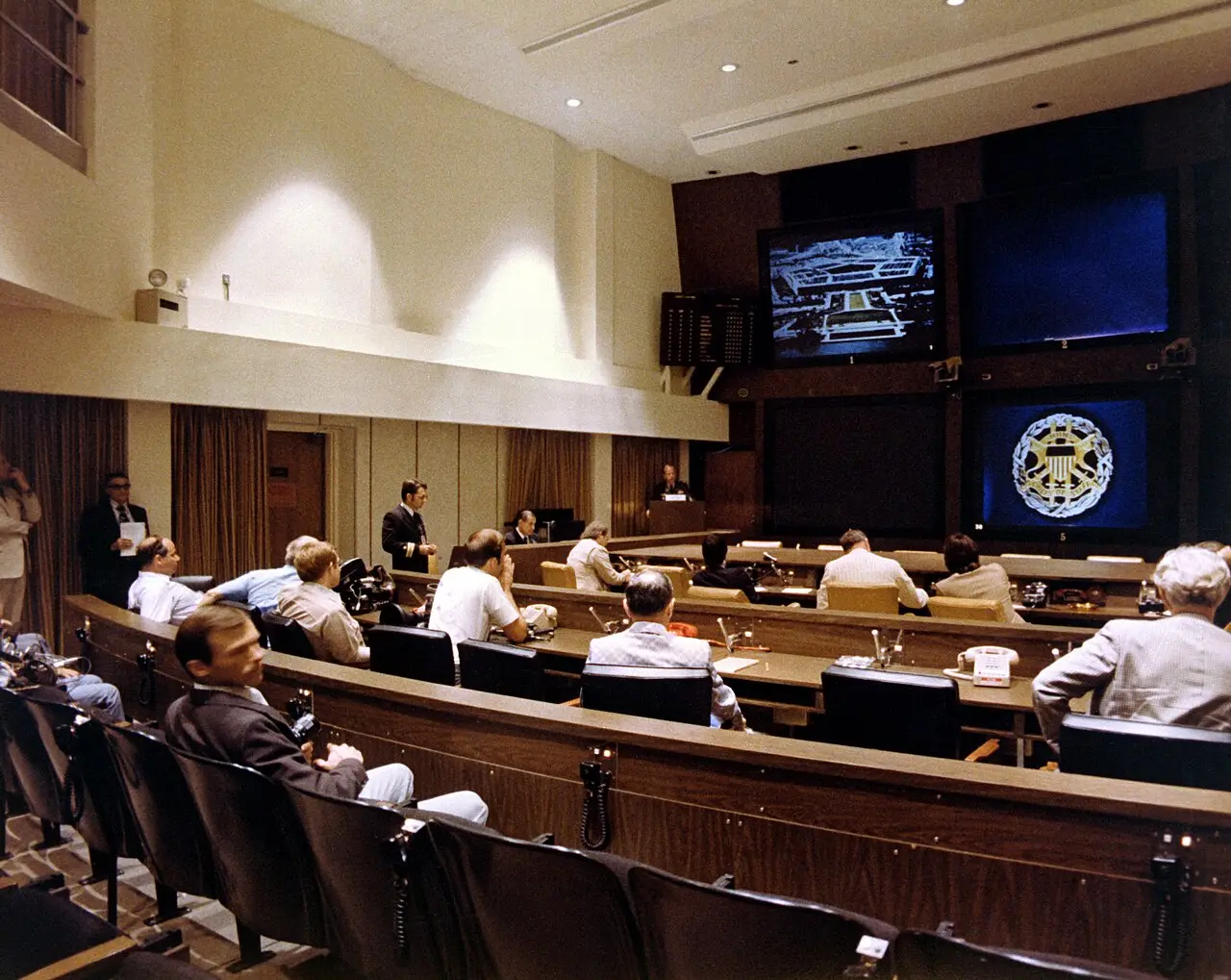
The lesson of the Cuban Missile Crisis was simple: the superpowers needed to be able to talk to each other. On June 20, 1963, the two governments signed a memorandum establishing a direct communications link, and on August 30 the Moscow–Washington hotline became operational. The Pentagon announced it to the press in a single sentence: "The direct communication link between Washington and Moscow is now operational."
Forget the movies. There was never a red telephone. The link was a teletype circuit running some 10,000 miles from Washington through London, Copenhagen, Stockholm, and Helsinki to Moscow. Four American-made teletype machines were flown to the Kremlin; East German machines went to the Soviet embassy in Washington. The American end landed not in the White House but at the Pentagon, which has run the hotline ever since.
And the first message? Washington typed: "THE QUICK BROWN FOX JUMPED OVER THE LAZY DOG'S BACK 1234567890." It was a typing test — a pangram using every letter and numeral, in all capitals because the equipment couldn't do lowercase. Moscow replied with a test message in Russian that American operators found completely unintelligible. A few kinks, as the New York Times noted the next day, remained to be worked out.
The line's first grave use came just months later, when Washington used it to inform Moscow of President Kennedy's assassination. It would be used again during the Arab-Israeli wars of 1967 and 1973, and during the Soviet invasion of Afghanistan in 1979. The teletype gave way to fax machines in 1986, then to a secure computer link in 2008.
It never prevented a war by itself. But for more than sixty years it has given two rival nuclear powers something the crisis of 1962 proved they desperately needed: a way to reach each other in minutes, not hours, when it matters most.
Building the link was an exercise in Cold War cooperation. The two sides exchanged encoding devices so each could decode the other's messages, plus a year's supply of spare parts, special tools, operating instructions, and telecommunications tape — redundancy for the most important wire on Earth. Test messages were originally sent every hour, around the clock, to prove the circuit was alive.
The "red telephone" of popular imagination — the prop that appears in film after film — never existed. No leader ever picked up a red phone to Moscow. The Jimmy Carter Presidential Library displays a phone associated with the hotline, but even that one is black. The real device was always mundane by design: written messages, translated and encrypted, because in a crisis, everyone involved wanted a record of exactly what was said.
The system kept evolving with the technology. In the 1970s a satellite link was added that could carry documents, maps, and photographs. The teletype gave way to fax machines in 1986, and since 2008 the hotline has been a secure computer link — essentially, encrypted email between the Pentagon and the Kremlin. Other countries copied the idea: Moscow linked to European capitals, China established hotlines with Russia and the United States, and India and Pakistan set one up in 2005.
The hotline has never been used to start a war. It exists for the opposite reason — a standing admission by two rival powers that the most dangerous moments in history are the ones when leaders cannot reach each other.
Photo: U.S. Department of Defense, public domain (via Wikimedia Commons).