The Pope Who Opened the Windows: Vatican II Begins, 1962
On October 11, 1962, Pope John XXIII opened the Second Vatican Council before more than 2,000 bishops, launching the most consequential religious gathering of the twentieth century.
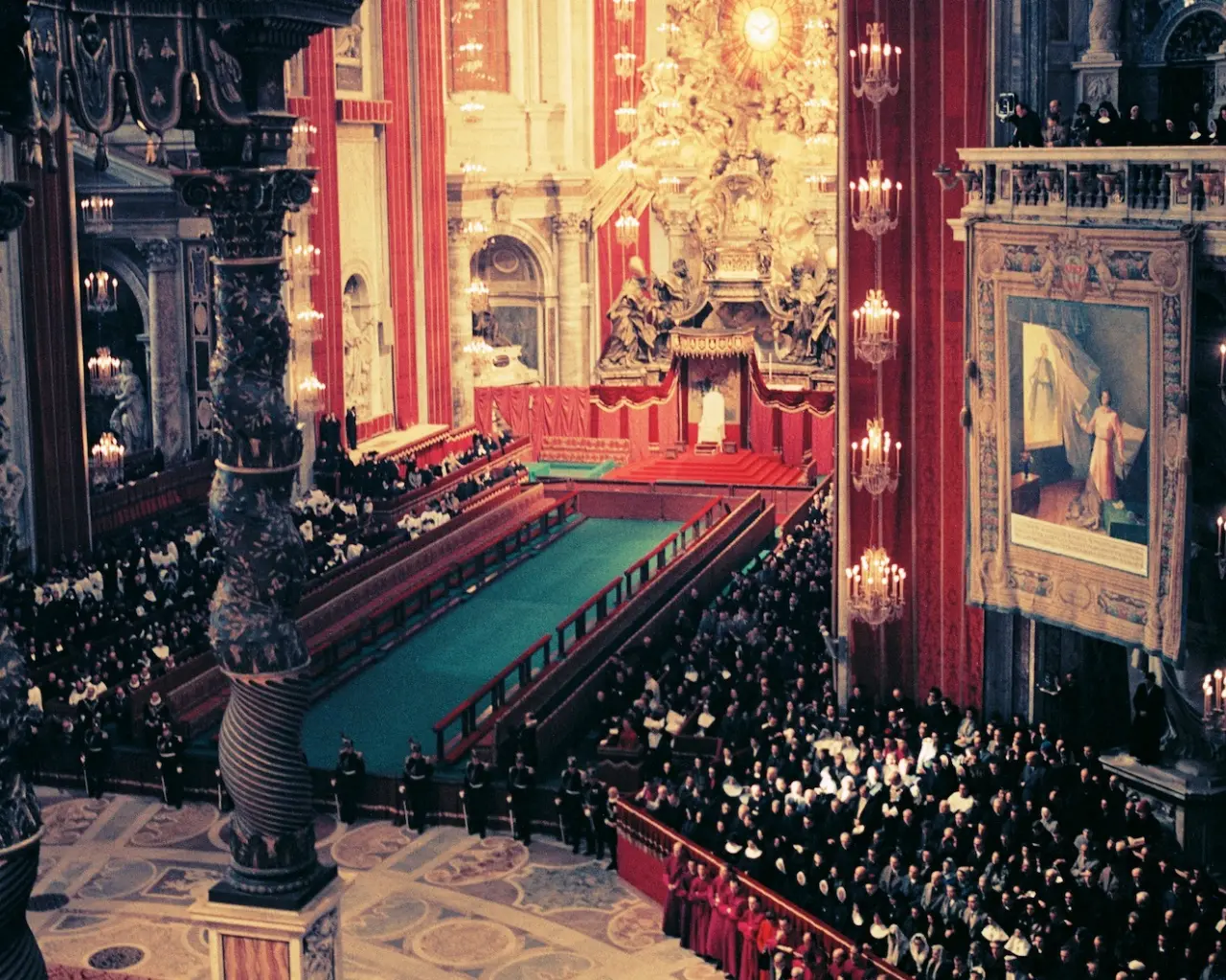
On the morning of October 11, 1962, a procession of more than 2,000 bishops crossed St. Peter's Square in Rome — the largest gathering of Catholic bishops in history — and filed into St. Peter's Basilica. They had come from every continent, in full vestments, to open a meeting that would reshape the lives of a billion people. It had been nearly a century since the Church had done anything like it.
The man who called them there was Pope John XXIII, a 77-year-old Italian elected pope only four years earlier and widely expected to be a quiet caretaker. Instead, in January 1959 — barely three months after his election — he stunned the cardinals by announcing an ecumenical council, the first since 1870. He called it aggiornamento, an Italian word meaning "bringing up to date": his conviction that the Church needed to open its windows to the modern world.
His opening address that October morning, Gaudet Mater Ecclesia — "Mother Church Rejoices" — set the tone. The pope, a former diplomat with a farmer's plainspokenness, pushed back against what he called the "prophets of doom" who saw only decline in the modern world. And he gave the assembled bishops their marching orders in a phrase that would echo for decades: in their work, they should favor "the medicine of mercy rather than the weapons of severity."
Over four sessions, running until December 1965, the council produced sixteen documents that rewrote how Catholics worshipped, prayed, and related to the rest of humanity. The Mass could now be celebrated in local languages instead of Latin. The Church formally repudiated antisemitism and affirmed the shared spiritual heritage of Christians and Jews. It declared religious freedom a human right, opened new bridges to other Christian churches, and told Catholics that holiness was the business of ordinary people, not just priests and nuns. John XXIII did not live to see it finished — he died in June 1963, and his successor, Pope Paul VI, carried the council through its final sessions.
The council also divided the Church. Traditionalists argued it had gone too far, too fast; reformers argued it had not gone far enough. That argument is still being had today, in every parish debate about how the Mass should be said and what the Church should say to the modern world.
But step back, and the scale is what stuns. Before October 11, 1962, a Catholic at Sunday Mass heard Latin, knelt at an altar facing away, and lived in a Church that still largely defined itself against the outside world. After the council, the priest faced the people, the prayers were in their own tongue, and the Church officially sought dialogue with Jews, Muslims, other Christians, and even the secular world. For the world's largest Christian body, it was the most consequential religious event of the twentieth century.
It all began on that October morning, when an old pope told two thousand bishops that the Church's greatest strength might not be its condemnations — but its mercy.
Photo: Lothar Wolleh, photograph of the Second Vatican Council in session at St. Peter's Basilica, CC BY-SA 3.0 (via Wikimedia Commons).