The Nine-Minute Verdict That Ended the "Trial of the Century"
On July 21, 1925, a Tennessee jury took just nine minutes to convict teacher John Scopes of teaching evolution — ending the Scopes 'Monkey Trial' with a guilty verdict the defense actually asked for.
The jury barely had time to sit down.
On the morning of July 21, 1925, in the small town of Dayton, Tennessee, twelve jurors filed out of the courtroom to decide the most famous case in American history. Nine minutes later, they were back. Their verdict: guilty.
The defendant was John Thomas Scopes, a 24-year-old teacher and football coach accused of breaking a brand-new Tennessee law. Just months earlier, the state legislature had passed the Butler Act, which made it illegal for any public school teacher to instruct students in "any theory that denies the story of the Divine Creation of man as taught in the Bible." In other words, teaching Charles Darwin's theory of evolution was now a crime.
The whole thing had been set up on purpose. The American Civil Liberties Union had advertised for a teacher willing to challenge the law in court, and the civic leaders of Dayton, a quiet town in the Tennessee hills, saw an opportunity. A sensational trial would put Dayton on the map. Scopes, who had used a state-approved textbook that discussed evolution while substituting in a biology class, agreed to be the test case.
What followed was the first great media circus of the modern age. The prosecution brought in William Jennings Bryan, the 65-year-old silver-tongued orator who had been the Democratic nominee for president three times and was the most famous defender of the literal Bible in America. The defense countered with Clarence Darrow, the country's most celebrated trial lawyer, an agnostic who took the case without a fee.
The trial opened on July 10 before Judge John T. Raulston, and the nation followed it by radio and newspaper. It was among the first trials ever broadcast live over the radio. Thousands of spectators crowded the courthouse until the judge feared the floor would collapse from the weight of the crowd.
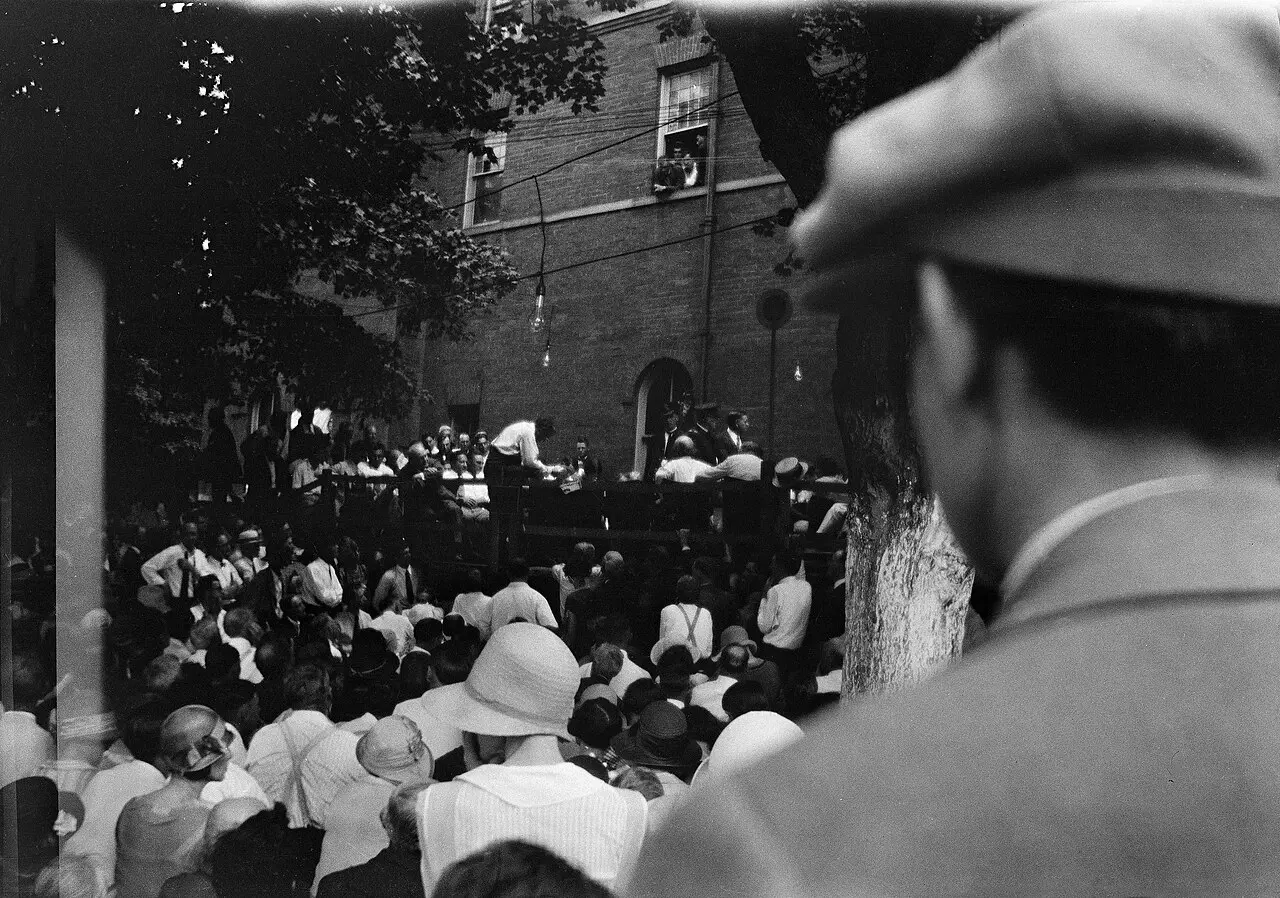
The drama peaked on July 20. With the courthouse lawn packed and the Tennessee heat blazing, Darrow did something unheard of: he called the prosecution's star, William Jennings Bryan, to the witness stand as an expert on the Bible. Under Darrow's questioning, Bryan admitted that the "days" of creation described in Genesis might not have been literal 24-hour days — that creation "might have continued for millions of years." The crowd roared. The next morning, Judge Raulston ruled Bryan's testimony irrelevant and struck it from the record.
Then came the strangest twist of all. Darrow stood up and asked the jury to find his own client guilty. It was strategy, not surrender: a guilty verdict was the only way to appeal the case to a higher court, and Darrow wanted the law itself — not one teacher — to face judgment. The move also denied Bryan the chance to deliver the grand closing speech he had spent weeks preparing.
Nine minutes of deliberation later, the jury agreed. Scopes was convicted and ordered to pay a $100 fine, the minimum allowed. Addressing the court, the young teacher said he had been "convicted of violating an unjust statute" and vowed to keep opposing it, calling the fine unjust. Five days later, on July 26, Bryan lay down for a Sunday afternoon nap in Dayton and never woke up. He was 65.
In 1927, the Tennessee Supreme Court threw out Scopes's conviction — not on principle, but on a technicality: the judge, not the jury, had set the fine, and only the jury had that power. The deeper question — who gets to decide what children are taught — went unanswered for decades. It was not until 1968 that the U.S. Supreme Court struck down a similar Arkansas anti-evolution law, ruling that it violated the First Amendment.
Why it matters: the Scopes trial was never really about one teacher in one Tennessee classroom. It was the first great public collision between science and scripture in American public life, fought in front of microphones and newsreel cameras. The argument it staged — about academic freedom, the role of religion in public schools, and who controls the curriculum — is still being fought today, in school boards and courtrooms across the country, a century later.
Photo: Clarence Darrow cross-examines William Jennings Bryan on the courthouse lawn during the Scopes trial in Dayton, Tennessee, July 1925. Courtesy of the Smithsonian Institution via Wikimedia Commons (no known copyright restrictions).