
The Battle That Ended America's Dream of a Short War
On July 21, 1861, hundreds of civilians came out to watch the Civil War's first major battle near Manassas, Virginia — and ended up fleeing for their lives as the Union army broke.
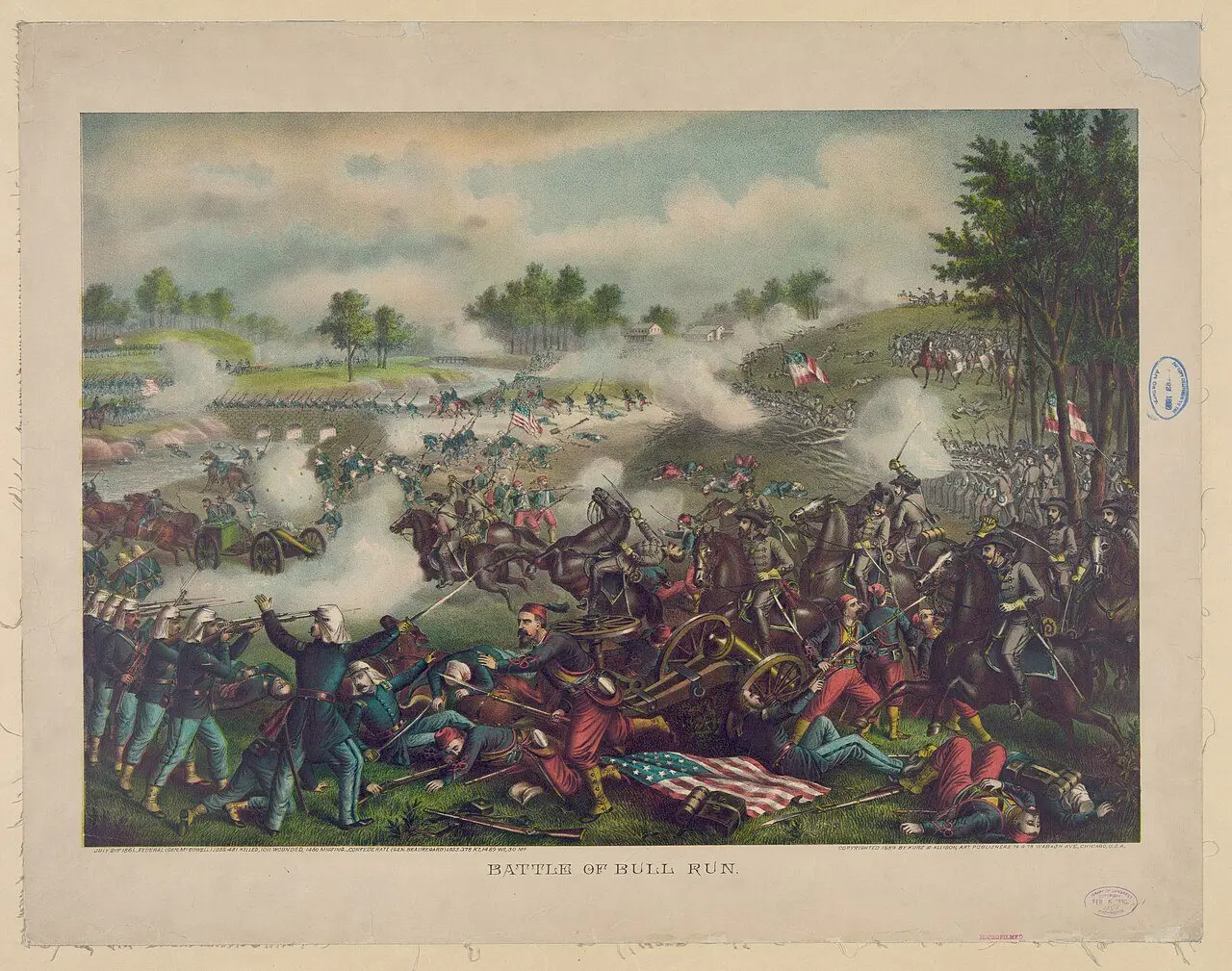
They came to watch a war. On the morning of July 21, 1861, hundreds of civilians — men, women, and children — traveled out from Washington to the countryside near Manassas, Virginia, to watch the battle they were sure was coming. They expected a spectacle: a quick, decisive Union victory that would put down the Southern rebellion in an afternoon. Nobody expected to spend the rest of the day running for their lives.
The war had begun just three months earlier with the Confederate attack on Fort Sumter. Northern newspapers and politicians were clamoring for action against the Confederate capital of Richmond, and President Abraham Lincoln finally yielded to the pressure, ordering Brigadier General Irvin McDowell to march his green Union army against the Confederate forces camped near Manassas Junction, roughly 30 miles west-southwest of Washington.
McDowell's plan was ambitious: swing around the Confederate left flank and crush the army of Confederate General P. G. T. Beauregard. What McDowell didn't know was that Confederate reinforcements were racing toward the battlefield — thousands of troops under General Joseph E. Johnston, arriving by railroad from the Shenandoah Valley in one of the first uses of railways to rush an army into battle.
The fighting opened well for the North. Union troops crossed Bull Run creek and drove the Confederates back toward Henry House Hill. Then the tide turned. On the hill, a brigade of Virginians under a little-known brigadier general named Thomas J. Jackson refused to break. By one famous account, Confederate General Barnard Bee rallied his faltering men by crying, "There stands Jackson like a stone wall!" — the moment that gave history "Stonewall" Jackson. Historians still debate whether those exact words were spoken, but the nickname stuck for good.
With fresh troops pouring in by rail, the Confederates launched a fierce counterattack. The Union line cracked, and what began as an orderly withdrawal collapsed into a panicked rout. Soldiers, supply wagons, and the same civilian sightseers who had come for the show all jammed the roads back to Washington in a chaos soldiers called the Great Skedaddle.
The toll stunned the nation: about 2,700 Union and just under 2,000 Confederate casualties — the bloodiest fighting yet in American history. Washington, which had treated the war almost as a spectator sport, now faced a frightening new reality: this would not be a short, glorious campaign. It would be a long, grinding war.
Why it matters: Bull Run shattered the illusion — on both sides — that the Civil War would end quickly. It forced the North to build a real, professional army and gave the South a confidence that would sustain four years of fighting. Everyone at Manassas learned the same lesson the country did: wars are never the spectacle you imagine.
Photo: Kurz & Allison's 1889 chromolithograph "Battle of Bull Run," public domain (via Wikimedia Commons).