The Missiles Go Home: How the Cuban Missile Crisis Ended
On October 28, 1962, Nikita Khrushchev announced the Soviet missiles would leave Cuba, ending thirteen days in which the world stood closer to nuclear war than ever before.
For thirteen days in October 1962, the world held its breath. It began on October 16, when President John F. Kennedy was shown photographs taken by an American U-2 spy plane: the Soviet Union was building nuclear missile sites in Cuba, ninety miles from Florida. By the time the crisis ended, the planet had come as close to nuclear war as it ever has.
Kennedy's advisers, a group called ExComm, debated everything from doing nothing to invading Cuba outright. On October 22, Kennedy went on television and announced a naval 'quarantine' — a blockade in all but name — to stop more Soviet weapons from reaching the island. Soviet ships approaching the quarantine line stopped or turned back. The standoff tightened.
Then came the weekend the crisis nearly slipped its leash. On Saturday, October 27 — 'Black Saturday' — Soviet leader Nikita Khrushchev sent a second, tougher letter, this time demanding that America also remove its nuclear missiles from Turkey. That same day, a U-2 was shot down over Cuba, killing its pilot, Major Rudolf Anderson. In Moscow and Washington, no one could be sure the other side was still in control of events.
What the public didn't know was that a deal was already taking shape in secret. On the evening of the 27th, Attorney General Robert Kennedy met Soviet Ambassador Anatoly Dobrynin and offered a bargain: the Soviets would remove their missiles from Cuba, America would publicly pledge never to invade the island — and, privately, the United States would remove its own Jupiter missiles from Turkey within months.
On the morning of October 28, Khrushchev's answer came over Radio Moscow. The Soviet Union would dismantle the missile sites and crate the weapons for the voyage home. The thirteen days were over.
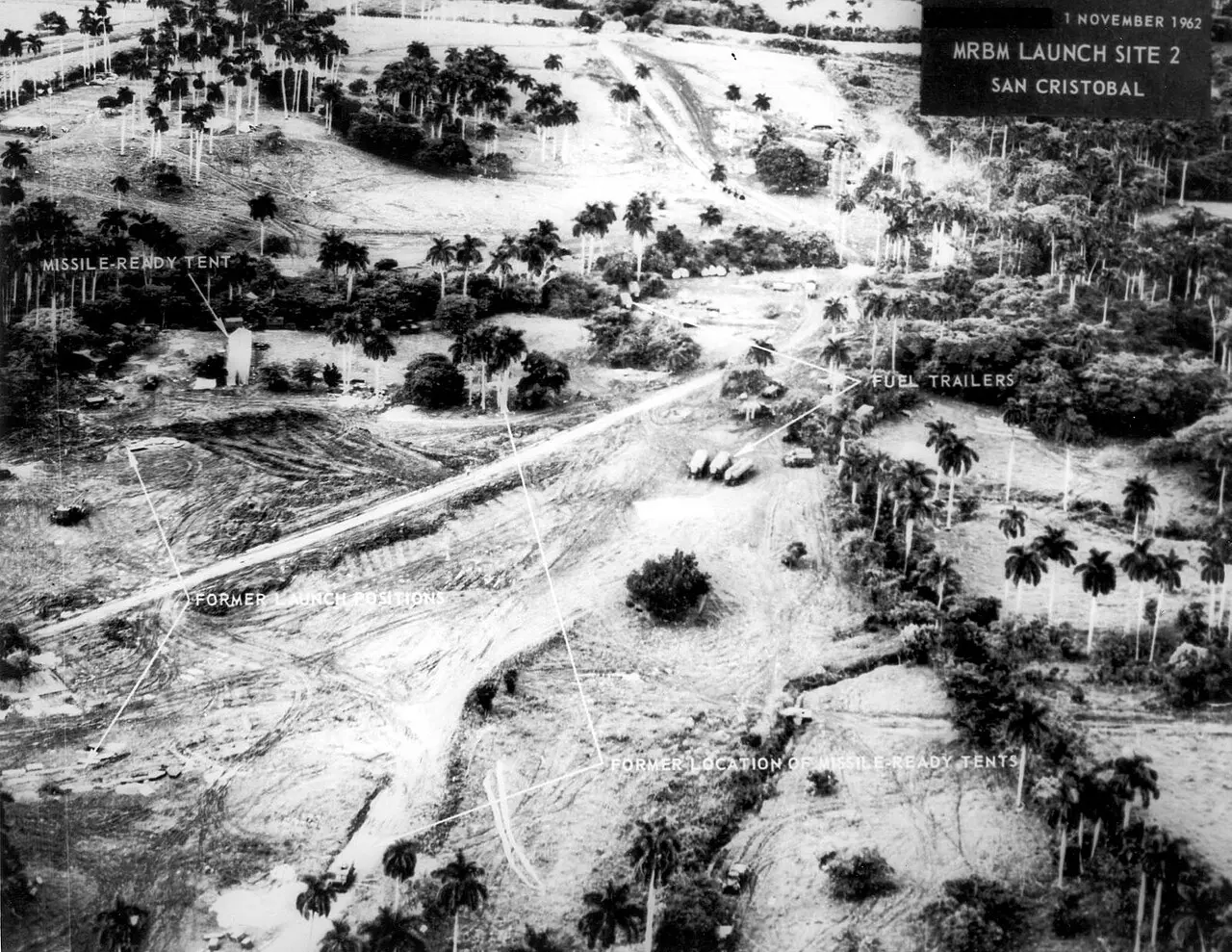
American reconnaissance planes watched the dismantling in the weeks that followed — photographing missile equipment being loaded onto Soviet ships at Cuban ports — and the naval quarantine stayed in place until November 20. The crisis left two lasting gifts: a direct 'hotline' between Washington and Moscow so the two leaders could never again misunderstand each other in a crisis, and, the following year, a treaty banning nuclear tests in the atmosphere, in space, and underwater.
The Cuban Missile Crisis is still studied in war colleges and business schools as the textbook case of brinkmanship — and of how it ends. It ended not with a missile launched, but with a letter answered: with two rivals, each terrified, finding the one deal both could live with.
Photo: U.S. aerial reconnaissance photograph of the San Cristobal missile site in Cuba, November 1, 1962, taken days after the crisis ended — public domain (via Wikimedia Commons).