The Day Two Frenchmen Flew Into History
On November 21, 1783, two Frenchmen climbed into a wicker basket beneath a giant decorated balloon and made the first free flight in human history.
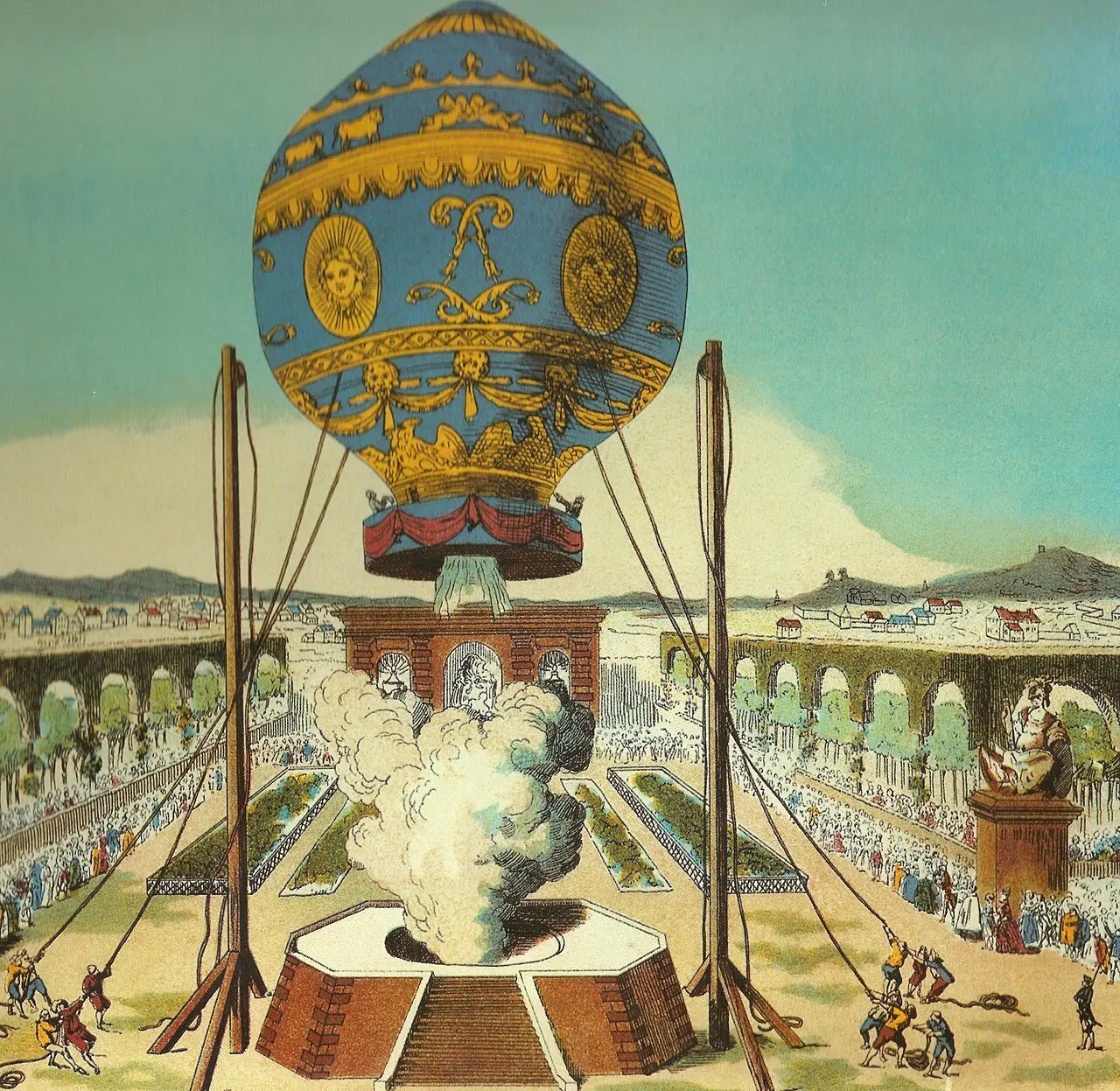
For the whole of human history, the sky had belonged to the birds. On a gray November afternoon in 1783, in a Paris park, two men climbed into a wicker basket hanging beneath an enormous decorated balloon — and then, with the king watching and a large crowd holding its breath, they simply let go of the Earth.
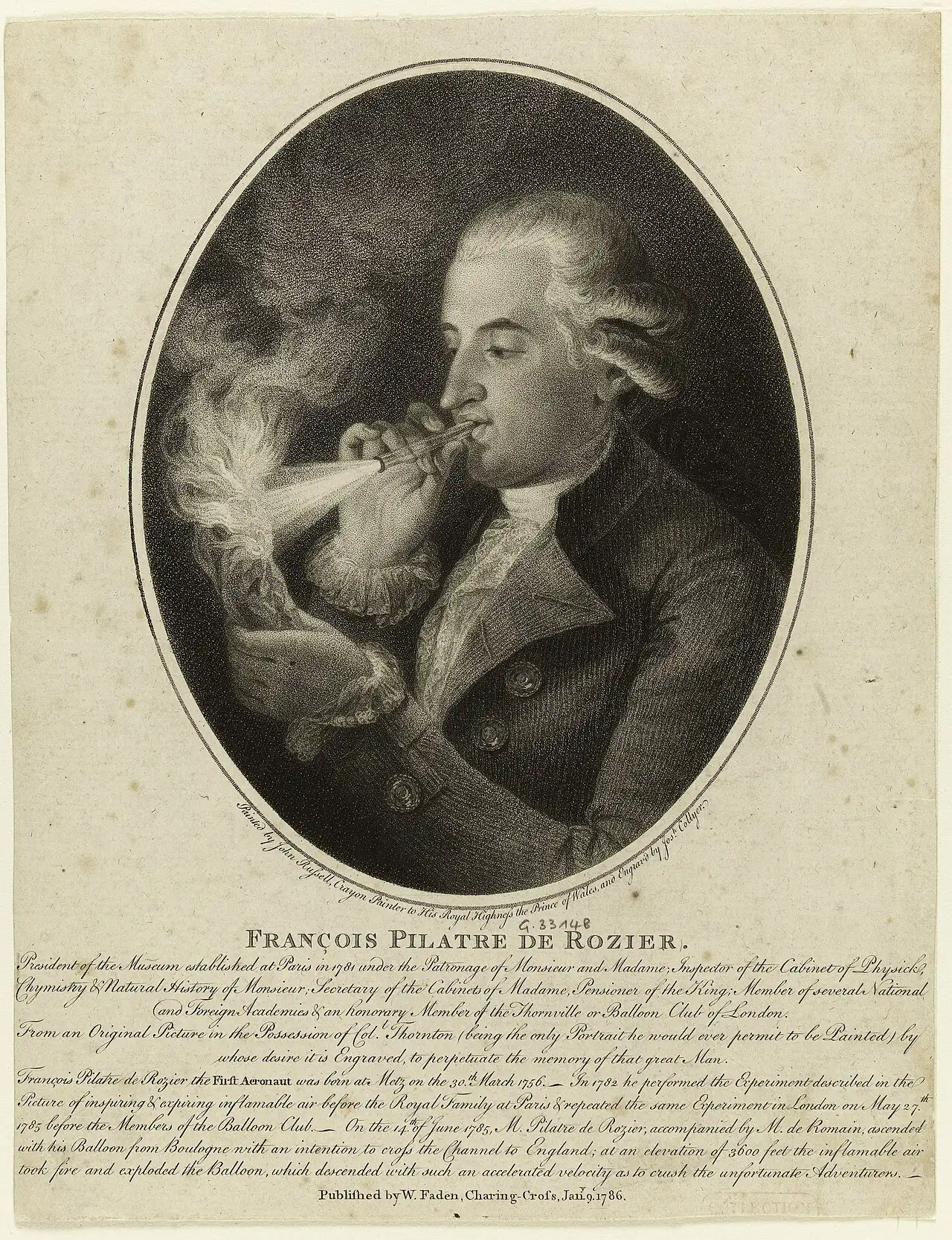
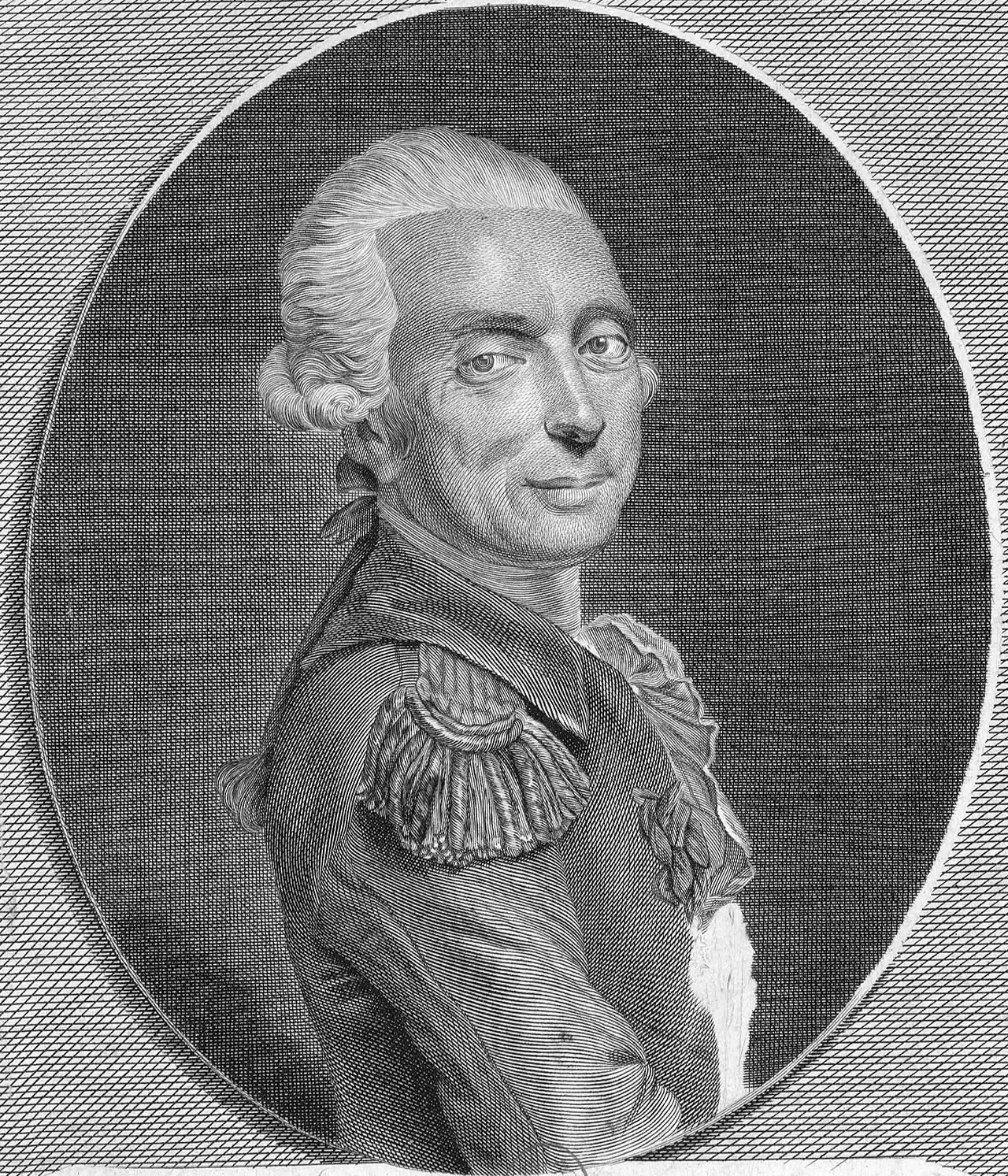
The scientist in the basket was Jean-François Pilâtre de Rozier, a 29-year-old chemistry and physics teacher. Beside him stood François Laurent, the Marquis d'Arlandes, an officer in the French royal guard. Neither man was originally supposed to be there: King Louis XVI had first decreed that the honor — and the mortal risk — of the first manned flight should go to two condemned criminals. De Rozier, with help from well-connected friends, persuaded the king that such a milestone belonged to men of standing. The king relented.
Their balloon was the work of brothers Joseph-Michel and Jacques-Étienne Montgolfier, paper manufacturers obsessed with the way hot air rose. They had flown an unmanned balloon that June, and that September — before Louis XVI and Marie Antoinette at Versailles — they sent up a sheep, a duck, and a rooster. The sheep was named Montauciel, “Climb-to-the-sky.” The animals landed safely. In October came tethered test flights with humans aboard, rising only as far as the rope allowed. Everything pointed to one question: could people fly free?
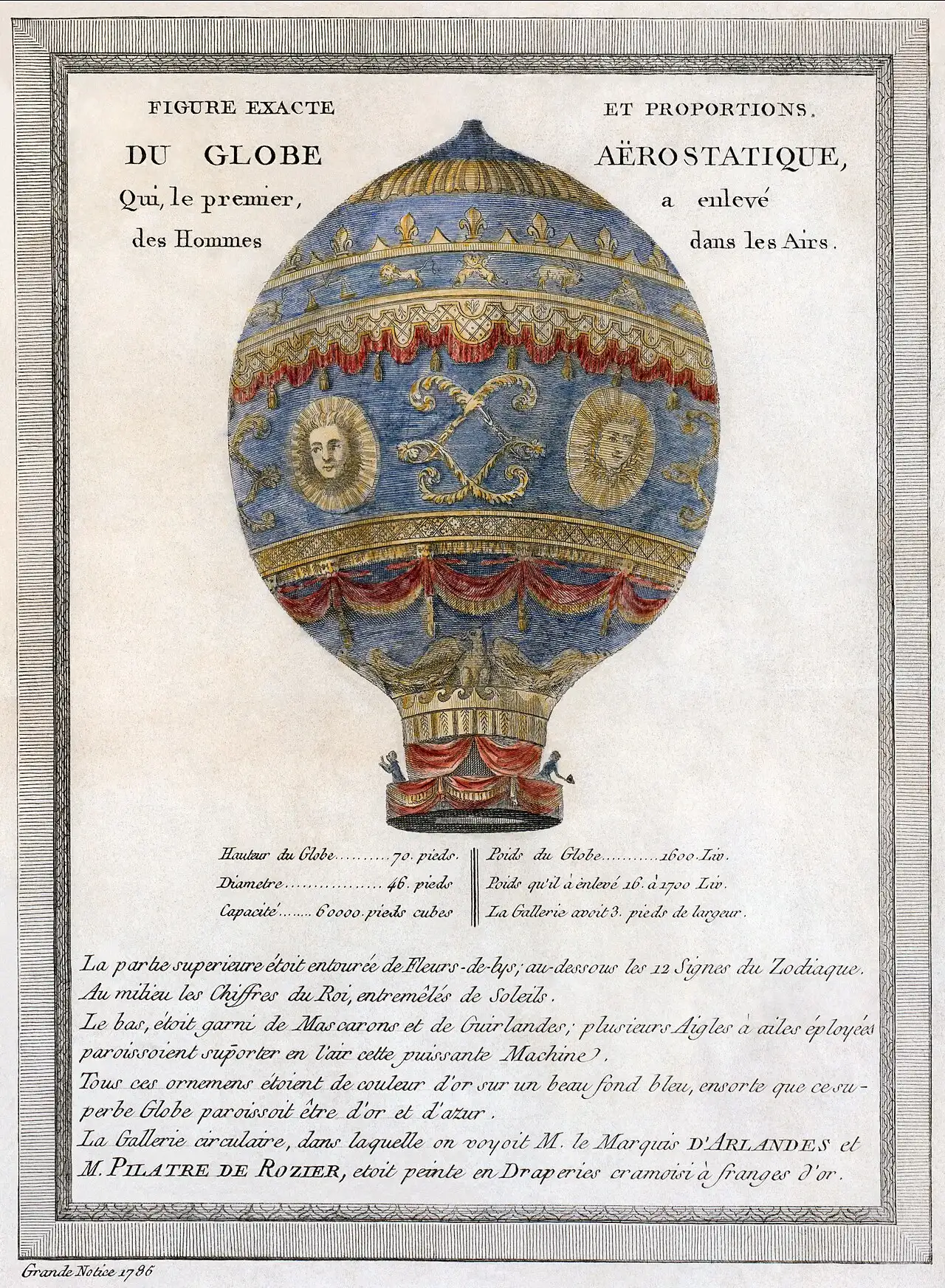
The answer came at 1:54 p.m. on November 21, 1783, in the garden of the Château de la Muette. The great balloon — some 75 feet tall, swathed in blue and gold with suns, zodiac signs, and the king's monogram — rose slowly over Paris. For 25 minutes de Rozier and d'Arlandes drifted southeast, reaching some 3,000 feet, feeding the fire and beating out embers that threatened to scorch the fabric. They touched down at the Butte-aux-Cailles, then on the city's edge, about five and a half miles from where they started — with fuel enough aboard to fly four times farther. On landing, the two men drank champagne to celebrate, a tradition balloonists keep to this day.
It was the first confirmed free flight by humans — the moment our species left the ground through daring rather than myth. Within ten days, a rival inventor, Jacques Charles, flew a hydrogen balloon from the Tuileries Gardens. Balloon mania swept Europe, and within a year the first woman had flown. Every aircraft since, from the Wright Flyer to the jets crossing the sky today, descends from those 25 minutes over Paris.
Photo: Claude-Louis Desrais, public domain (via Wikimedia Commons).
More images (via Wikimedia Commons): portraits of Jean-François Pilâtre de Rozier (Joseph Collyer, CC0) and the Marquis d'Arlandes (public domain); an engraved notice of the 1783 balloon (public domain).