Bloody Sunday in Dublin
On November 21, 1920, Dublin endured three separate waves of killing in a single day — IRA assassinations at dawn, a massacre of football fans that afternoon, and murders in Dublin Castle at night.
During Ireland's War of Independence, the morning of Sunday, November 21, 1920, began with a coordinated strike. Michael Collins's elite IRA unit, known as the Squad or the Twelve Apostles, fanned out across Dublin to assassinate the "Cairo Gang" — a network of undercover British intelligence officers living in the city. At address after address, gunmen shot their targets: about 15 men were killed or fatally wounded, most of them British Army officers, along with a police sergeant and two Auxiliaries. At least two civilians were killed as well. British intelligence in Ireland was shattered in a single morning, and panicked agents fled to the safety of Dublin Castle.
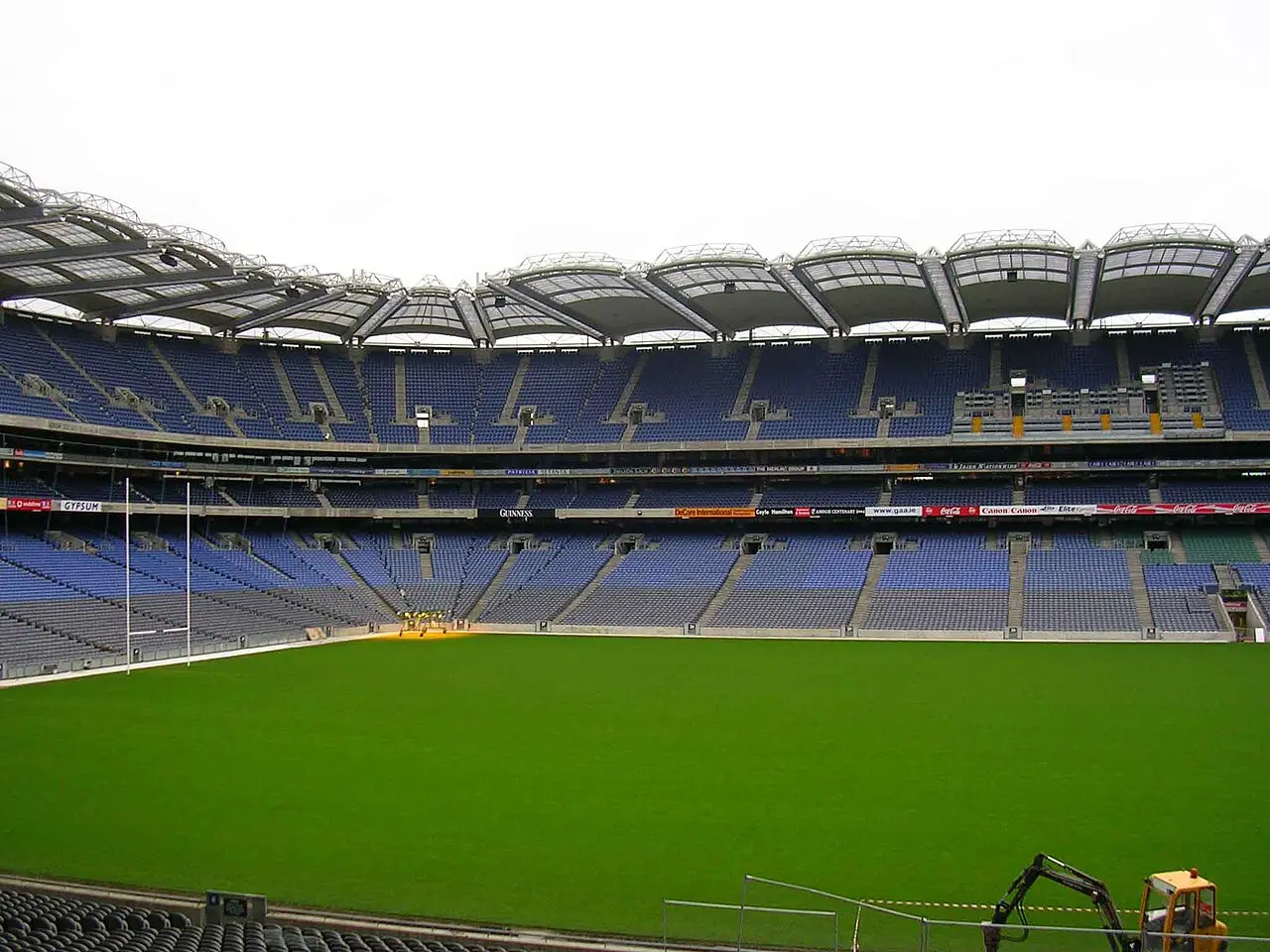
That afternoon, Dublin and Tipperary met in a challenge football match at Croke Park, a fundraiser for the dependents of republican prisoners. Nearly 10,000 spectators filled the ground; the throw-in, scheduled for 2:45, was delayed until 3:15 by the crush of the crowd. Minutes into the match, witnesses said, an airplane circled the stadium twice and fired a red flare — the signal. A mixed force of Royal Irish Constabulary men, Auxiliaries, and soldiers stormed the ground, cordoned it, and opened fire on the crowd. The shooting lasted less than two minutes, but the panic lasted far longer: spectators rushed the exits, crushes formed, and hundreds of people threw themselves over a twenty-foot wall to escape.
Fourteen civilians were killed or fatally wounded and at least 60 were wounded. Three of the dead were children. Among the dead was Tipperary player Michael Hogan, for whom the stadium's Hogan Stand is named. A military inquiry later judged the shooting indiscriminate and excessive; the authorities' claim that their men had been fired on first was contradicted by nearly every other witness.
That night, at Dublin Castle, two republicans who had helped plan the morning's operation — Dick McKee and Peadar Clancy — and a civilian arrested with them, Conor Clune, were beaten and shot dead. Their captors said they had been killed trying to escape. Two other IRA men would be convicted and hanged the following March for their part in the assassinations.
More than 30 people were killed or fatally wounded in Dublin that day. Bloody Sunday hardened Irish public opinion against British rule and became one of the defining dates of the War of Independence — a day when a football match, an intelligence war, and a prison killing collided, and a nation remembered all three.
Photo: Jcmurphy, CC BY-SA 3.0 (via Wikimedia Commons).