The Day the Music Died
On February 3, 1959, a small plane crashed in an Iowa cornfield, killing rock-and-roll stars Buddy Holly, Ritchie Valens, and the Big Bopper — a loss Don McLean immortalized as "the day the music died."
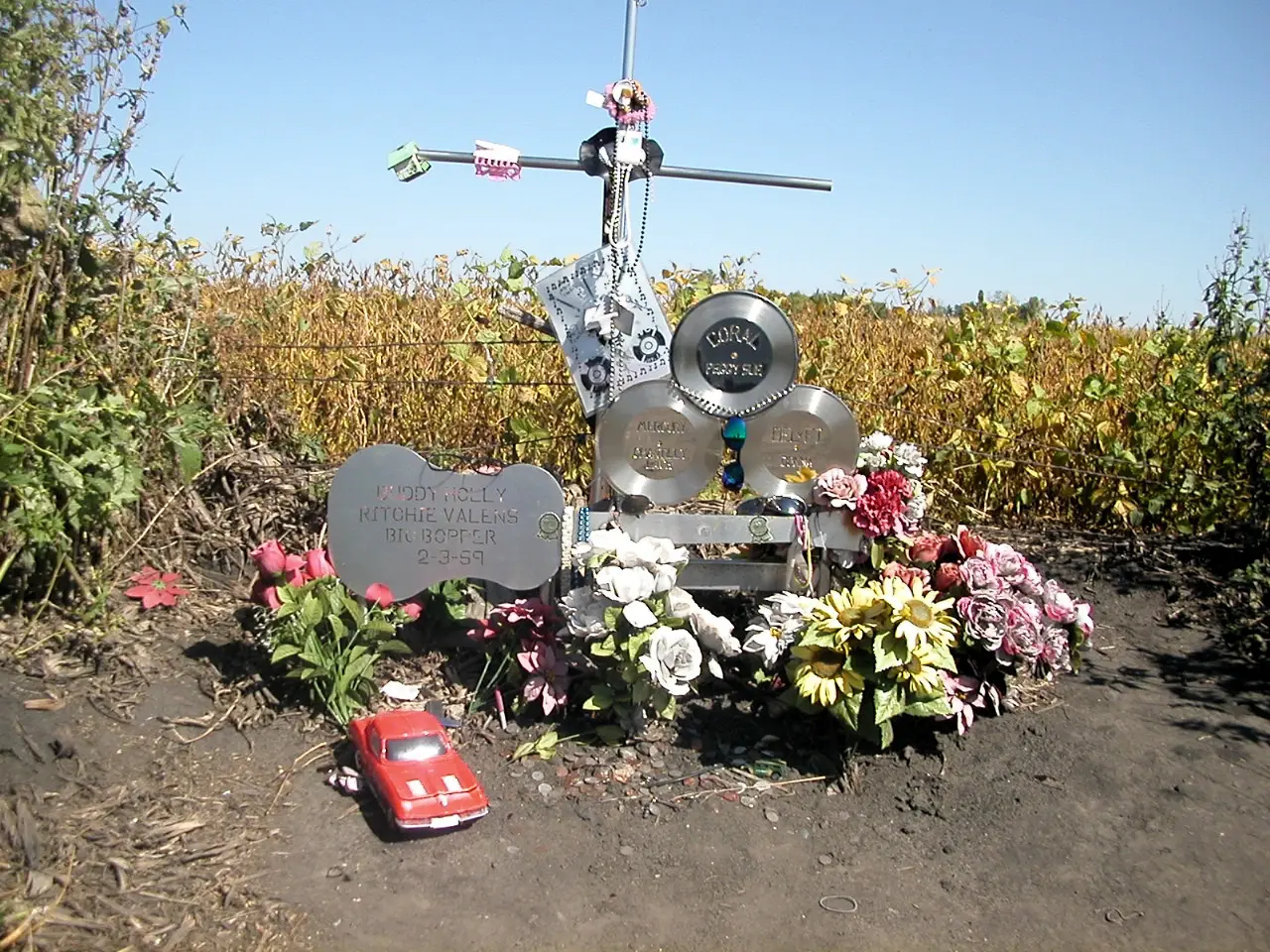
Just after 1 a.m. on February 3, 1959, a small plane took off from a snowy Iowa airfield and never reached its destination. On board were three of the brightest young stars in rock and roll. Twelve years later, Don McLean would call that night "the day the music died."
Buddy Holly, 22, of Lubbock, Texas; Ritchie Valens, 17, of Los Angeles; and J. P. "The Big Bopper" Richardson, 28, the Texas disc jockey turned hitmaker of "Chantilly Lace," were touring the Upper Midwest on the Winter Dance Party. It was a miserable trek: the tour buses kept breaking down in subzero cold, and the musicians were battling flu and even frostbite. After playing the Surf Ballroom in Clear Lake, Iowa, on February 2, Holly chartered a four-seat Beechcraft Bonanza to fly ahead to the next stop in Moorhead, Minnesota, and get a decent night's sleep.
The seats on that plane became a small, cruel lottery. Richardson, sick with the flu, talked Holly's bandmate Waylon Jennings into giving up his seat. Valens won the last seat in a coin toss against guitarist Tommy Allsup. Pilot Roger Peterson took off into poor winter weather late that night; minutes later, the plane went down in a cornfield about five miles northwest of the Mason City airport. There were no survivors.
They were only getting started. Holly — born Charles Holley — wrote his own songs, a rarity then, and hits like "Peggy Sue" and "That'll Be the Day" helped invent the self-contained rock band; Bob Dylan and Paul McCartney both counted him as a formative influence. Valens, born Richard Valenzuela, had already scored with "Donna" and "La Bamba," sung in Spanish he barely spoke, and would be portrayed in the 1987 film La Bamba. Richardson's booming "Chantilly Lace" had been a Top 10 hit just months earlier.
McLean's "American Pie," a number-one hit in 1972, fixed February 3, 1959, in the cultural memory as the end of rock's first innocent era. Every year, fans gather at the Surf Ballroom for a memorial concert, and pilgrims still walk the cornfield to the guitar-shaped monument marking the crash site. The day the music died — and the reason the music that followed owed so much to three young men who never got to hear it.
Photo: Dennis Fernkes, public domain (via Wikimedia Commons)