The Dawn Paris Rose Up: Birth of the Paris Commune
On March 18, 1871, Parisian workers and soldiers defied the French government, seized the city's cannons, and launched the Paris Commune — the world's first workers' government.
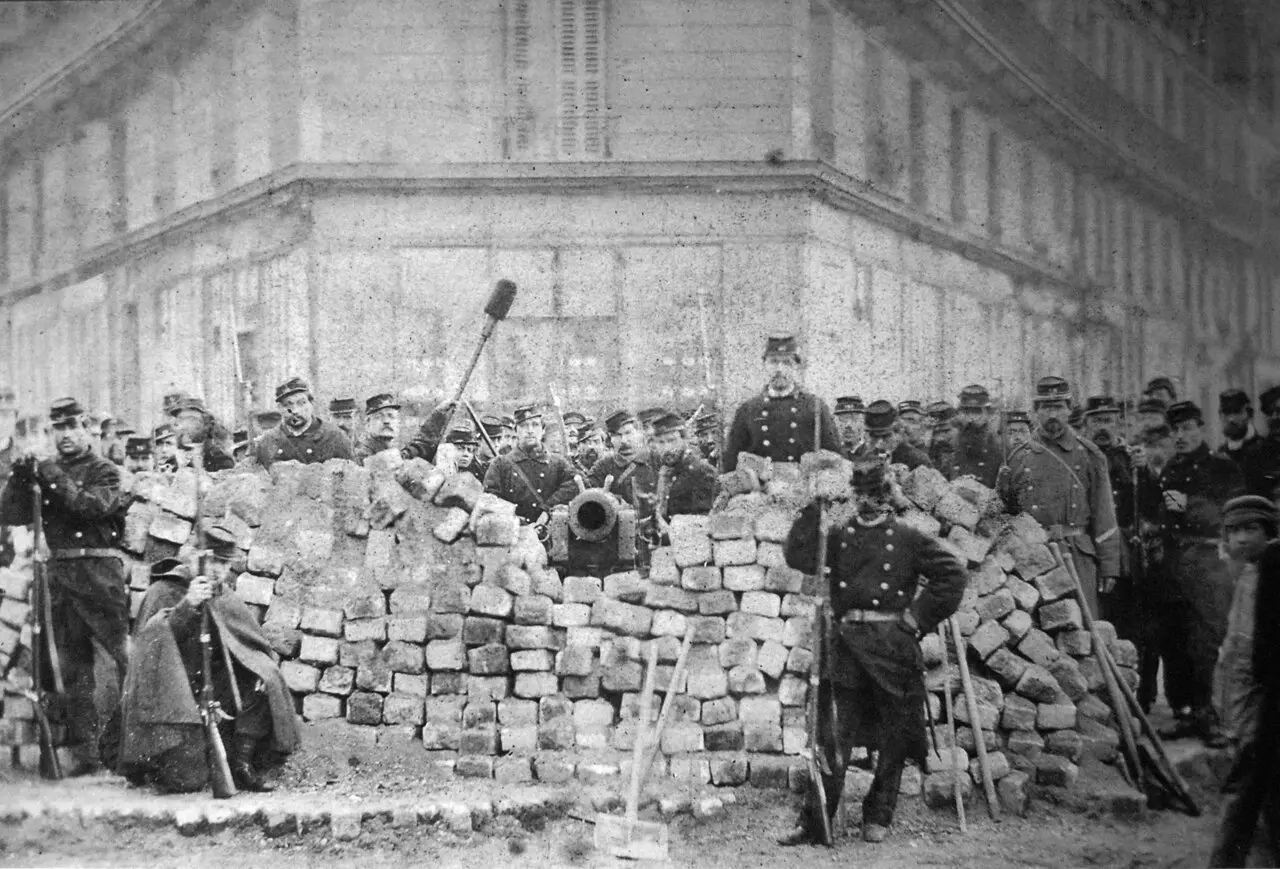
At dawn on March 18, 1871, French army troops crept up Montmartre hill in Paris with orders to seize the cannons of the National Guard. By nightfall, Paris belonged to its workers — and the government had fled to Versailles.
The spark was humiliation. France had just lost the Franco-Prussian War; Paris had endured a brutal four-month siege in which its people starved, and the new national government, led by Adolphe Thiers, had surrendered on terms Parisians considered treasonous. Thiers, ruling from Versailles, feared the armed, radicalized workers of the capital. On the morning of March 18, he sent soldiers to haul away the National Guard's artillery parked on Montmartre.
It went wrong immediately. The cannons were too heavy to move without horses, the operation took hours, and crowds of Parisians — many of them women — gathered, pleaded with the soldiers, and fraternized with them. When officers ordered the troops to fire on the crowd, the soldiers refused. Two generals, Lecomte and Clément-Thomas, were seized and shot by the enraged crowd. The army melted away; Thiers and his ministers fled to Versailles; and the Central Committee of the National Guard took possession of the Hôtel de Ville. Paris, in the words of one witness, was suddenly free.
Elections followed on March 26, and on March 28 the Commune was formally proclaimed before a huge crowd at the Hôtel de Ville. For 72 days — until May 28 — Paris was governed by an elected council of workers, artisans, journalists, and radicals, among them foreigners like the Hungarian labor organizer Léo Frankel and the Polish general Jarosław Dąbrowski, who commanded the Commune's defenses. The Commune separated church and state, remitted rents owed during the siege, abolished child labor, and decreed that workers could take over workshops abandoned by their owners.
It ended in blood. In the 'Bloody Week' of May 21–28, the French army stormed back into Paris and crushed the Commune, killing thousands of Communards and executing many more. But the idea survived the barricades. Karl Marx, who had watched events unfold from London, made the Commune famous worldwide with his pamphlet The Civil War in France, and its red flag flew over labor movements on every continent. March 18 is still commemorated by the left around the world as the day ordinary Parisians — bakers, seamstresses, and schoolteachers — ran a great city themselves, if only for a spring.
Photo: unknown photographer, 1871, public domain.