Justice, Not Vengeance: The Nuremberg Trials Begin
On November 20, 1945, the Nuremberg trials opened in Courtroom 600, putting Nazi leaders in the dock and building modern international law.
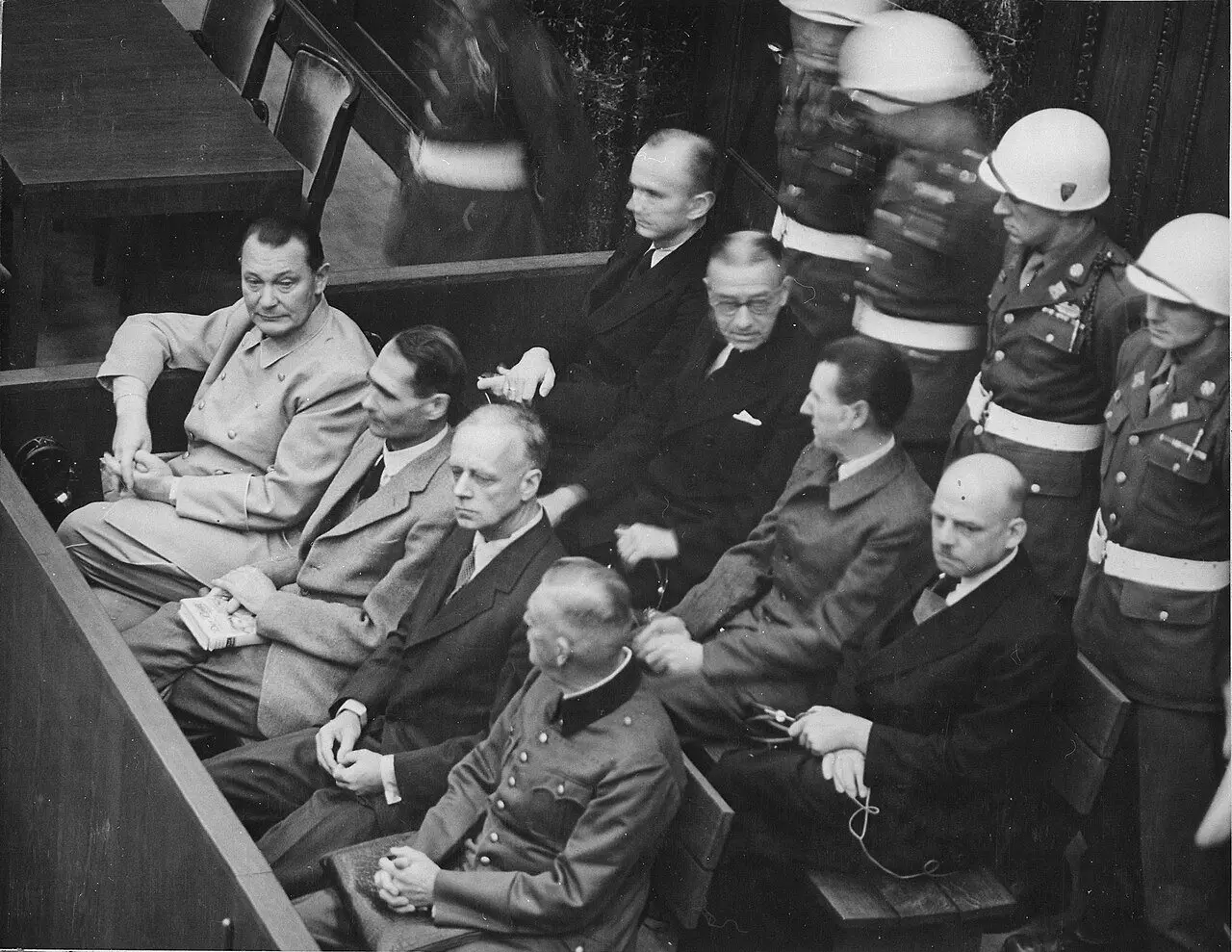
The easy answer was a rope and a firing squad. The Allies chose the harder one: a courtroom.
When Germany surrendered in 1945, some of the victors wanted vengeance without ceremony. Winston Churchill and the American Treasury Secretary favored summary execution for the top Nazi leaders — no speeches, no trials. America's Secretary of War, Henry Stimson, argued the opposite: a court would build a public record that no firing squad could. President Truman sided with Stimson and appointed a sitting Supreme Court justice, Robert H. Jackson, to lead the American prosecution.
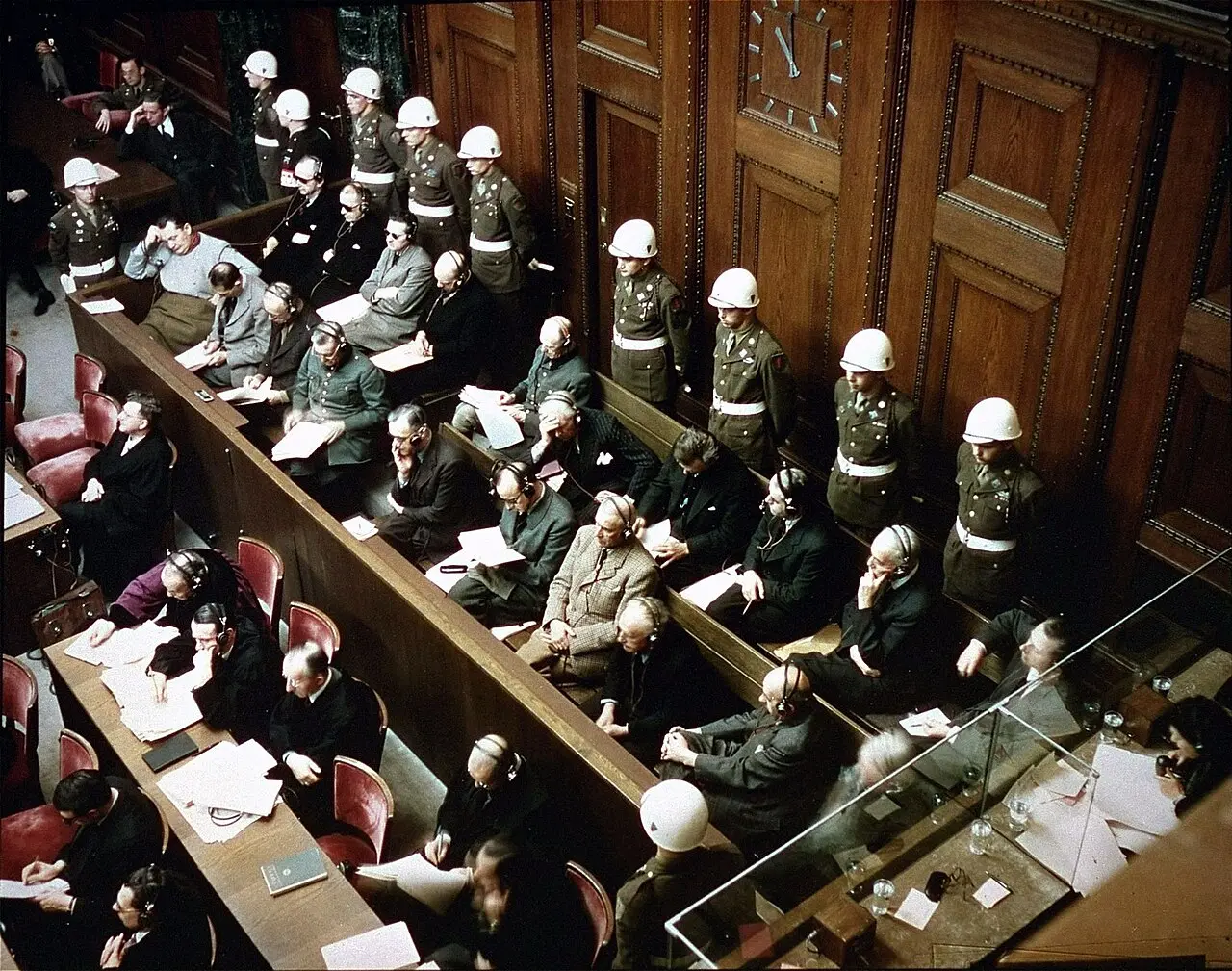
The four Allied powers — the United States, Britain, France, and the Soviet Union — signed the London Charter on August 8, 1945, defining the charges: crimes against peace, war crimes, crimes against humanity, and conspiracy. Nuremberg was chosen because its Palace of Justice was still standing and had a prison attached. At 10:00 a.m. on November 20, 1945, the International Military Tribunal convened in Courtroom 600. Twenty-four men had been indicted; twenty-two sat in the dock — one was tried in absentia, one had killed himself before the trial, and one was excused for ill health. All pleaded not guilty. The proceedings ran simultaneously in English, French, Russian, and German — one of the first times large-scale simultaneous interpretation had ever been attempted.
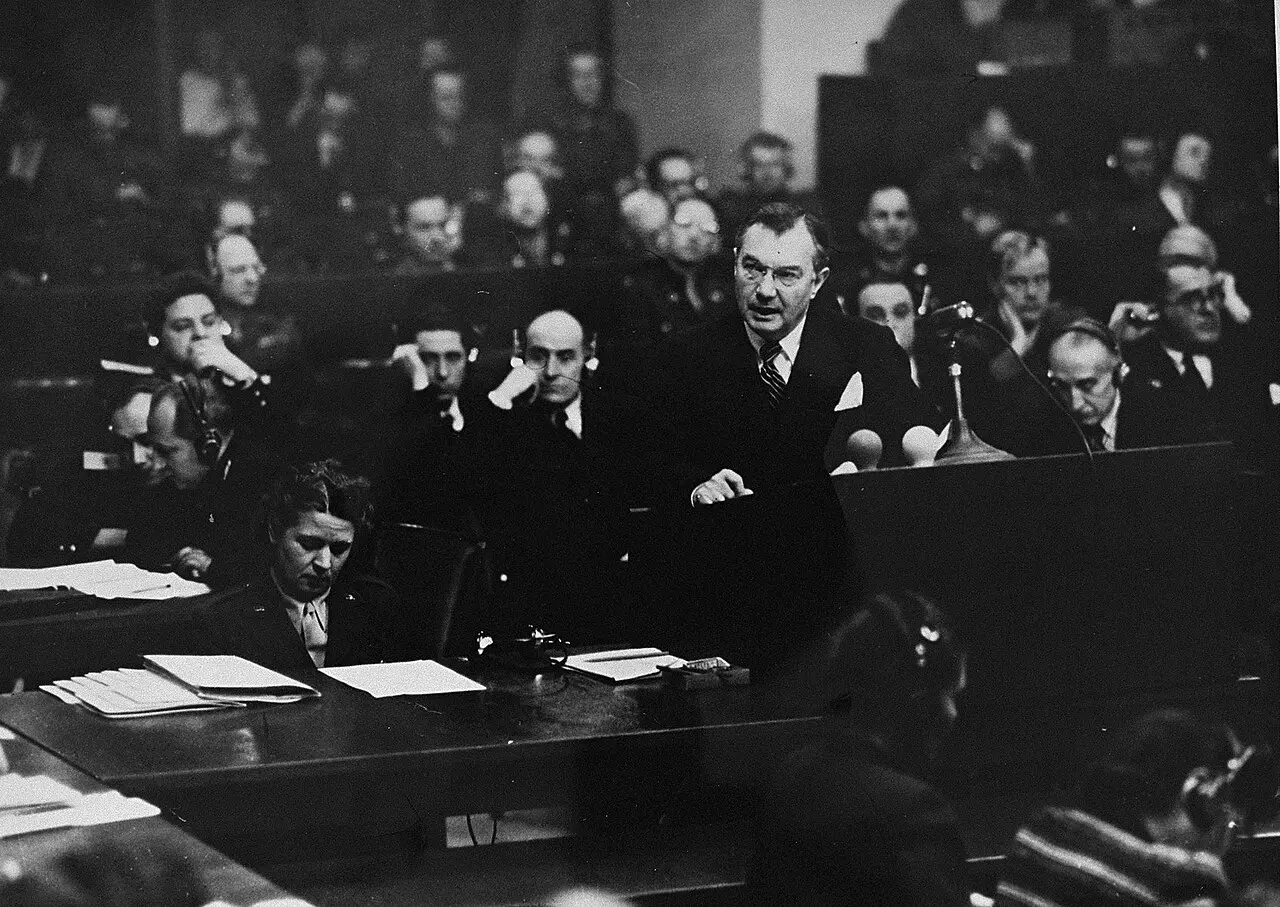
The next day, Jackson rose to open the prosecution, and spoke for hours. "That four great nations, flushed with victory and stung with injury, stay the hand of vengeance and voluntarily submit their captive enemies to the judgment of law," he said, "is one of the most significant tributes that Power has ever paid to Reason." He made the tribunal's boldest argument plain: that no defendant could escape responsibility by claiming he was merely following orders.
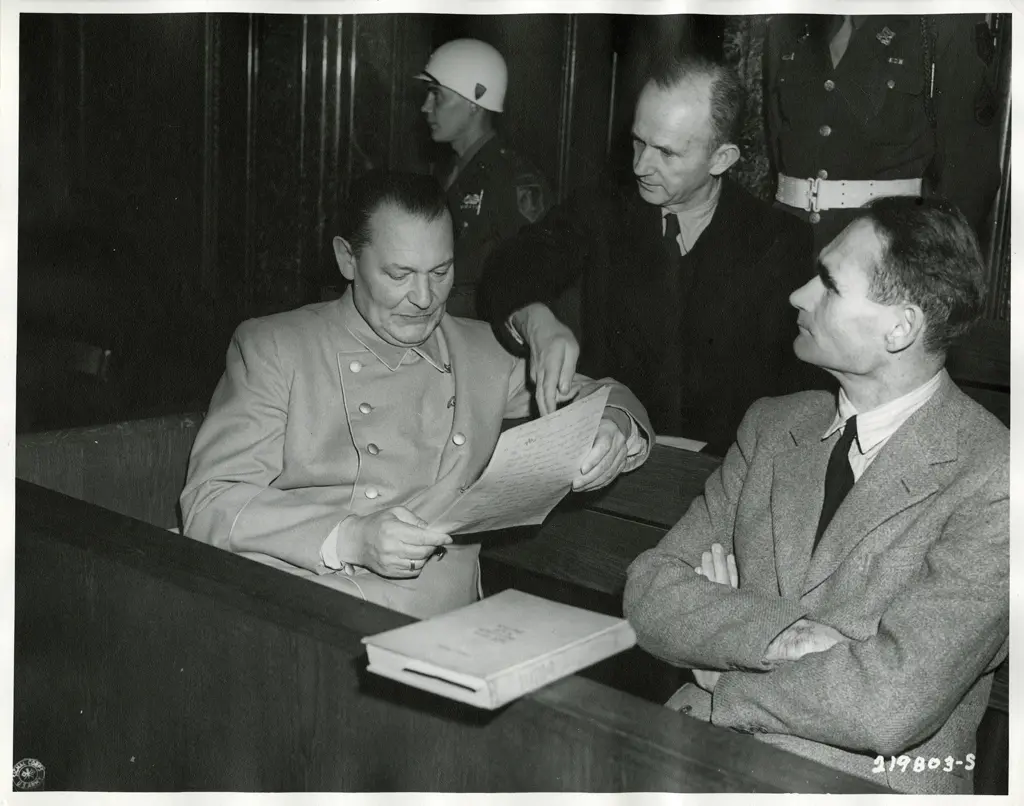
The trial ran for nearly a year. On October 1, 1946, the judges delivered their verdicts: twelve men sentenced to death, seven given prison terms, three acquitted. Hermann Göring, once Hitler's designated successor, cheated the hangman with smuggled cyanide hours before the executions; the other ten were hanged on October 16, 1946.
Nuremberg was not revenge dressed up in robes — it was the birth of modern international law. Its principles were adopted by the United Nations, became the foundation of the 1948 Genocide Convention and the 1949 Geneva Conventions, and inspired the Nuremberg Code on human experimentation. Every war-crimes tribunal since, from The Hague onward, stands on ground first broken in Courtroom 600.
Photo: U.S. government photographer, public domain (via Wikimedia Commons).
More images (via Wikimedia Commons, public domain; U.S. Army and government photographers): the defendants in the dock at Nuremberg; prosecutor Robert H. Jackson; Hermann Göring, Karl Dönitz and Rudolf Hess conferring.