Sunk by a Whale: The Real Moby-Dick
On November 20, 1820, a sperm whale rammed and sank the Nantucket whaleship Essex in the Pacific, beginning an 83-day survival ordeal that inspired Moby-Dick.
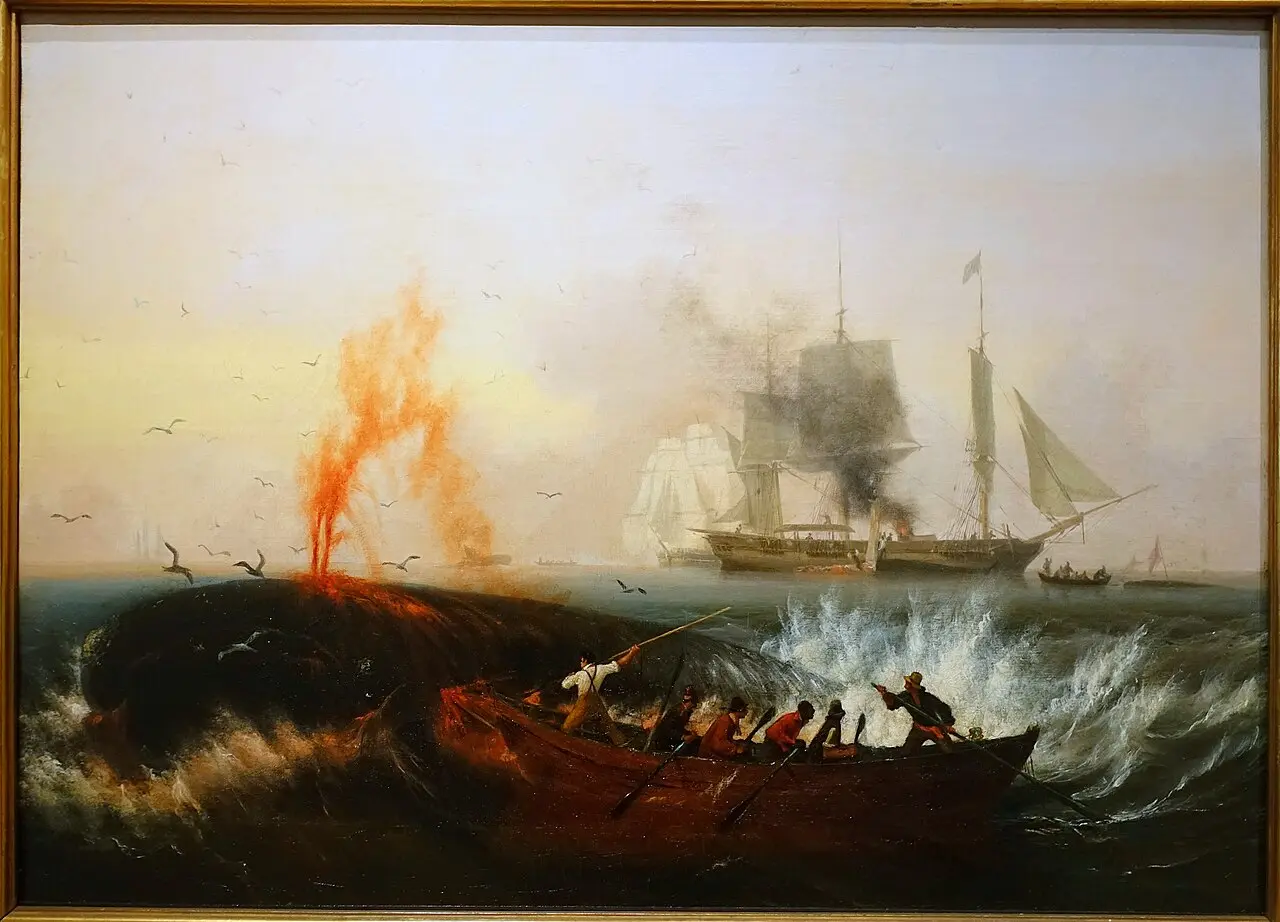
The Essex was a 238-ton whaleship out of Nantucket, Massachusetts, hunting the Pacific under Captain George Pollard Jr. She had sailed in August 1819 with a crew of 21 — twenty by the time she reached the whaling grounds, after one man jumped ship at the Ecuadorian port of Atacames. On the morning of November 20, 1820, about 2,000 nautical miles west of South America, the hunters became the hunted.
First mate Owen Chase was the first to see it: an enormous bull sperm whale, which Chase estimated at 85 feet long, bearing down on the ship. The whale struck the Essex head-on with what Chase later called "an appalling and tremendous jar," then rammed her a second time. The ship capsized. Twenty men escaped into three small open whaleboats with what bread and water they could grab from the wreck.
The crew then made a fateful choice. Instead of sailing for the nearest islands, they steered for the distant coast of South America — thousands of miles away — because they wrongly feared the closer islanders were cannibals. The decision sent them beating against wind and current into one of the longest survival ordeals in maritime history.
After a month at sea they reached uninhabited Henderson Island, where they found only seabirds' eggs and brackish water. Three men chose to stay there — they were rescued the following April — while the other seventeen set out again for South America. In the weeks that followed, men died of starvation, dehydration, and exposure. The survivors, in desperation, ate the bodies of the dead. In Captain Pollard's boat, the last four men drew lots to choose who would be sacrificed so the others might live; the lot fell to seventeen-year-old Owen Coffin, the captain's young cousin.
Rescue came in February 1821, 83 days after the sinking. Pollard and one companion were picked up by the ship Dauphin; Chase and two others by the brig Indian. The second mate's boat was never found. Of the twenty men who had watched their ship go down, eight survived: five from the whaleboats, three from Henderson Island.
Chase published his account in 1821 — Narrative of the Most Extraordinary and Distressing Shipwreck of the Whale-Ship Essex — and the cabin boy, Thomas Nickerson, later wrote his own. The story reached a young Herman Melville, who wove it — along with tales of a real white whale called Mocha Dick — into his 1851 novel Moby-Dick. The Essex remains the only fully documented case of a whale sinking a large ship: nature's answer, once, to the whalers.
Photo: Painting by Ambroise Louis Garneray (c. 1835), public domain (via Wikimedia Commons).