Around the World in 72 Days: Nellie Bly Sets Sail
On November 14, 1889, reporter Nellie Bly boarded a steamer in New York determined to circle the globe faster than Jules Verne's fictional Phileas Fogg.
She had proposed the trip a year earlier, and her editors had hesitated — not because the idea was impossible, but because she was a woman. Then, with just two days' notice, Joseph Pulitzer's New York World gave her the go-ahead. At 9:40 on the morning of November 14, 1889, Nellie Bly boarded the steamer Augusta Victoria and set out to beat Phileas Fogg.
Bly — the pen name of Elizabeth Cochrane — was already famous. Two years earlier she had gotten herself committed to the insane asylum on New York's Blackwell's Island, then written a searing exposé of the horrors inside. Her reporting had prompted a government investigation and real reforms. Now she wanted to turn fiction into fact: to circle the globe faster than the eighty days Jules Verne had given his fictional hero in Around the World in Eighty Days.
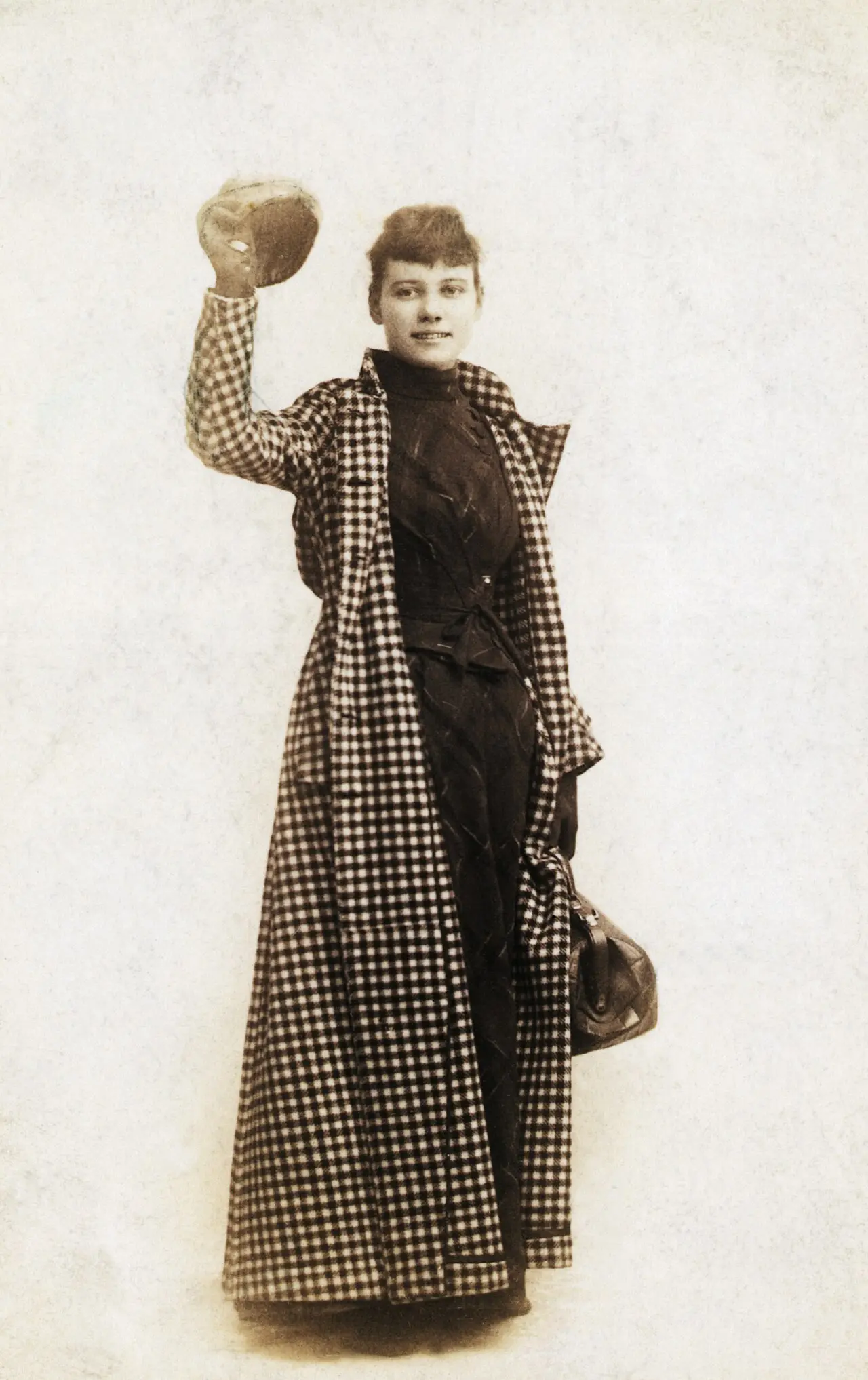
She traveled light. She wore the dress she had on, a sturdy overcoat — the checked traveling cloak of her famous portrait — and carried a small bag with a few changes of underwear and her toiletries. Most of her money, £200 in English bank notes and gold plus some American currency, she carried in a bag tied around her neck. Her route would cover 24,899 miles by steamship, train, rickshaw, sampan, horse, and burro.
The World promoted the journey relentlessly, even running a "Nellie Bly Guessing Match" in which readers tried to predict her arrival time to the second — nearly a million entries poured in. A rival paper, the Cosmopolitan, sponsored its own reporter, Elizabeth Bisland, to race around the world in the opposite direction and beat them both. Along the way, Bly stopped in Amiens, France, to meet Jules Verne himself. She visited a leper colony in China. In Singapore, she bought a monkey.
Thanks to the new submarine telegraph cables, she could wire short progress reports home, and the world followed her dash across Asia and the Pacific. She completed the journey in 72 days, 6 hours, 11 minutes and 14 seconds — smashing Fogg's fictional record and setting a real one — and soon wrote it all up in a book, Around the World in Seventy-Two Days.
Bly had already pioneered a new kind of journalism, the undercover investigation. With one steamer ticket and a checked cloak, she added another: the stunt as serious reporting — and proved, to anyone still doubting, that a woman could outrun fiction itself.
Photo: public domain portrait of Nellie Bly, 1889 (via Wikimedia Commons).