Struck Twice by Lightning, Apollo 12 Flew to the Moon Anyway
On November 14, 1969, lightning struck Apollo 12 twice just seconds after liftoff — but a young flight controller's quick thinking saved the moon mission.
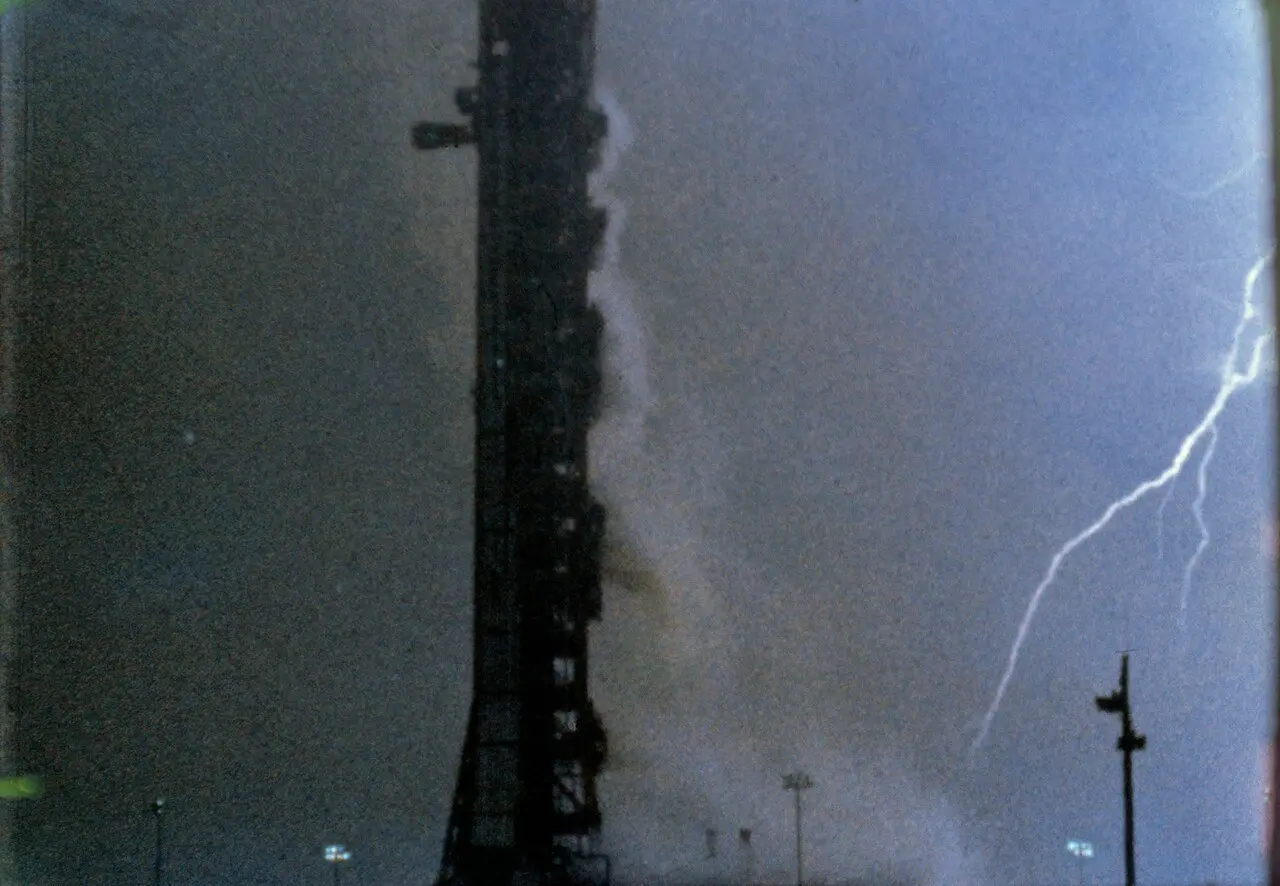
Thirty-six seconds after liftoff, the lightning hit. Sixteen seconds later, it hit again. The crew of Apollo 12 was flying to the Moon inside a thunderstorm's favorite target — and nobody turned back.
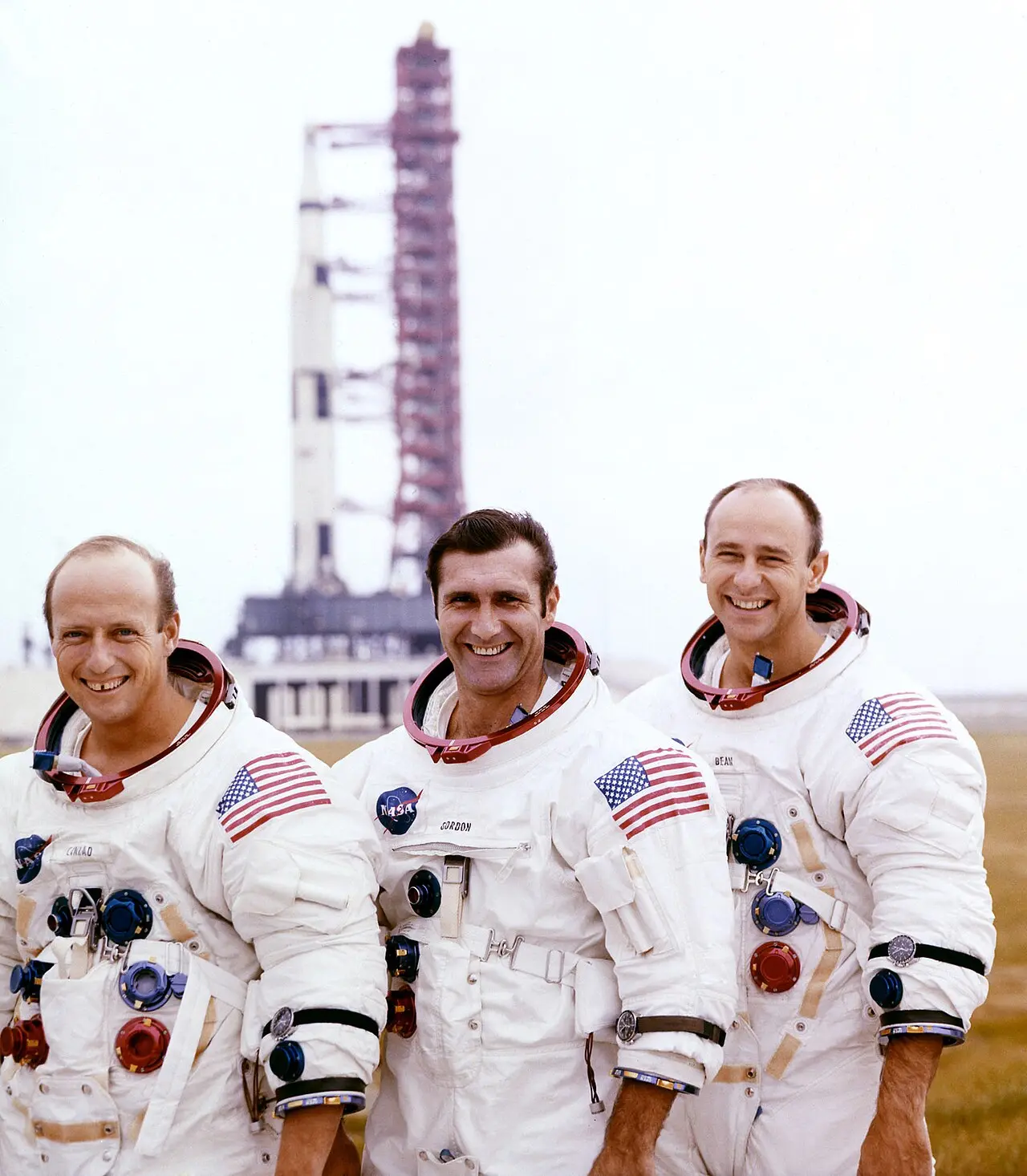
It was 11:22 a.m. Eastern time on November 14, 1969, less than four months after Apollo 11. Commander Charles “Pete” Conrad, lunar module pilot Alan Bean, and command module pilot Richard “Dick” Gordon were riding a Saturn V into a dark, rainy sky over Kennedy Space Center. Conrad had just remarked that it was “a lovely liftoff” — when, at 36.5 seconds and about 6,400 feet up, the rocket triggered a lightning strike. The crew saw a bright flash; alarms erupted as the spacecraft's electrical systems dropped out. At 52 seconds, with the rocket near 14,400 feet, a second bolt knocked out the guidance system. On the ground, observers reported lightning striking the launch pad itself. “OK, we just lost the platform, gang,” Conrad radioed. “I don't know what happened here; we had everything in the world drop out.”
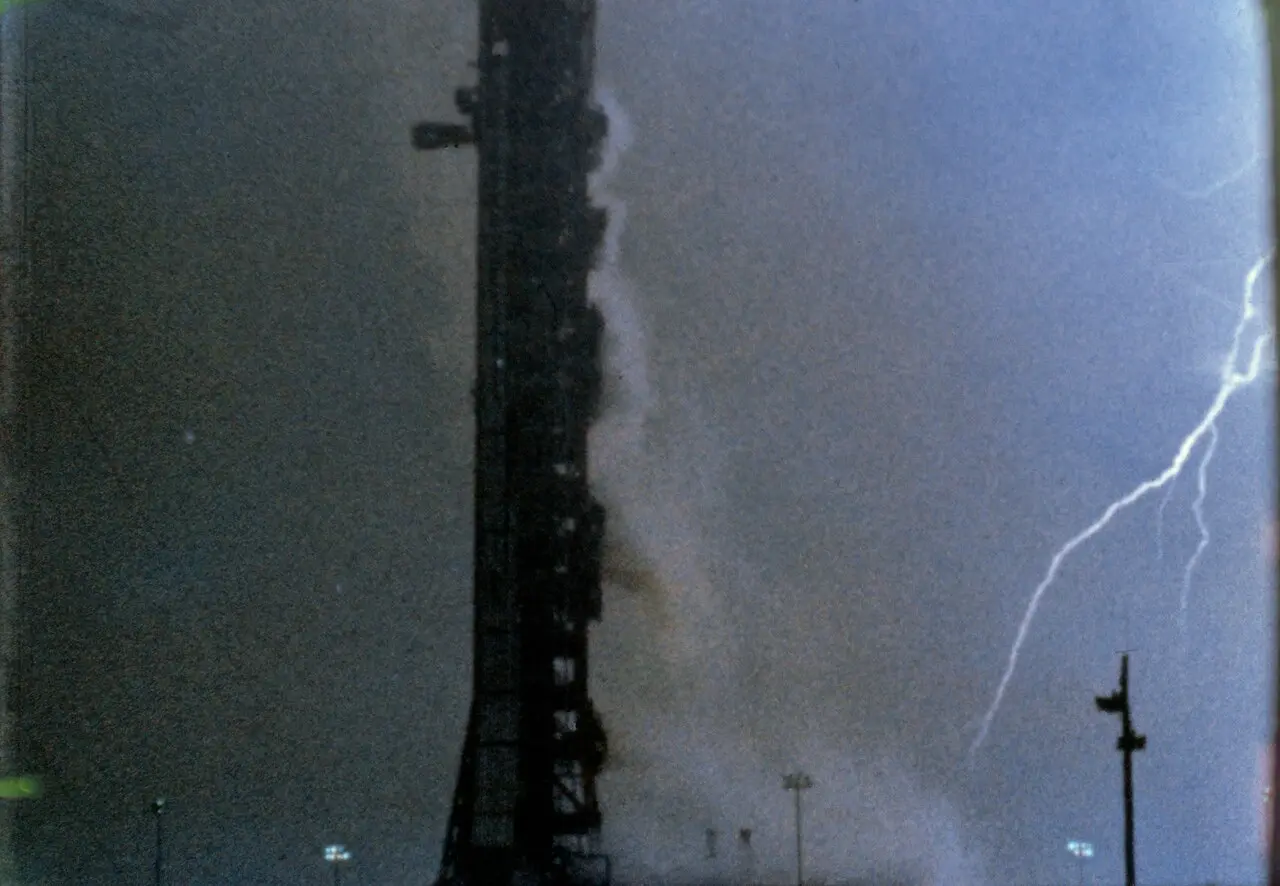
In Mission Control, flight controller John Aaron recognized the scrambled telemetry: he had seen the same pattern once before, in a training simulation. He passed up a now-famous instruction — “Flight, try SCE to Aux” — and when the crew switched the signal-conditioning equipment to its backup power, the instruments came back to life. Nine non-essential sensors were permanently lost, but the spacecraft itself survived, and with automatic guidance working again, the crew could safely continue.
With the spacecraft healthy again, the mission pressed on. Five days later, on November 19, Conrad and Bean guided their lunar module to a pinpoint landing in the Ocean of Storms, touching down within walking distance of Surveyor 3, an unmanned probe that had landed there in 1967. They became the third and fourth humans to walk on the Moon. On two moonwalks they deployed science instruments, collected samples, and even cut pieces off Surveyor 3 to bring home for study. Above them, Gordon kept station in lunar orbit.
Apollo 12 splashed down on November 24, landing within three miles of its recovery ship, the USS Hornet.
Apollo 11 proved humans could reach the Moon; Apollo 12 proved they could do it precisely — and keep their cool when the sky itself fought back. The lightning strike is still studied as a lesson in how preparation and calm judgment can rescue a mission that looks lost.
Photo: NASA, public domain (via Wikimedia Commons).
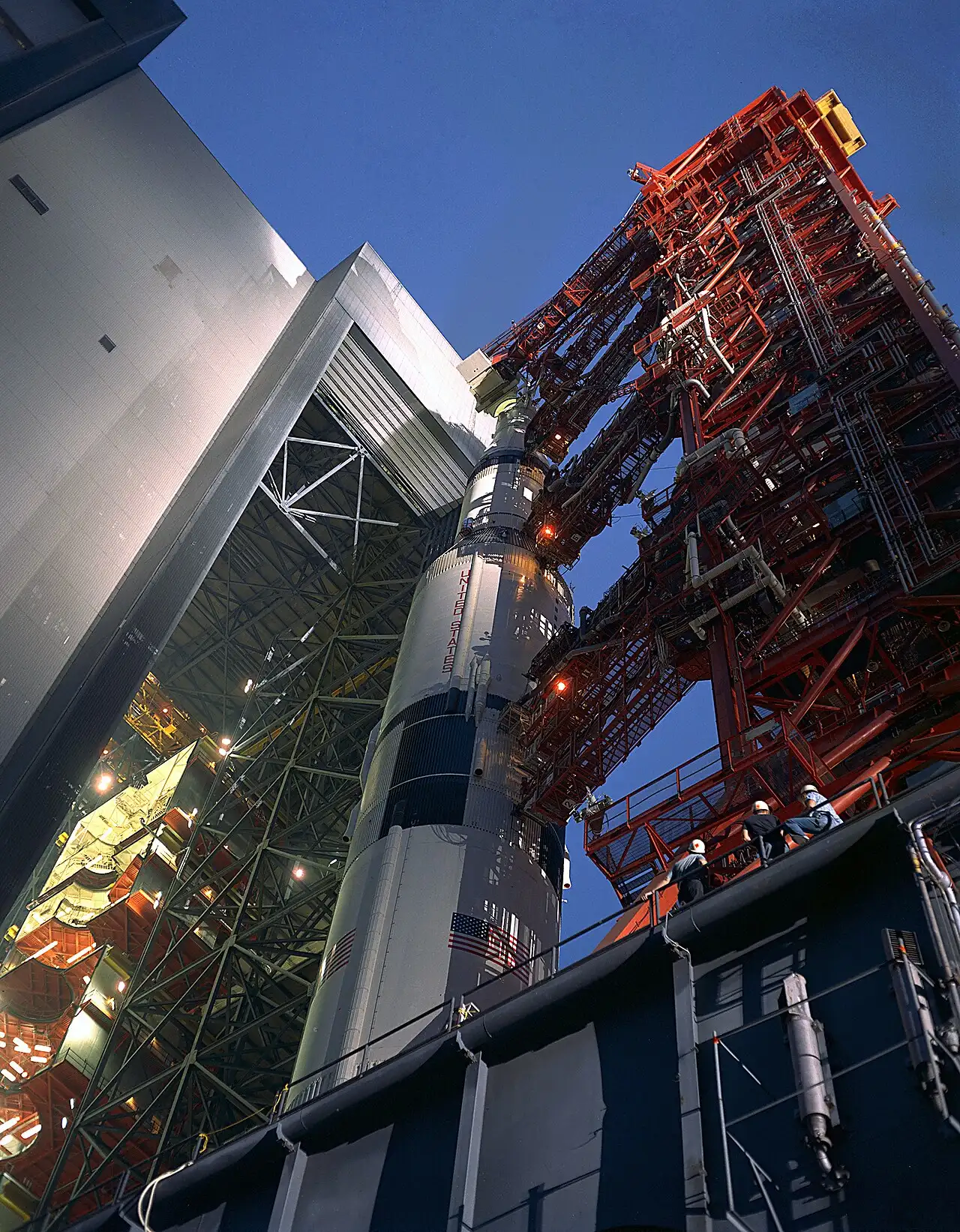
More images (via Wikimedia Commons, public domain, NASA): lightning near the Apollo 12 launch; the Apollo 12 crew, Pete Conrad, Dick Gordon and Alan Bean; the Saturn V moving toward its pad.