Fifty-Seven Feet to History: The First Shipboard Takeoff
On November 14, 1910, Eugene Ely flew a flimsy biplane off the bow of the USS Birmingham — the first airplane takeoff from a warship, and the birth of naval aviation.
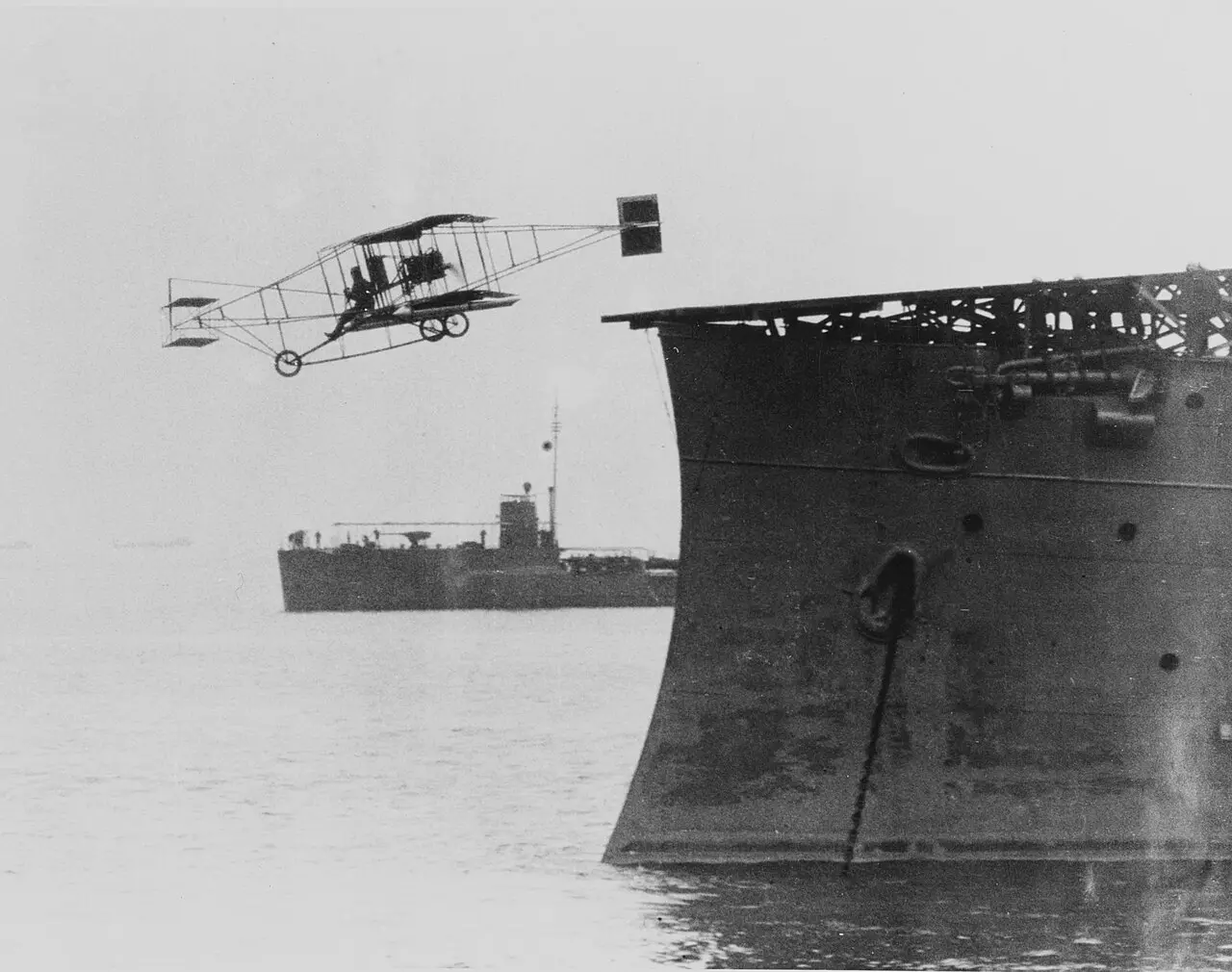
The runway was 83 feet long, and only 57 feet of it could actually be used for takeoff. Beyond that lay open water. On the afternoon of November 14, 1910, a 24-year-old exhibition pilot named Eugene Ely pointed the nose of his Curtiss Pusher biplane — fitted with floats under its wings in case the flight ended in the water — down that wooden platform — built over the bow of the light cruiser USS Birmingham, anchored at Hampton Roads, Virginia — and rolled toward the edge of history.
The flight had been arranged by Captain Washington Irving Chambers, whom the Secretary of the Navy had assigned to study what airplanes might mean for naval warfare. The original plan was to steam into the Chesapeake Bay and launch while underway, which would have given the fragile plane extra lift. Fog and rain ruined that idea, so Ely would have to do it from a stationary ship — the harder way.
The moment the plane cleared the platform, it plunged. The wheels dipped into the water, spray blinded Ely by coating his goggles, and for a breathless instant the first shipboard takeoff in history looked like it would end in the bay. But the Curtiss caught the air and rose. Ely, unable to see well enough to circle back to the Norfolk Navy Yard as planned, set the plane down on a beach at Willoughby Spit, two and a half miles away. He had done it: an airplane had taken off from a warship for the first time.
It was the opening shot of naval aviation. Two months later, on January 18, 1911, Ely completed the other half of the puzzle, landing his Curtiss Pusher on a platform built on the cruiser USS Pennsylvania anchored in San Francisco Bay — the first successful shipboard landing, made with an early tailhook system that snagged ropes stretched across the deck. Afterward he told a reporter the landing had been "easy enough," adding, "I think the trick could be successfully turned nine times out of ten."
Ely had learned to fly only months before, after crashing a borrowed plane in Portland and buying the wreck out of a sense of responsibility. He held pilot's license number 17 from the Aero Club of America. With two short flights off wooden platforms, he proved that the airplane and the warship belonged together — an idea that would grow into the aircraft carrier, the most powerful warship ever built.
Photo: U.S. Navy, public domain (via Wikimedia Commons).