
Twenty Hours Across the Ocean: Amelia Earhart's First Atlantic Crossing
On June 18, 1928, Amelia Earhart landed at Burry Port, Wales, becoming the first woman to fly across the Atlantic Ocean.
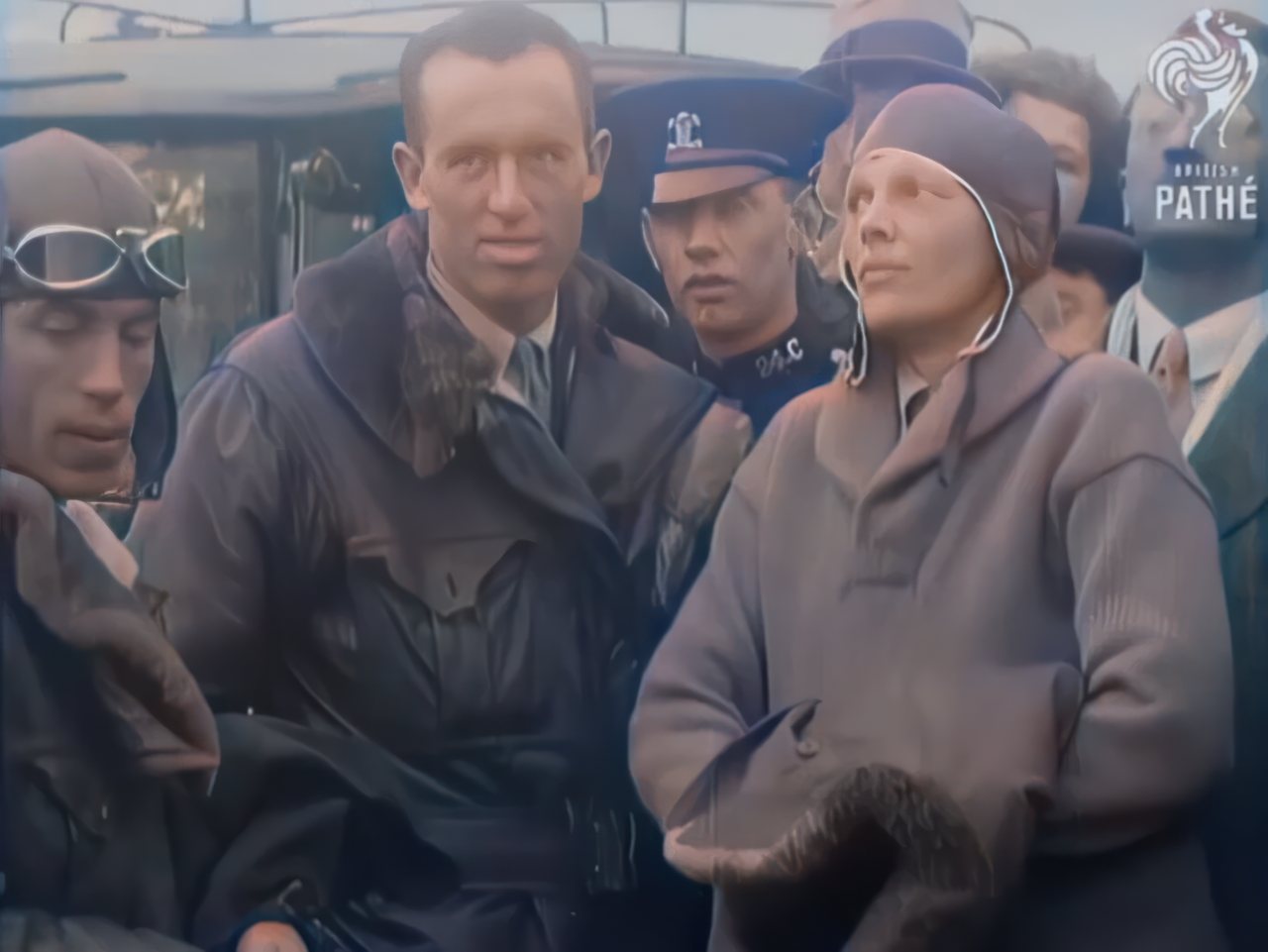
Just after noon on June 18, 1928, people along the coast of Burry Port in Carmarthenshire, Wales, heard the heavy drone of aircraft engines. Looking up, they saw a small orange seaplane circling the Loughor estuary, then touching down on the choppy water just offshore. Inside was a 30-year-old from Atchison, Kansas, who had just become the first woman to fly across the Atlantic.
Amelia Earhart hadn't planned to be famous. She'd learned to fly in California under pioneering instructor Neta Snook, and by 1928 she was a settlement worker in Boston who flew for fun. Then she was invited to join a transatlantic flight as the only woman aboard a Fokker tri-motor called the Friendship. She would fly as the expedition's passenger — officially rated as assistant pilot — alongside pilot Wilmer Stultz and mechanic Lou Gordon.
The Friendship left Trepassey Harbor in Newfoundland on the afternoon of June 17. Almost immediately the weather turned: rain, dense cloud, severe turbulence. Stultz flew blind for most of the way, and the crew never even saw Ireland. "We encountered fog almost all the way, and there was considerable rain as well," Stultz told reporters afterward. "Most of the way I was flying blind because of the fog and rain. We had no idea where we were, as we had not seen Ireland. We landed here in south Wales because we were short of fuel."
Twenty hours and forty minutes after leaving Newfoundland, they splashed down at Burry Port at about 12:40 p.m. on June 18. The little Welsh town was suddenly mobbed — crowds streamed in from Swansea and Cardiff, and seaplanes full of reporters and photographers landed nearby. Earhart was now an international celebrity, her face on newspaper front pages around the world.
She never treated the flight as the finish line. In 1932 she crossed the Atlantic again — this time solo, in a Lockheed Vega, becoming the first woman to do it alone. In 1935 she flew solo from Hawaii to California. She co-founded the Ninety-Nines, an organization for women aviators, and spent the rest of her life promoting aviation for everyone.
Her final flight began June 1, 1937, when she and navigator Fred Noonan left Miami attempting to circle the globe. They disappeared after leaving Lae, New Guinea, on June 29 — and the mystery of what happened has fascinated the world ever since. But her legacy was sealed long before that: she proved a woman belonged in the cockpit, whether as crew on a fog-bound Friendship or alone above a vast ocean.
Why it matters: Earhart's 1928 crossing was the moment aviation's glass ceiling cracked. A woman who had only been flying for a few years crossed the most daunting route in the air — and then spent the next decade making sure she wouldn't be the last.
Photo: the crew of the Friendship at Burry Port, Wales, in June 1928, after the historic flight; CC0 dedication via Wikimedia Commons.