The Broadcast Almost Nobody Heard That Saved France
On June 18, 1940, an unknown French general spoke into a BBC microphone — and lit the flame of the French Resistance.
Almost nobody heard it. There is no recording of it. The man who delivered it was unknown to the public. And yet the broadcast Charles de Gaulle made on June 18, 1940, became one of the most important speeches in French history — the moment the French Resistance was born.
France was collapsing. German armies had swept through the country in weeks; Paris had fallen; the government was suing for an armistice. Brigadier General Charles de Gaulle — promoted that very month and briefly the undersecretary for defense — refused to accept defeat. He flew to London, where Winston Churchill gave him access to the BBC. On the evening of June 18, de Gaulle stepped up to a microphone in a BBC studio and addressed his occupied homeland.
His message was defiance wrapped in logic. France had lost a battle, he declared, but France had not lost the war. France was not alone: it still had its vast empire, and it had allies — above all Britain, which ruled the seas and would fight on. The same modern weapons that had defeated France could one day bring victory. And then came the line that would echo through the war: "The flame of French resistance must not be extinguished, and will not be extinguished." He called on French soldiers, engineers, and armaments workers — wherever they were — to join him and keep fighting.
At the time, the broadcast reached only a handful of listeners; the BBC never even recorded that first transmission — the famous recording heard today was re-made on June 22. But the text was printed in newspapers the next day and spread by word of mouth. De Gaulle kept broadcasting, and the appeal became the founding charter of Free France. The full text is now engraved on a bronze plaque beneath the Arc de Triomphe in Paris. The Vichy regime sentenced de Gaulle to death in absentia for treason; he simply ignored them and built an army instead.
The Appeal of 18 June gave occupied France something it desperately needed: proof that the fight was not over and a leader willing to lead it. From that broadcast grew the Free French forces that would fight alongside the Allies and help liberate Paris in 1944. De Gaulle earned the nickname "the Man of 18 June," and the date became a national symbol of refusing to surrender — a reminder that sometimes history turns not on armies, but on one voice in a radio studio, speaking into the dark.
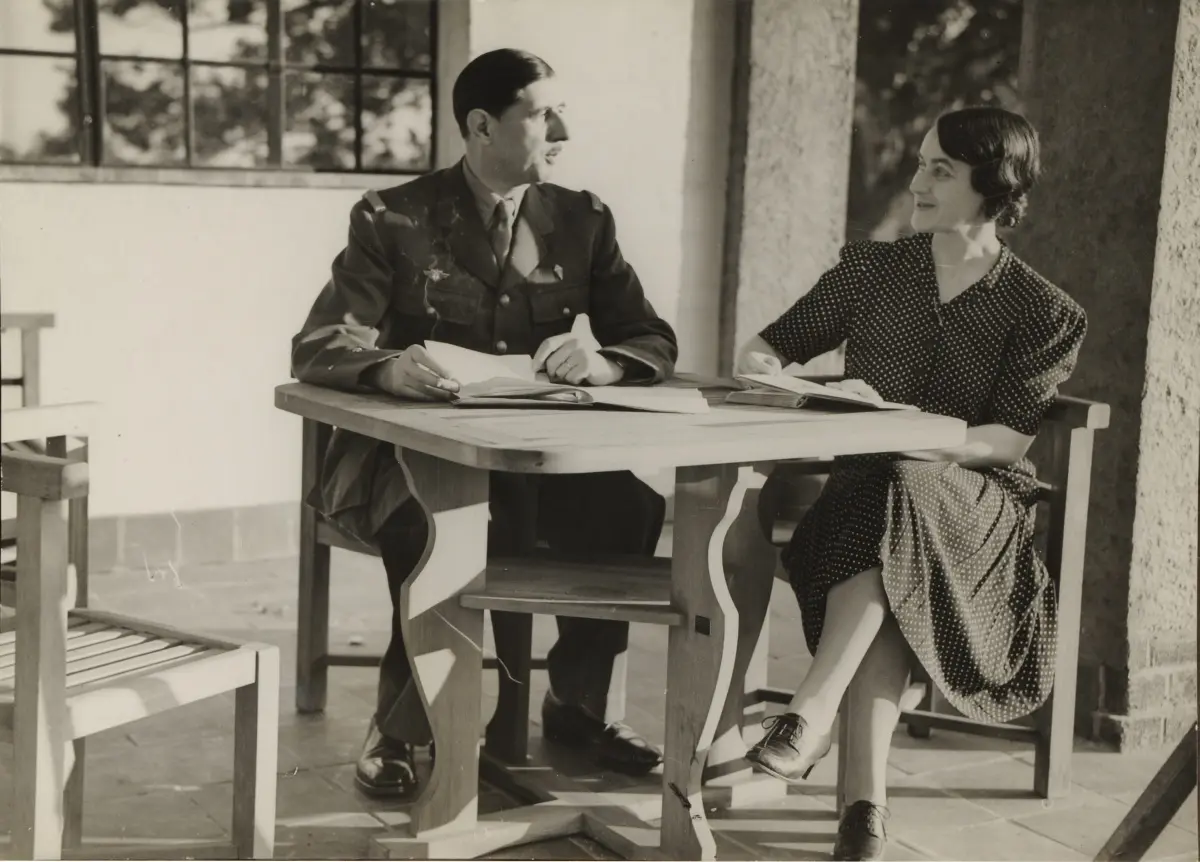
Photo: Charles de Gaulle in uniform with his wife in London during the Second World War, public domain (via Wikimedia Commons).