The Day Napoleon Met His Waterloo
On June 18, 1815, Napoleon Bonaparte's empire ended in a muddy Belgian field — and Europe's map was redrawn for a century.
He had conquered most of Europe, been exiled to a tiny island, escaped, and reconquered France without firing a shot. But on one rainy Sunday in June 1815, Napoleon Bonaparte's luck — and his empire — ran out in a field of mud twelve miles south of Brussels.
The comeback had been astonishing. Exiled to Elba in 1814 after his defeat at Leipzig, Napoleon slipped away in February 1815, landed in France, and marched on Paris as the troops sent to stop him defected to his side. Europe's great powers, meeting at the Congress of Vienna, declared him an outlaw and mobilized. Napoleon struck first, invading Belgium to crush the British-led and Prussian armies separately before they could join forces. On June 16 he beat the Prussians at Ligny — and made the mistake of assuming they were finished.
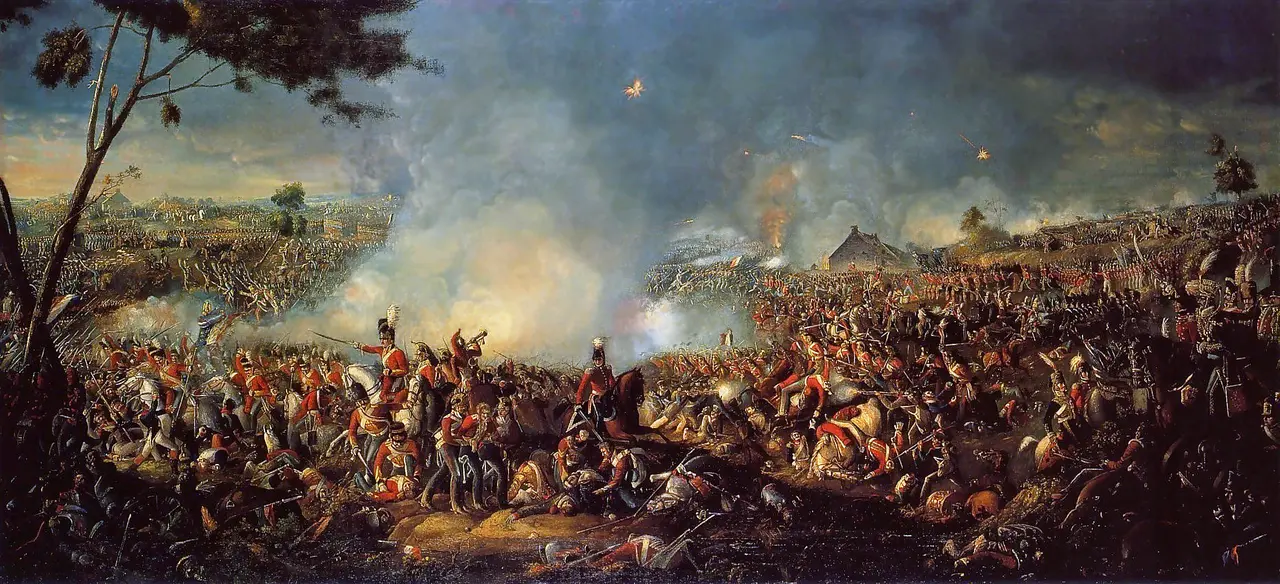
On June 18, Napoleon's 72,000 troops faced the Duke of Wellington's 68,000-man allied army dug in near the village of Waterloo. Napoleon waited until midday to attack, letting the rain-soaked ground dry — a delay that would prove fatal, because it gave the supposedly beaten Prussians time to march to the sound of the guns. All afternoon the French hurled assaults at Wellington's center and failed to break it. Around 6 p.m., Marshal Ney captured a key farmhouse and pounded the allied line with artillery. Then, in the late afternoon, some 30,000 Prussians under the 72-year-old Field Marshal Blucher smashed into Napoleon's flank.
The French line cracked, then collapsed. A general allied advance turned the retreat into a rout, and the Prussians chased the wreckage of Napoleon's army into the night. French losses were catastrophic — about 25,000 killed or wounded and thousands more captured — against roughly 23,000 allied casualties. Napoleon fled the field, abdicated days later, and was shipped to the remote island of St. Helena, where he died six years later. Wellington himself called it "the nearest-run thing you ever saw in your life."
Waterloo ended the Napoleonic Wars and more than two decades of near-constant European conflict. The victors' settlement at the Congress of Vienna redrew the map of Europe and ushered in a century of relative peace on the continent. And "Waterloo" entered the language forever as the word for a final, crushing defeat — a fate Napoleon had dealt to so many others before it was dealt to him.
Photo: "The Battle of Waterloo" by William Sadler, painted in 1815, public domain (via Wikimedia Commons).