Thirteen Days That Brought Two Enemies to Shake Hands
On September 17, 1978, Egypt's Anwar Sadat and Israel's Menachem Begin signed the Camp David Accords after thirteen days of secret talks, ending decades of war between their nations.
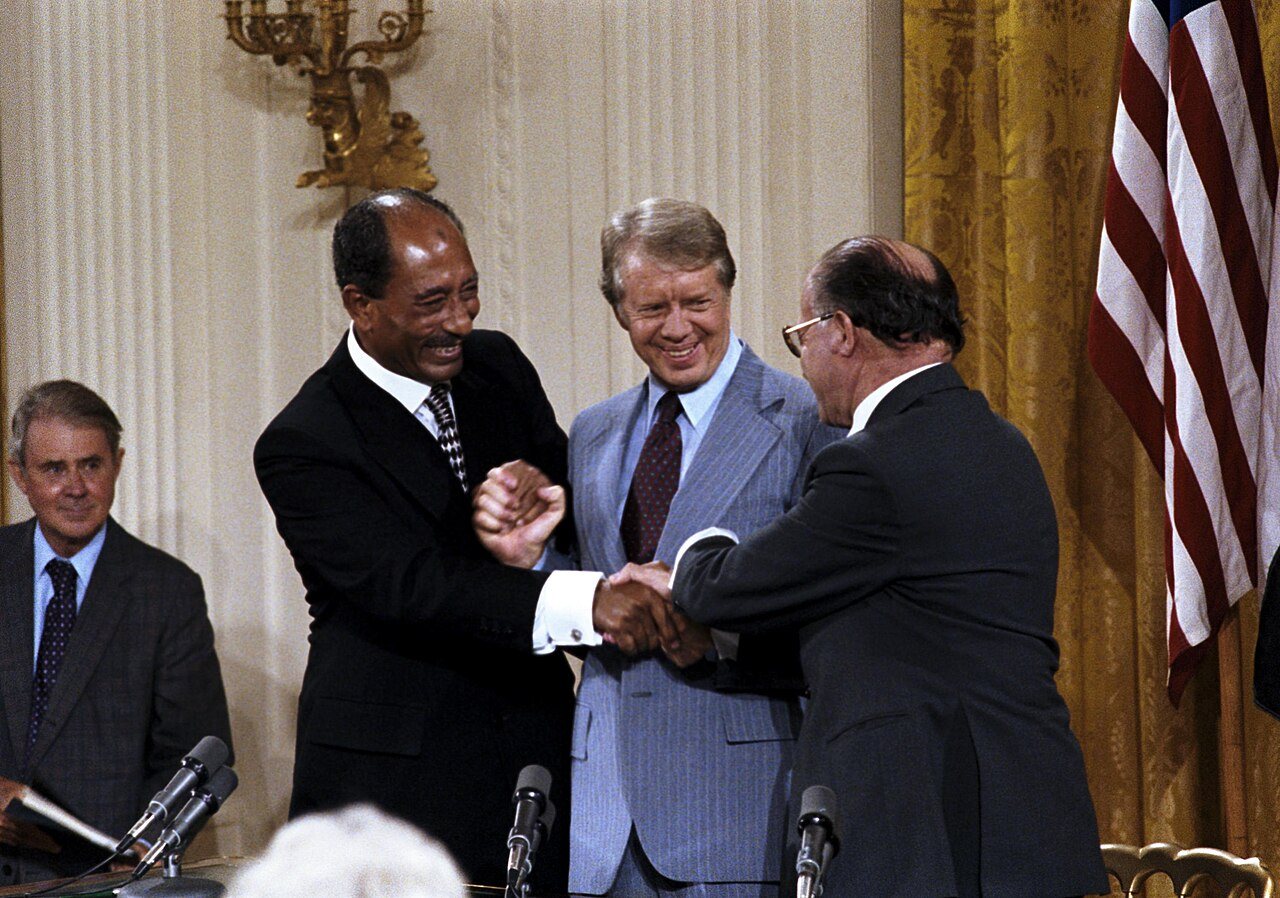
They could barely stand to be in the same room. By the end, they were shaking hands in front of the world.
In November 1977, Egyptian president Anwar Sadat did the unthinkable: he flew to Jerusalem and addressed Israel's parliament, the Knesset — the first Arab leader ever to visit Israel. Egypt and Israel had fought four wars in thirty years. Sadat's gesture stunned the planet. But bold gestures don't make peace by themselves, and the talks that followed quickly stalled.
Enter Jimmy Carter. The American president invited Sadat and Israeli prime minister Menachem Begin to Camp David, his secluded retreat in the Maryland woods, for secret negotiations. No press, no cameras, no grandstanding — just the two leaders, their teams, and thirteen days.
From September 5 to September 17, 1978, they argued over maps, words, and history. Begin and Sadat distrusted each other so deeply they were rarely in the same room; Carter shuttled between their cabins, carrying proposals back and forth like a courier of last resorts. More than once, both leaders wanted to walk out, and Carter talked them back from the edge. He even took them to nearby Gettysburg, hoping the American Civil War battlefield would remind them what endless war really costs.
On September 17, 1978, it worked. In the East Room of the White House, Sadat and Begin signed two framework agreements — one for peace between Egypt and Israel, another sketching a path toward Palestinian self-rule — with Carter standing between them, literally and figuratively. Then came the famous triple handshake: the three men joining hands as cameras flashed.
The accords led directly to the Egypt–Israel peace treaty of March 1979, the first ever between Israel and an Arab state. Israel withdrew from the Sinai Peninsula; Egypt recognized Israel's right to exist. For their courage, Sadat and Begin shared the 1978 Nobel Peace Prize.
Not everything was resolved. The Palestinian question stayed open, and much of the Arab world condemned Egypt for making a separate peace. Sadat would pay with his life, assassinated in 1981 by extremists who opposed the treaty.
But the Egypt–Israel peace has held for nearly fifty years — through wars, uprisings, and revolutions elsewhere in the region. Camp David matters because it proved something hard to believe: even enemies who will not speak to each other can be coaxed, draft by draft, argument by argument, into a handshake — if someone refuses to let them leave the room.
Photo: Central Intelligence Agency, public domain (via Wikimedia Commons).