The Piece of Paper That Promised Peace
On September 30, 1938, the Munich Agreement was signed, handing part of Czechoslovakia to Hitler — and teaching the world the cost of appeasement.
In the small hours of September 30, 1938, four men put their names to a document that would become the century's most famous lesson in the danger of giving in. In Munich's Führerbau, Adolf Hitler, Benito Mussolini, Neville Chamberlain, and Édouard Daladier signed the Munich Agreement — carving up Czechoslovakia without a single Czech in the room.
The crisis had been building all summer. Hitler demanded the Sudetenland, the border regions of Czechoslovakia where three million ethnic Germans lived, and threatened war if he didn't get it. Europe held its breath: Britain and France had spent September digging trenches in their parks and handing out gas masks. Rather than fight, they chose to negotiate — over the head of the country they were bargaining away.
The terms were brutal. Czechoslovakia was ordered to hand over the Sudetenland to Germany between October 1 and 10. Its representatives were summoned afterward and simply told what had been decided. The country lost its fortified border defenses, much of its industry, and a fifth of its people — all to buy a peace that would not last.
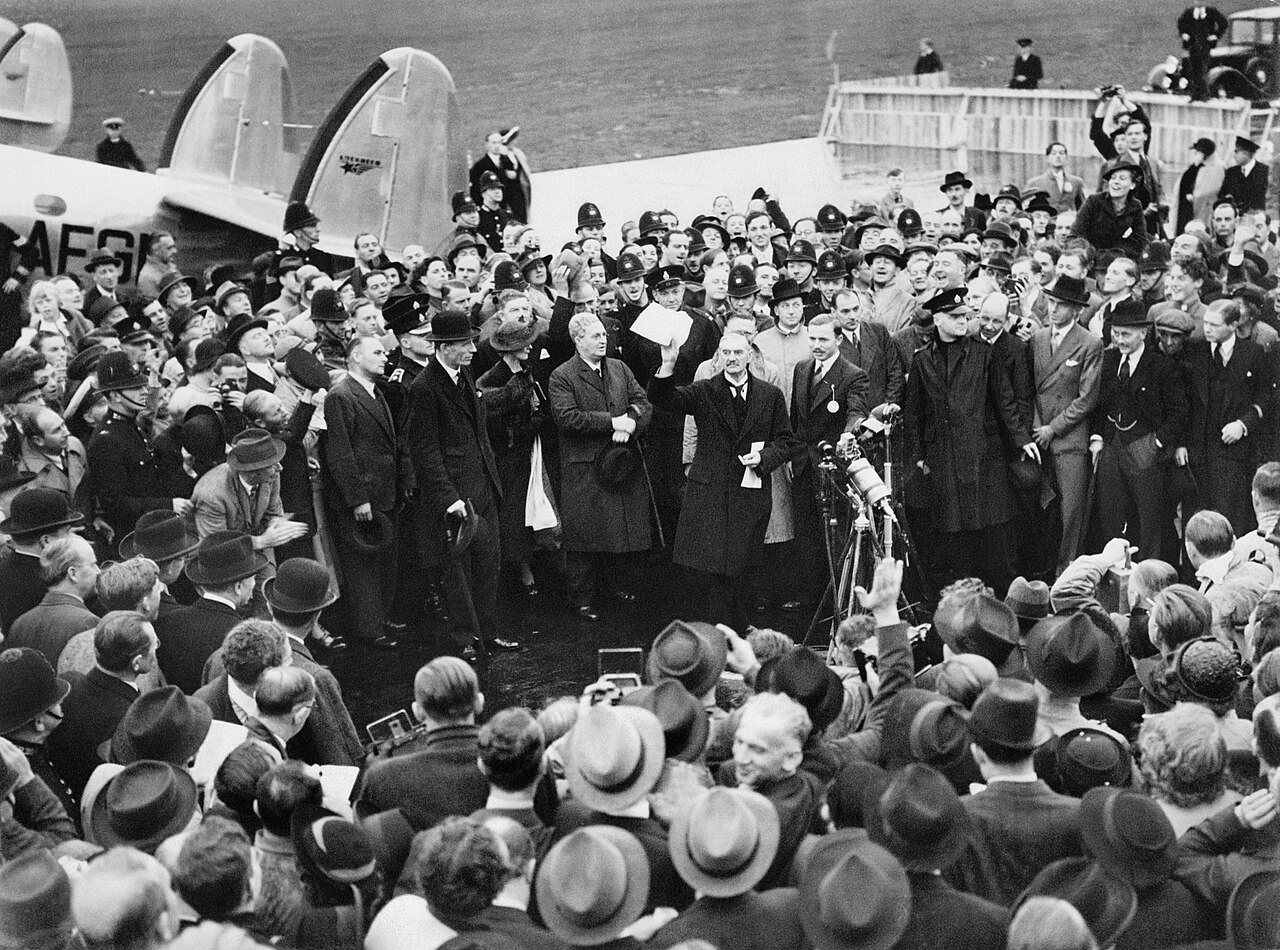
Chamberlain, though, came home convinced he had succeeded. After a private meeting with Hitler that morning produced a signed Anglo-German declaration, the British prime minister flew back to London and stepped off his plane at Heston Aerodrome waving the paper triumphantly. Standing before the cameras that afternoon, he told the waiting crowd: "I believe it is peace for our time."
Winston Churchill saw it differently. Days later in the House of Commons he delivered one of his most quoted warnings: "You were given the choice between war and dishonour. You chose dishonour, and you will have war."
He was right. Less than six months later, in March 1939, German troops marched into Prague and swallowed the rest of Czechoslovakia — proof that Hitler's appetite had never been about the Sudetenland at all. Britain and France finally drew their line at Poland, and that September the Second World War began.
Munich became shorthand for the folly of appeasement: the idea that bullies can be bought off with other people's land. Every generation of leaders since has been warned not to repeat it — and every generation has had to decide what that warning really means.
Photo: Neville Chamberlain at Heston Aerodrome on September 30, 1938, holding the signed agreement, public domain (via Wikimedia Commons).