The Night Sweden Lost Its Innocence
On February 28, 1986, Swedish prime minister Olof Palme was shot dead on a Stockholm street while walking home from the cinema with his wife — a murder that shocked the world and was never solved.
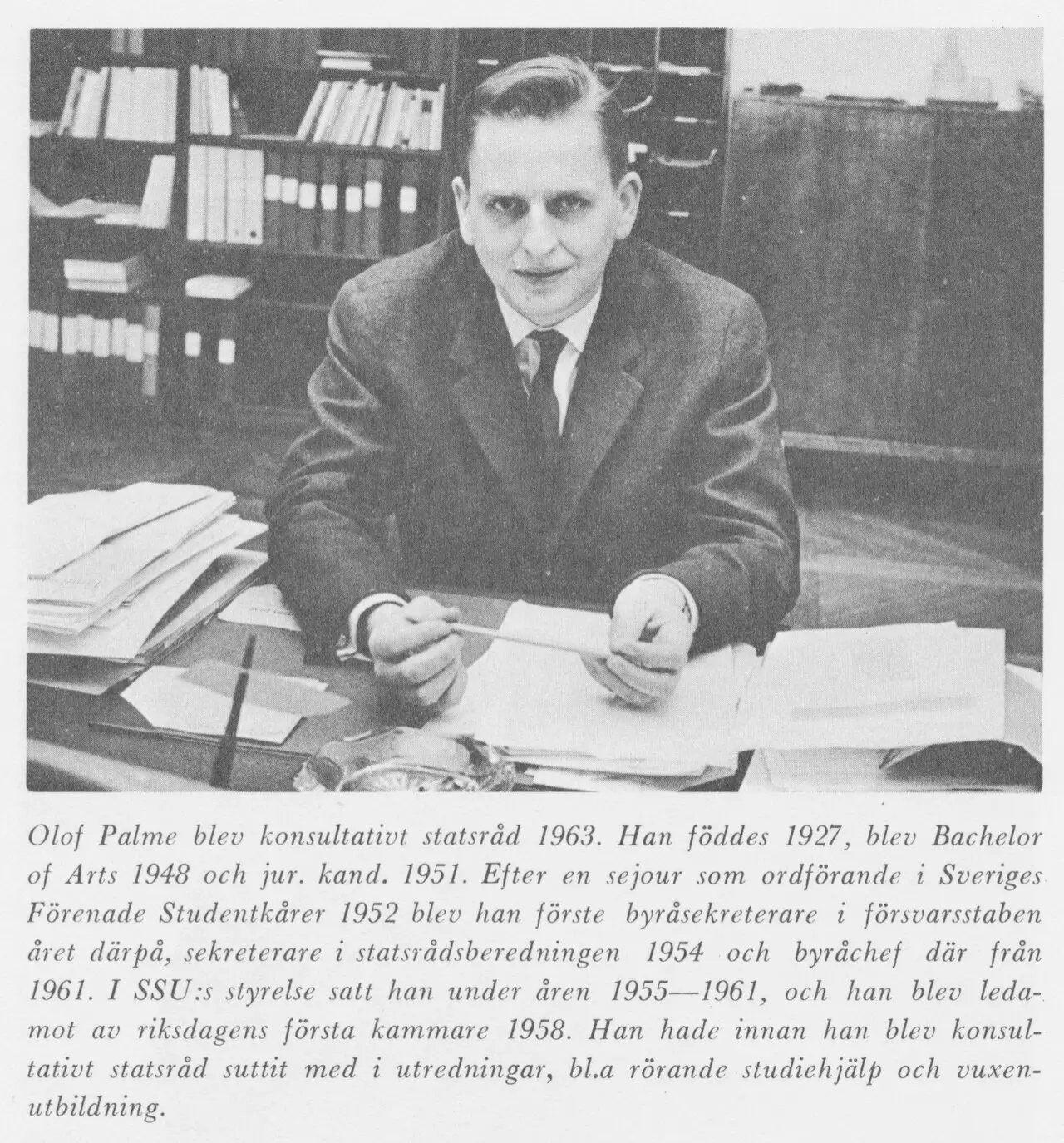
The prime minister of Sweden walked home from the movies like an ordinary citizen. A few minutes later he was dead, and a country that had believed itself safe from political murder was changed forever.
It was a Friday night in late February 1986. Olof Palme, Sweden's prime minister, had decided on a whim to take his wife Lisbeth to the cinema in central Stockholm. Like many Swedish leaders of the era, he moved through public life with almost no security — political violence was practically unknown in Sweden, and Palme preferred to live like any other citizen.
At about 11:21 p.m., as the couple walked along Sveavägen near the Tunnelgatan intersection on their way home, a lone gunman shot Palme in the back at close range. A second shot slightly wounded Lisbeth. There were no bodyguards to intervene and no motorcade to rush him away. He was carried to Sabbatsberg Hospital, where he was pronounced dead shortly after midnight.
The shock was total. Deputy Prime Minister Ingvar Carlsson was sworn in within hours, but Sweden struggled to comprehend that an assassin could simply walk up to a prime minister on a city street and vanish into the night. Within days, thousands of flowers left by passers-by at the murder site had grown into an enormous pile. The manhunt became the largest criminal investigation in Swedish history — and it produced no certain answer.
Two years later a small-time criminal named Christer Pettersson was convicted after Lisbeth Palme identified him as the gunman, only to be acquitted on appeal and declared legally innocent; he died in 2004. For decades the case gathered theories like dust. In June 2020 the chief prosecutor announced his conclusion that the most likely culprit was Stig Engström, a graphic designer dubbed "the Skandia Man" — but Engström had died in 2000, so with no one left to charge, the investigation was closed, and the murder remains officially unsolved.
The assassination mattered far beyond Sweden's borders. Palme had been one of the most prominent statesmen of the Cold War era, a Social Democratic leader whose outspoken foreign-policy stances made him famous worldwide — and, to some, infamous. But it was the manner of his death, so ordinary and so defenseless, that left the deepest mark: a country that had taken its safety for granted learned in a single night that no one is beyond reach.
Photo: Svenskt Porträttarkiv (SPA), CC BY-SA 4.0 (via Wikimedia Commons)