
The Morning Science Found the Secret of Life
On February 28, 1953, Watson and Crick determined that DNA is a double helix — the breakthrough that launched modern genetics.
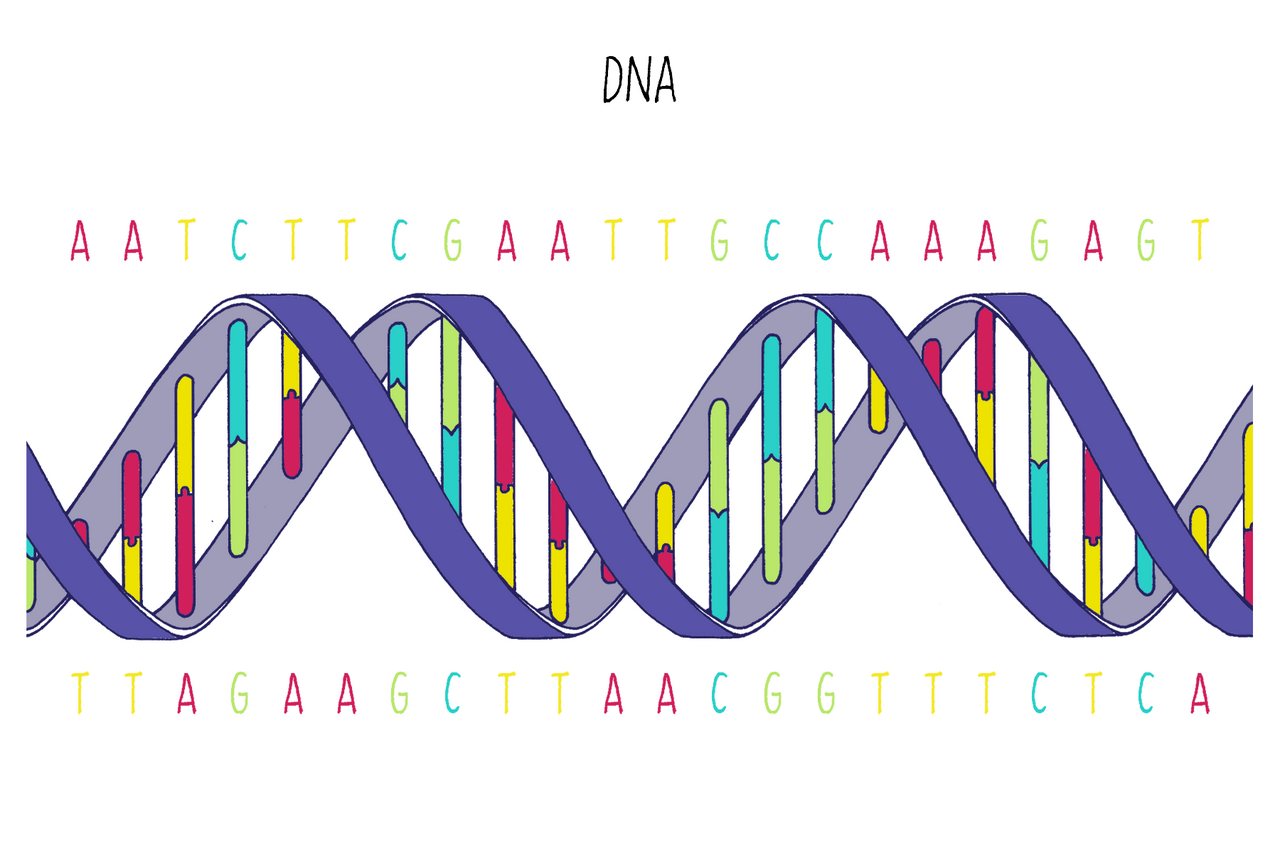
On the morning of February 28, 1953, two young scientists in Cambridge, England, finally cracked one of the greatest puzzles in biology: the shape of the molecule that carries the instructions for life itself.
James Watson and Francis Crick worked at Cambridge University's Cavendish Laboratory, where they were racing to determine the structure of DNA — deoxyribonucleic acid, the molecule inside every living cell that passes traits from parent to child. They were not the only ones in the race. The famous American chemist Linus Pauling had proposed his own model early that year, and it was wrong — which only sharpened the competition to get there first.
Watson and Crick built their case like detectives assembling clues. A crucial piece of evidence came from King's College London, where Rosalind Franklin and her student Raymond Gosling had used X-ray diffraction to photograph DNA, producing a striking image known as Photo 51. Its cross-shaped pattern was the telltale signature of a helix, and it gave Watson and Crick exactly the clue they needed. On February 28, the pieces fell into place: DNA was a double helix — two strands wound around each other like a twisted ladder, with pairs of chemical bases (adenine with thymine, guanine with cytosine) forming the rungs.
According to Watson's later account in his book The Double Helix, Crick celebrated by striding into the nearby Eagle pub at lunchtime and announcing that they had found "the secret of life." Crick himself later said he had no recollection of those exact words — but the excitement in the lab that day was genuine. The structure immediately suggested how DNA copies itself: unzip the ladder, and each half becomes a template for building a new one.
The pair published their findings in the journal Nature on April 25, 1953, in a famously understated paper that began, "We wish to suggest a structure for the salt of deoxyribose nucleic acid." Nine years later, Watson, Crick, and Maurice Wilkins shared the Nobel Prize for the discovery. Franklin, whose X-ray work had been so vital, had died in 1958 and was neither included in the announcement nor the prize — an omission history has worked hard to correct.
That twisted ladder, figured out on a single February morning, became the foundation of modern genetics — from understanding inherited disease to the sequencing of the entire human genome.
Photo: explorebiology, CC BY 4.0 (via Wikimedia Commons).