The Night Leipzig Refused to Be Afraid
On October 9, 1989, some 70,000 East Germans marched peacefully through Leipzig in defiance of 8,000 armed police — the night the regime blinked, and the beginning of the end for East Germany.
By late afternoon on Monday, October 9, 1989, the city of Leipzig was holding its breath.
All day the rumors had been building: hospitals were stocking extra blood, and some 8,000 police officers and soldiers were massing in the streets. Four months earlier, in Beijing's Tiananmen Square, a pro-democracy movement had been crushed by tanks — and East Germany's leaders had openly praised the crackdown. Everyone in Leipzig understood what that could mean for them.
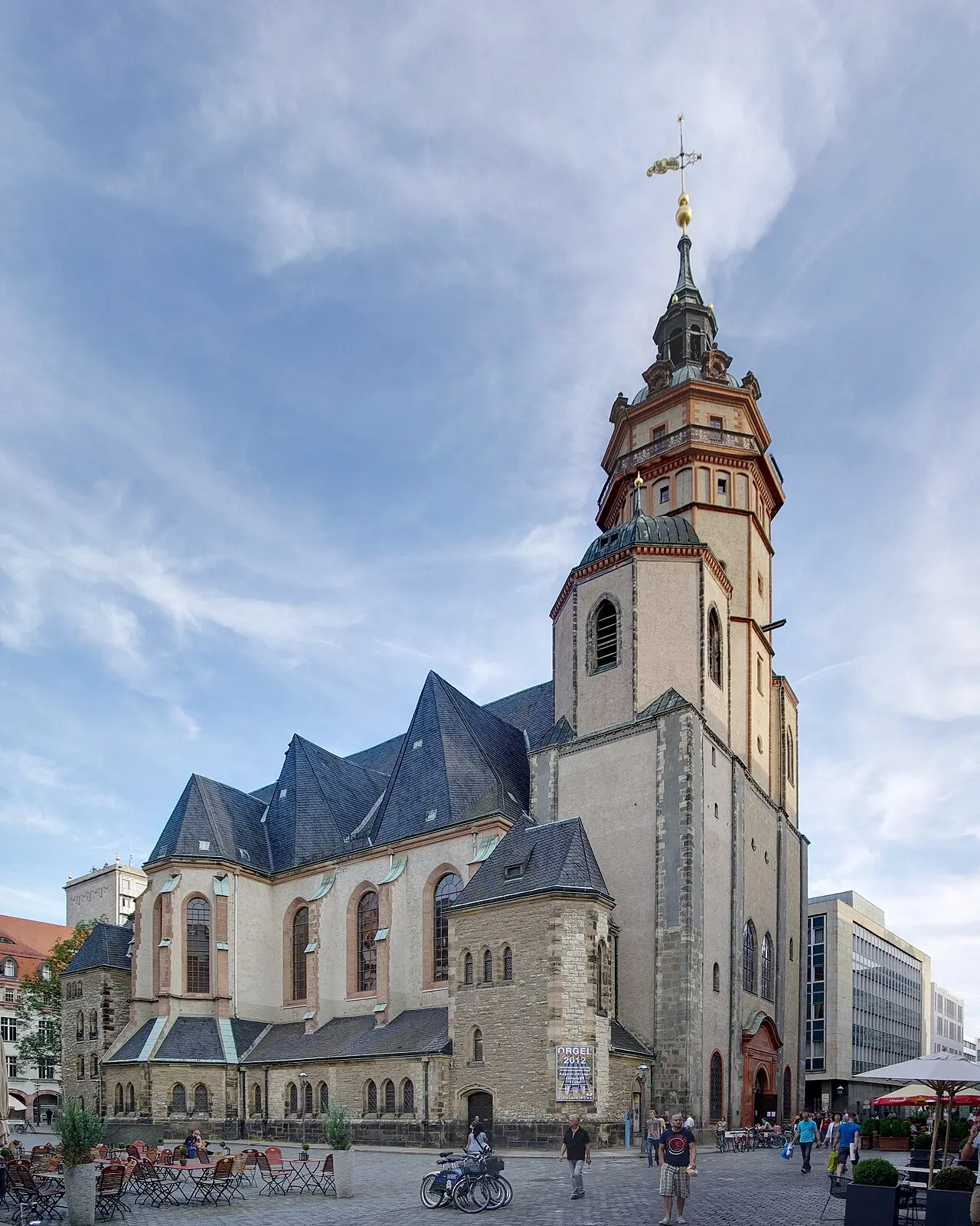
What brought them into the streets had started small. Since 1982, a handful of worshippers had gathered every Monday at St. Nicholas Church, the Nikolaikirche, for prayers for peace. On September 4, 1989, a few dozen of them walked out of the church carrying homemade banners reading Für ein offenes Land mit freien Menschen — For an open country with free people. The secret police, the Stasi, tried to stop them. The next Monday there were more. Then more.
By early October the trickle was a flood. The regime's 40th-anniversary celebrations on October 7 had been answered with beatings and some 500 arrests across the country. Leipzig's turn came two days later, and the state treated it as decision day.
That afternoon an unusual message crackled over local radio. Six prominent Leipzig citizens — the appeal initiated by Kurt Masur, the world-famous conductor of the Gewandhaus Orchestra, and including members of the ruling Communist Party itself — had recorded a joint call for calm, nonviolence, and dialogue. It was read aloud in the packed churches as the evening peace prayers ended.
Then the church doors opened, and the people poured out.
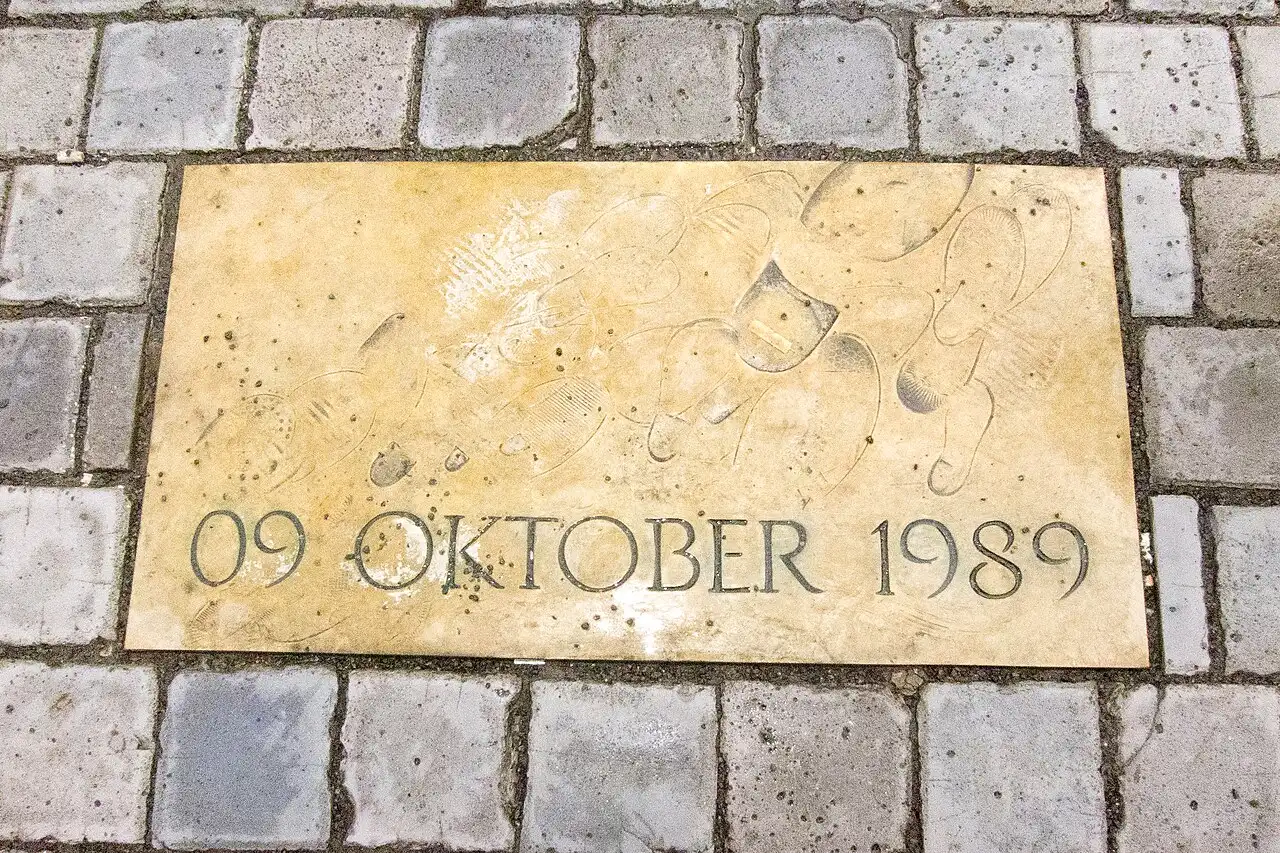
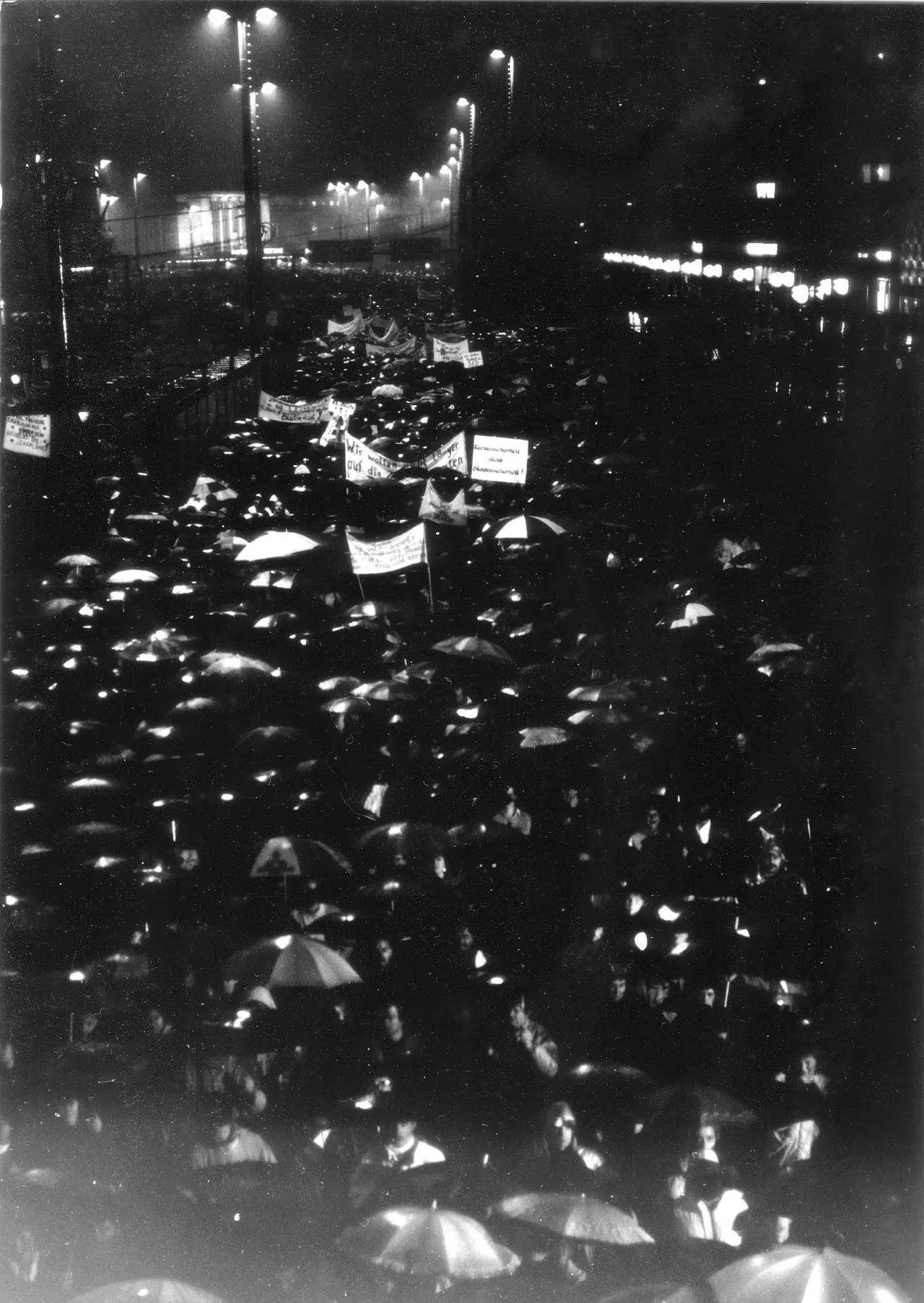
They came by the tens of thousands, many carrying candles and homemade signs, until the streets around the church could hold no more. Estimates put the crowd at some 70,000 in a city of half a million. They fell into step along Leipzig's inner ring road, and a single chant rose above the shuffle of feet: Wir sind das Volk! — We are the people!
It was a direct answer to the state's founding fiction. East Germany called itself a democratic republic; the marchers were reminding their rulers what those words were supposed to mean.
The column wound past the dreaded Stasi headquarters — and nothing happened. The police lines held their ground but did not advance. Local party and police commanders, surprised by the sheer size of the crowd and with no clear orders from East Berlin, held their forces back. A few demonstrators were arrested. But the guns stayed silent, and the marchers kept walking until, hours later, they simply went home.
The next Monday, 120,000 people marched in Leipzig. The Monday after that, more than 300,000. Nine days after the first march, Erich Honecker was forced to resign. One month to the day after Leipzig's night of courage, the Berlin Wall fell.
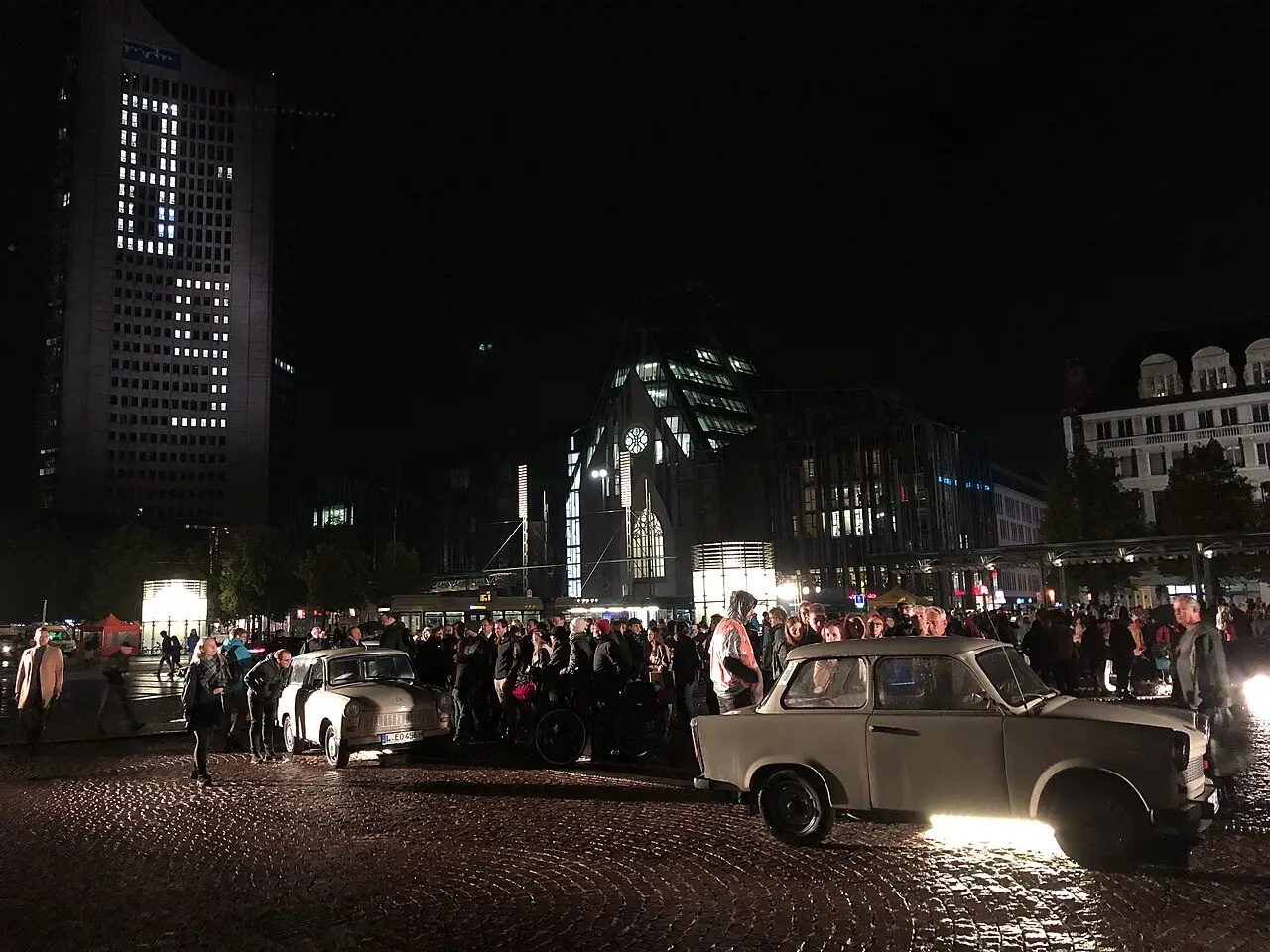
October 9 is remembered as the beginning of the end for East Germany, and Leipzig still marks it every year with a Festival of Lights, when thousands retrace the marchers' route by candlelight. The lesson of that night belongs to no single country: when ordinary people refuse to be afraid — all at once, and all together — even the most heavily armed state can find it has nothing left to shoot at.
Photos (via Wikimedia Commons): Monday demonstration in Leipzig, 1989 (Oliver Kloss, CC BY-SA 4.0); St. Nicholas Church, Leipzig (Berthold Werner, CC BY-SA 3.0); the "09 Oktober 1989" memorial plaque in the pavement (Thomas Quine, CC BY 2.0); the 2023 anniversary of the Peaceful Revolution (Oliver Kloss, CC BY 4.0).