The Night a Mouse Learned to Whistle: Steamboat Willie
On November 18, 1928, Steamboat Willie premiered in New York — seven minutes of whistling that made Mickey Mouse a star and taught movies how to sing.
The man sitting in the back of the theater that night had sold his car and mortgaged his studio to pay for what was on the screen. Two weeks later, he owned the most famous cartoon character in the world.
Walt Disney was 26 and running out of luck in 1928. He had just lost his first star, Oswald the Lucky Rabbit, in a contract dispute, and the two silent Mickey Mouse cartoons he had made — Plane Crazy and The Galloping Gaucho — had found no distributor. Then he bet everything on an idea: a cartoon built from the start around sound.
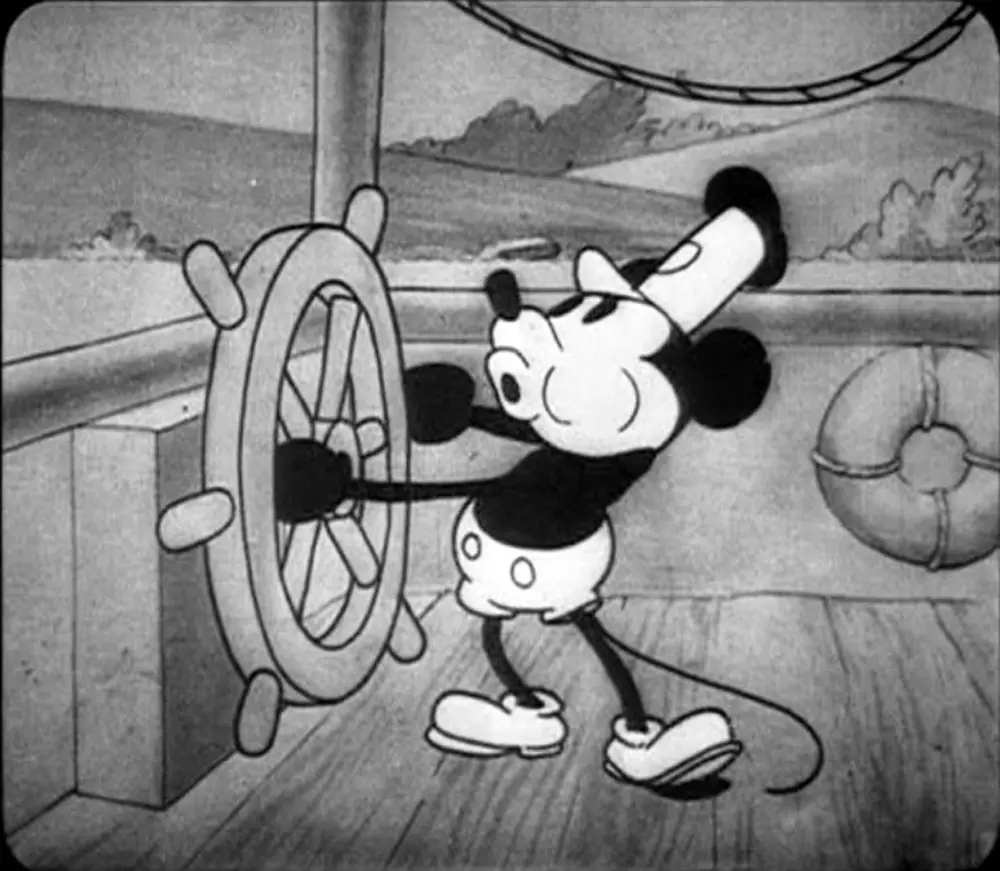
His animators, led by Ub Iwerks, drew every gag to be heard as well as seen — Mickey whistling as he steers a riverboat, animals squeaking, squawking, and thumping out a rhythm. The music, assembled by animator Wilfred Jackson, stitched together popular tunes like "Steamboat Bill" and "Turkey in the Straw." Walt recorded the soundtrack in New York using Pat Powers' Cinephone system, and voiced Mickey himself. The first recording session was a disaster; they did it over until it worked.
On November 18, 1928, Steamboat Willie premiered at the Colony Theatre in New York, playing ahead of an independent feature called Gang War. The seven-minute cartoon — Mickey hijacked from the wheel by the bullying Captain Pete, then turning a menagerie of animals into a one-mouse band — brought the house down. It ran for two weeks at $500 a week, a fortune for a cartoon. Gang War, meanwhile, is all but forgotten.
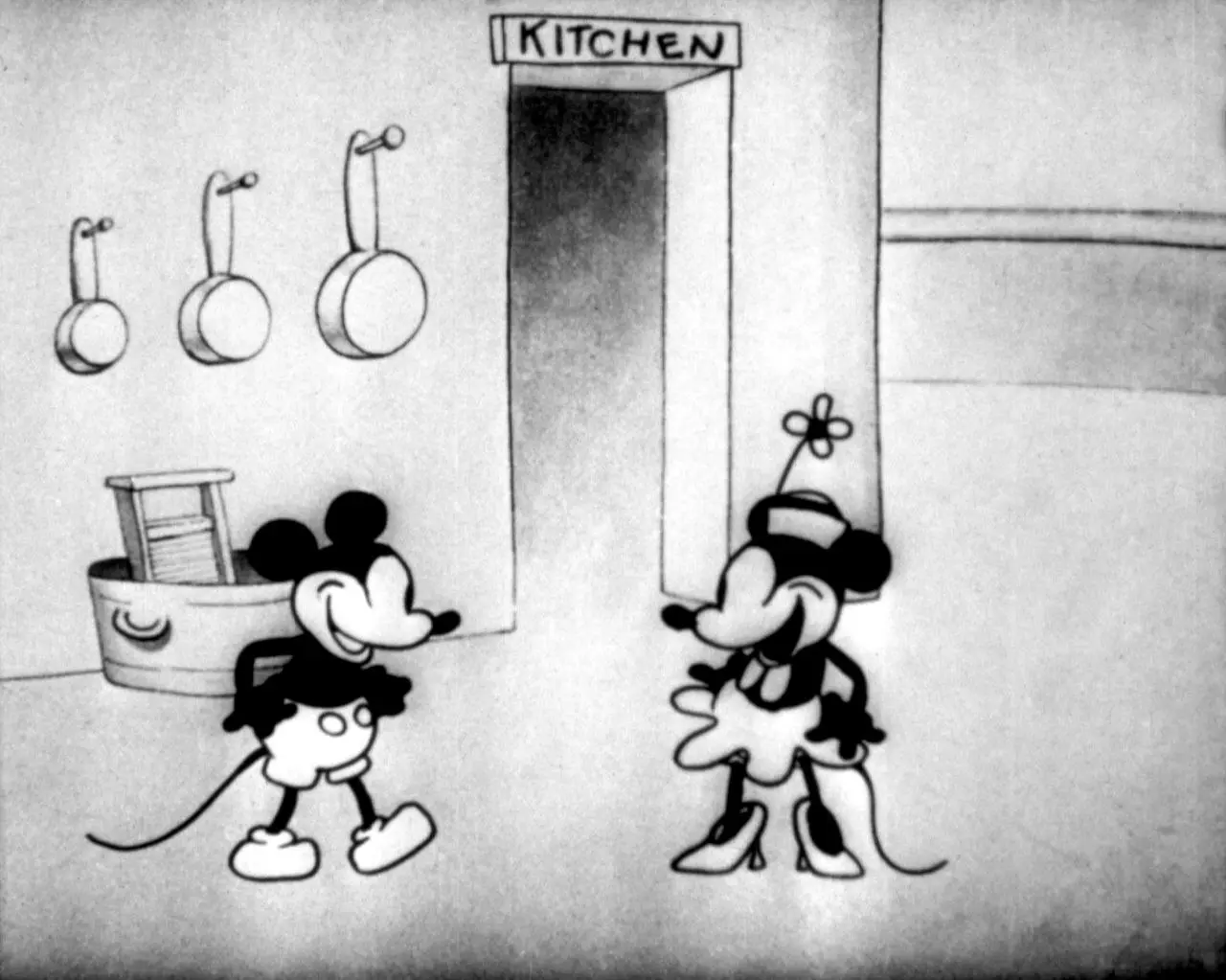
The critics noticed something new. Variety's November 21 review called it "not the first animated cartoon to be synchronized with sound effects, but the first to attract favorable attention" — an honest correction, since earlier sound cartoons had already appeared. What Willie had was the first soundtrack built entirely in post-production, every squeak and whistle timed to the picture. Within a year or two, Mickey Mouse was arguably the biggest star on earth. Disney kept voicing Mickey himself until 1946. November 18 is still celebrated as Mickey's birthday.
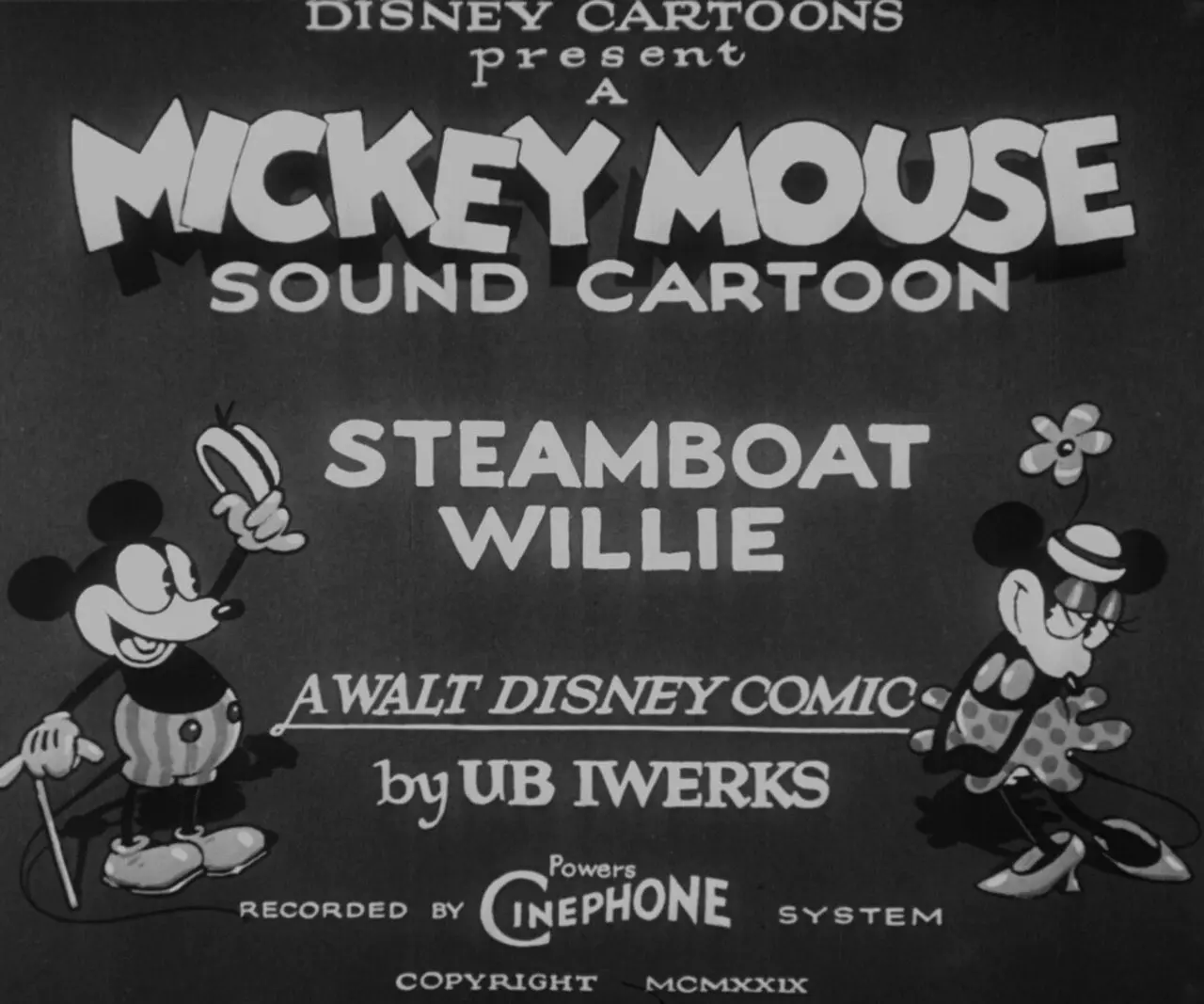
Steamboat Willie joined the National Film Registry in 1998, and on January 1, 2024, it entered the public domain — which is why its famous title card, from a 1929 re-release, can appear here at all. The little mouse whistling at the wheel didn't just save Walt Disney's studio. Sound changed movies forever — and it all started with a mouse, a steamboat, and seven minutes of whistling.
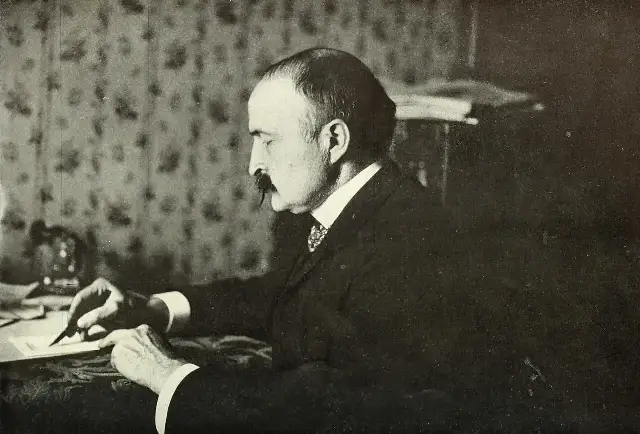
Photo: Ub Iwerks, public domain (via Wikimedia Commons).
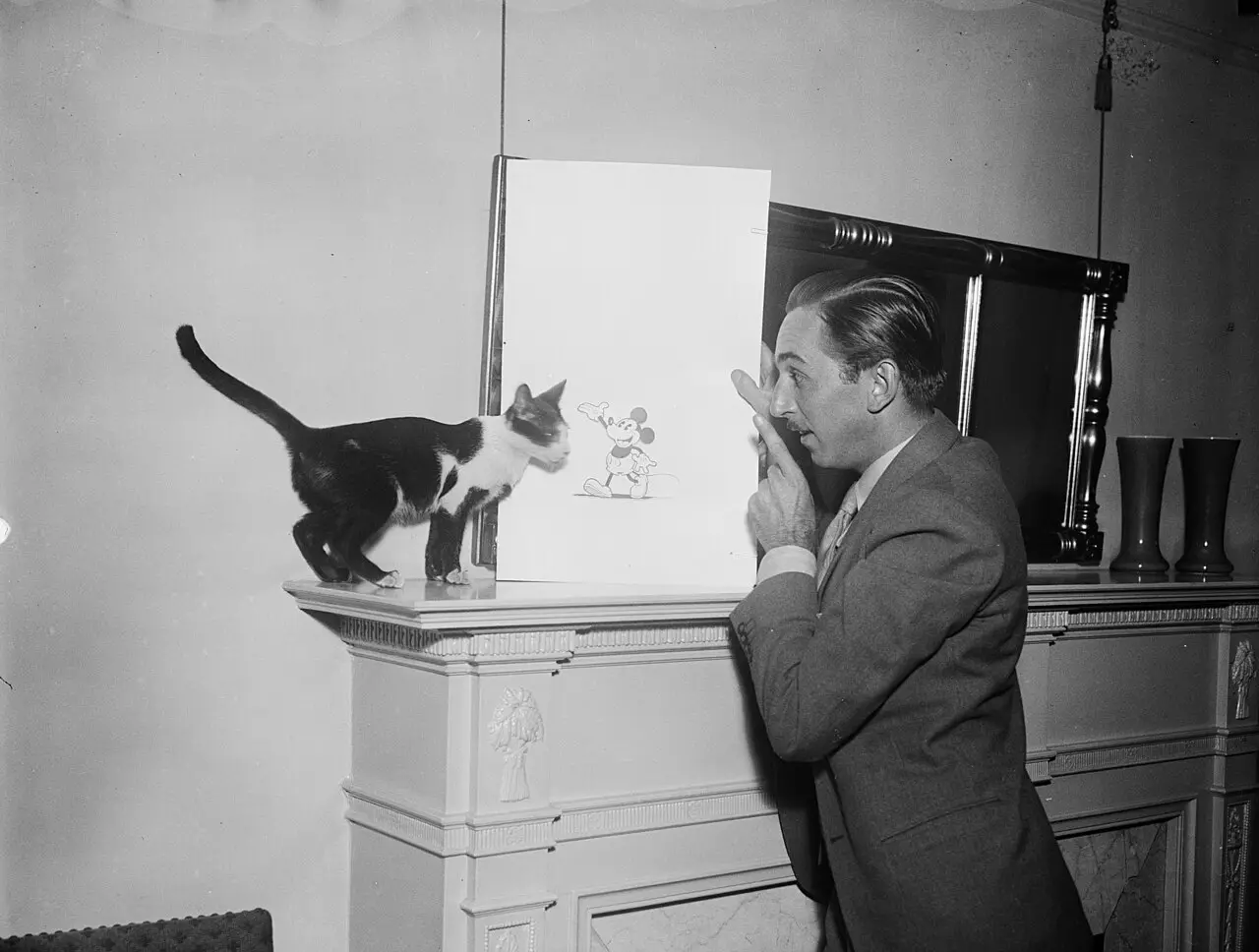
More images (via Wikimedia Commons, public domain): frames from Steamboat Willie (Walt Disney and Ub Iwerks); Walt Disney with a Mickey Mouse drawing (Harris & Ewing).