The Day America Had Two Noons
On November 18, 1883, every railroad in North America reset its clocks at noon — even the ones that had already passed it.
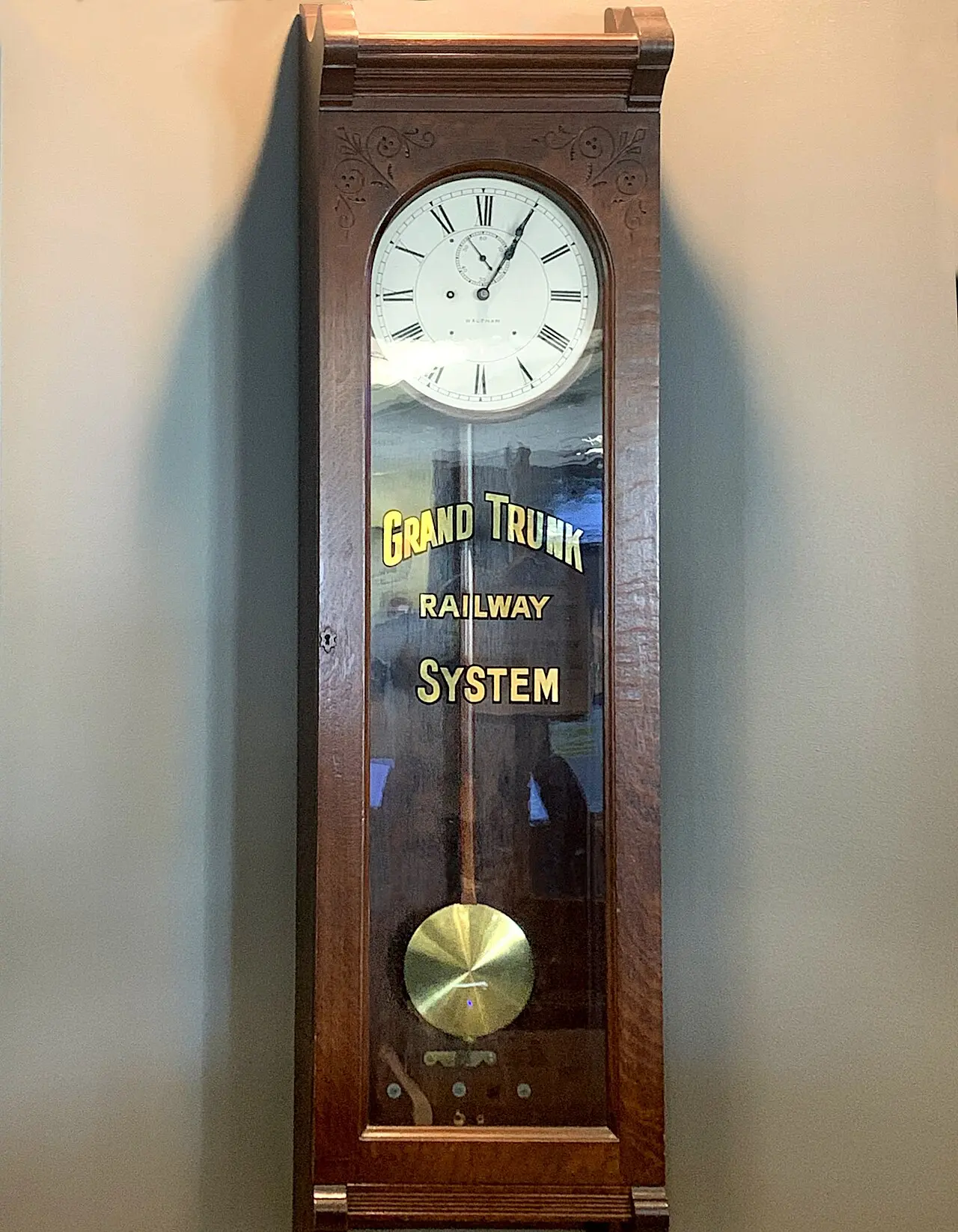
At exactly noon on Sunday, November 18, 1883, telegraph operators sent synchronized signals across thousands of miles of track. Every railroad clock in the United States and Canada was reset — even the ones that had already passed noon. For one day, the sun reached its peak twice.
Before that day, time in America was a local affair. Each town kept its own solar time, set by the sun at its highest point, so clocks in neighboring cities could differ by minutes and railroads ran on their own company clocks. As the rail network grew, the confusion turned dangerous: trains running on different times meant missed connections, and worse, wrecks.
A school principal named Charles Dowd had proposed standard one-hour time zones for railroads as early as 1863, but his system never caught on. The plan the railroads actually adopted came from William F. Allen, editor of the Traveler's Official Railway Guide, and it was coordinated by the General Time Convention — the railroads' own standards body. The continent was divided into zones: Eastern, Central, Mountain, and Pacific.
The change arrived by wire. In New York, Western Union operators broadcast the synchronized noon; in Chicago, depots rang bells. Towns watched their public clocks jump forward or backward — Boston's shifted back by more than sixteen minutes. The New York Times, reporting the next morning, captured the almost ceremonial mood: "At noon yesterday the railroad companies of the country adopted the Standard Time system. The sun stood still for the space of three minutes and eighteen seconds, and the clocks followed him."
Not everyone approved — a few clergymen denounced "railroad time" as an offense against God's order — but the public adapted within days. What the railroads called Standard Railway Time was so plainly practical that cities and towns adopted it voluntarily, and the U.S. government finally wrote it into law with the Standard Time Act of 1918. A year after the Day of Two Noons, delegates from 25 nations met in Washington and chose Greenwich, England, as the world's prime meridian — the foundation of the global system we still live by.
The modern time zone is one of the most invisible inventions in history. We set our watches by it, schedule our lives around it, and never think about it — which is exactly the point. It took a Sunday in November 1883 to make time itself a shared utility.
Photo: Mr Serjeant Buzfuz, CC0 (via Wikimedia Commons).