The Day a Frenchman Signed Away a Canal Zone
On November 18, 1903, Philippe Bunau-Varilla — who was not Panamanian — signed a treaty giving the United States permanent control of the Panama Canal Zone.
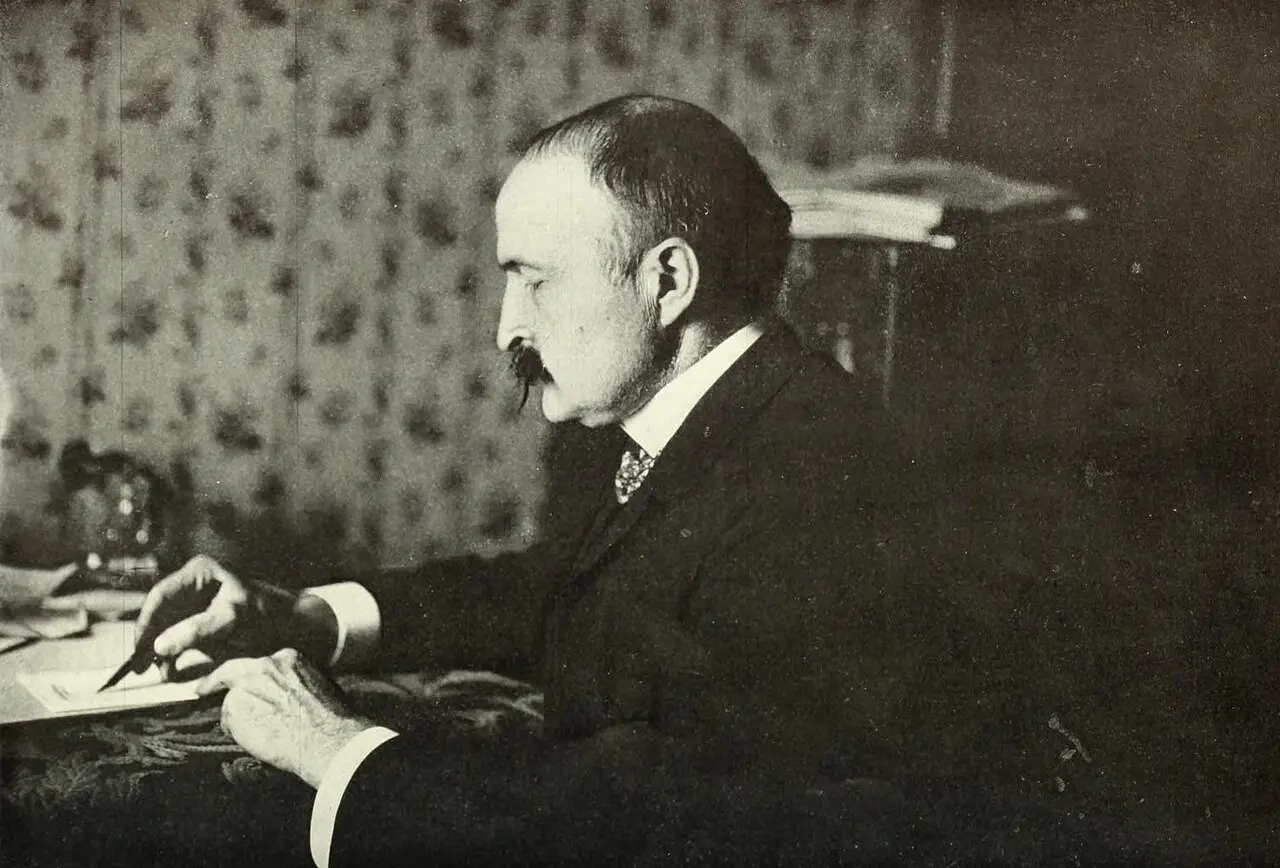
He had not set foot in Panama for seventeen years, and he never returned. Yet on November 18, 1903, Philippe-Jean Bunau-Varilla signed away his adopted country's most valuable asset — acting as Panama's ambassador to the United States.
Bunau-Varilla was a French engineer and a major shareholder in the French company that had tried — and failed — to dig a canal across Panama in the 1880s. When Colombia rejected a canal treaty with Washington that August, he and the other French investors faced ruin. His solution was audacious: he met the leader of Panama's independence movement, Manuel Amador, in a suite at New York's Waldorf-Astoria, wrote him a check for $100,000 to fund a revolt against Colombia, and took the job of Panama's man in Washington in return.
It worked with astonishing speed. Panama proclaimed independence on November 3, with American warships conveniently offshore to deter a Colombian response. The United States recognized the new republic on November 13. Bunau-Varilla was promptly appointed its envoy — a Frenchman representing a country he had not seen in nearly two decades.
The treaty he signed with U.S. Secretary of State John Hay gave the United States perpetual control of a ten-mile-wide Canal Zone, the right to build and fortify a canal, and powers within the zone "as if it were sovereign." In exchange, Panama received a guarantee of its independence, $10 million outright, and a $250,000 annual annuity. A separate $40 million went to buy out the assets of the French canal company — the same company that had bankrupted Ferdinand de Lesseps, the builder of the Suez Canal, when his Panama effort collapsed in 1889. The U.S. Senate ratified the treaty in February 1904, and the canal itself was completed in 1914.
It was, on paper, a fairer deal than Colombia had been offered — and on paper only. Panama's new leaders had not even seen the treaty before Bunau-Varilla signed it; they protested, then acquiesced. The United States would effectively run Panama for decades, until a 1936 agreement stripped out the most interventionist features and, finally, new treaties in 1978 set the canal's full transfer to Panama for the year 2000.
The deal served American power for 75 years — and poisoned relations with Panama and Colombia for nearly as long. Panamanians called the terms a national humiliation, negotiated by a foreigner who had sold the store. The treaty finally expired in 1979, and Washington later paid Colombia $25 million in what wags called "canalimony" under a 1921 treaty.
The Panama Canal stands as one of the great engineering achievements of the century. The signature that made it possible belonged to a man whose only connection to the country he represented was a checkbook and a grudge.
Photo: unknown photographer, public domain (via Wikimedia Commons).