The Museum Born Nine Days After the Crash
On November 7, 1929, just nine days after the Wall Street Crash, the Museum of Modern Art opened in New York on the 12th floor of an office building.
Nine days after the stock market crashed and set off the Great Depression, three women opened an art museum. On November 7, 1929, the Museum of Modern Art welcomed its first visitors on the twelfth floor of the Heckscher Building at 730 Fifth Avenue — a modest six-room suite that would become one of the most famous museums on Earth.
The founders were Abby Aldrich Rockefeller, Lillie P. Bliss, and Mary Quinn Sullivan, three wealthy patrons who had watched the 1913 Armory Show electrify America and concluded that New York — then the world's most modern metropolis — had no museum devoted to the art of its own time. The Metropolitan Museum of Art barely touched modern work. So they invited A. Conger Goodyear to serve as president, hired a brilliant 27-year-old art historian named Alfred H. Barr Jr. as the first director, and set out to prove that art could thrive even as the economy collapsed around them. As one history of the opening put it, they were dubbed the "adamantine ladies" — unbreakable.
Goodyear had enlisted Paul J. Sachs of Harvard's Fogg Museum — known in those days as a "collector of curators" — to help staff the museum, and it was Sachs who recommended Barr, his brilliant young protégé. From the start, the trustees defined modern art broadly: not just painting and sculpture but architecture, industrial design, photography, film, prints, and drawings — a multidepartmental vision no American museum had attempted. In August 1929 they had announced their intentions publicly, declaring that New York's lack of such a gallery was "an extraordinary anachronism" when far smaller cities already had one.
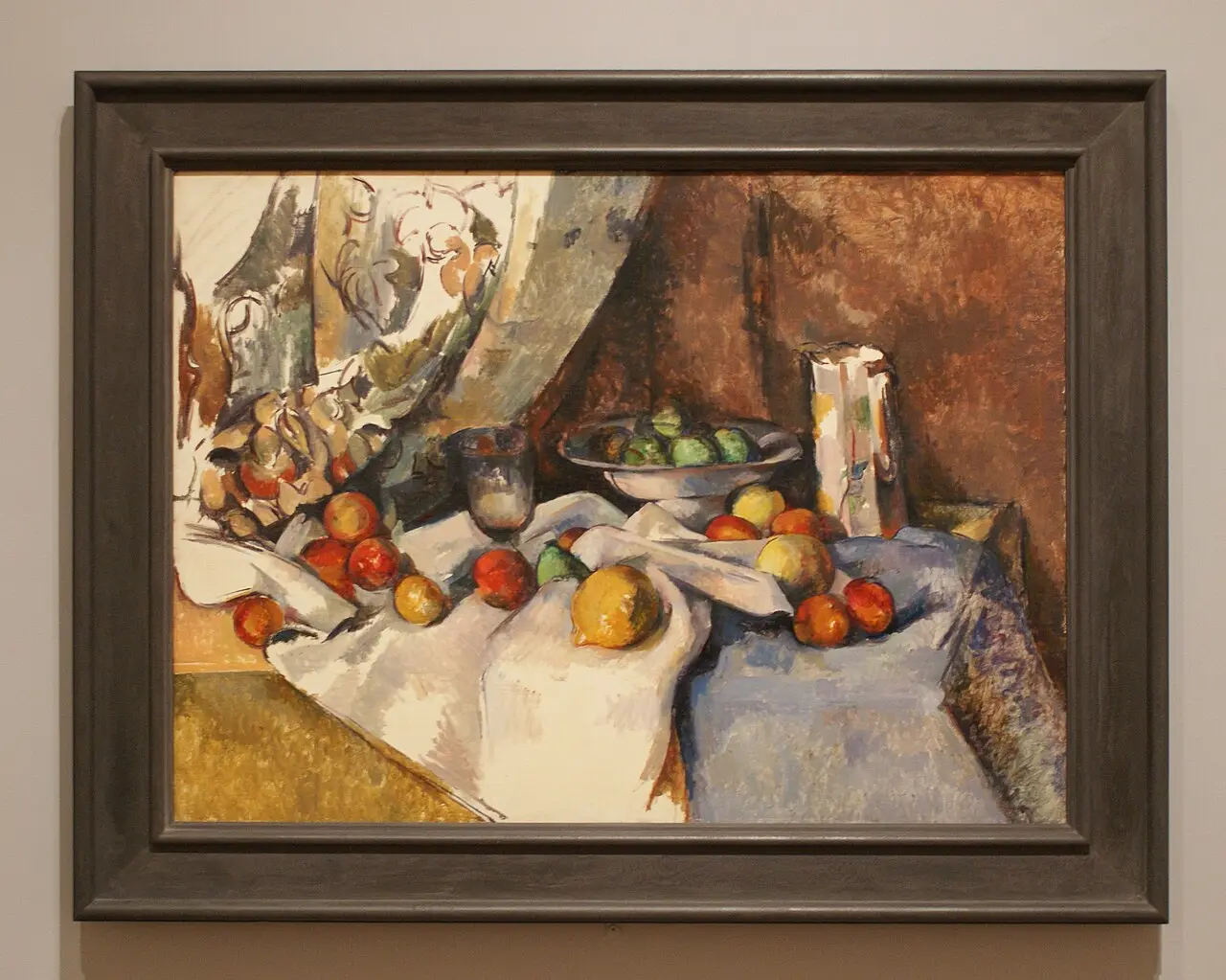
Their inaugural exhibition was a statement of intent: Cézanne, Gauguin, Seurat, van Gogh, roughly a hundred paintings by four European Post-Impressionists, all of them loans. Many Americans had never seen such work in person. The show ran from November 7 to December 7 and drew 47,293 visitors — a staggering crowd for a brand-new museum in a city sliding into depression. Eight of the masterpieces from that first exhibition would eventually enter the museum's permanent collection by gift or bequest, including Cézanne's Still Life with Apples (1895–98), from the collection of founder Lillie P. Bliss herself.
MoMA outgrew the Heckscher Building almost immediately, moved to 11 West 53rd Street in 1932, and opened its permanent midtown home in 1939. From an initial gift of eight prints and one drawing, Barr built a collection that now spans painting, sculpture, photography, film, architecture, and design — and draws millions of visitors a year. All of it started on the twelfth floor of an office building, nine days after Black Tuesday, on the conviction that even in the worst of times, people need new art.
Photo: Opal_Art_Seekers_4 (Wikipedia Loves Art), CC BY 2.5 (via Wikimedia Commons). Painting by Paul Cézanne, public domain.