The Cartoon That Drew the Republican Elephant
On November 7, 1874, a Harper's Weekly cartoonist panicked an elephant, teetered it over a pit, and accidentally invented one of America's most famous logos.
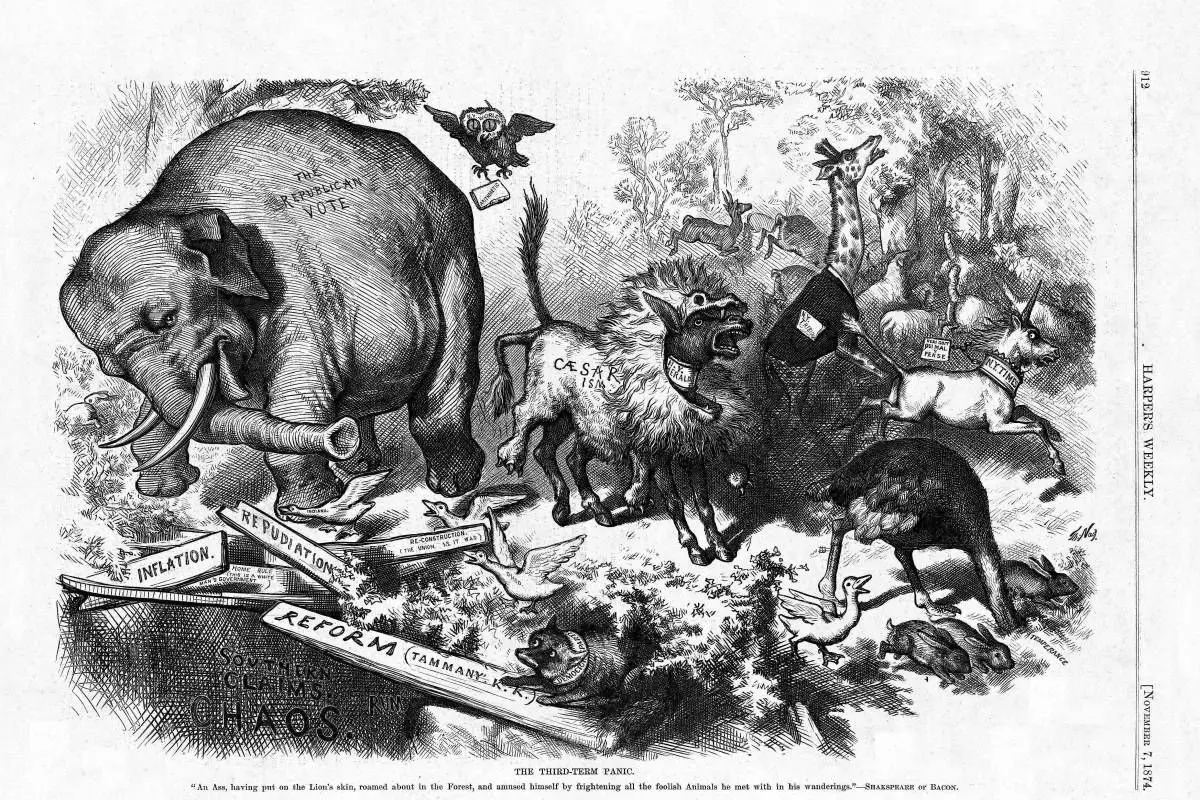
Every election season, the elephant is everywhere: red cartoon elephants wave on flags, yard signs, and television chyrons. It's the most recognized political mascot in America. And it all traces back to a single page of a magazine, published on November 7, 1874.
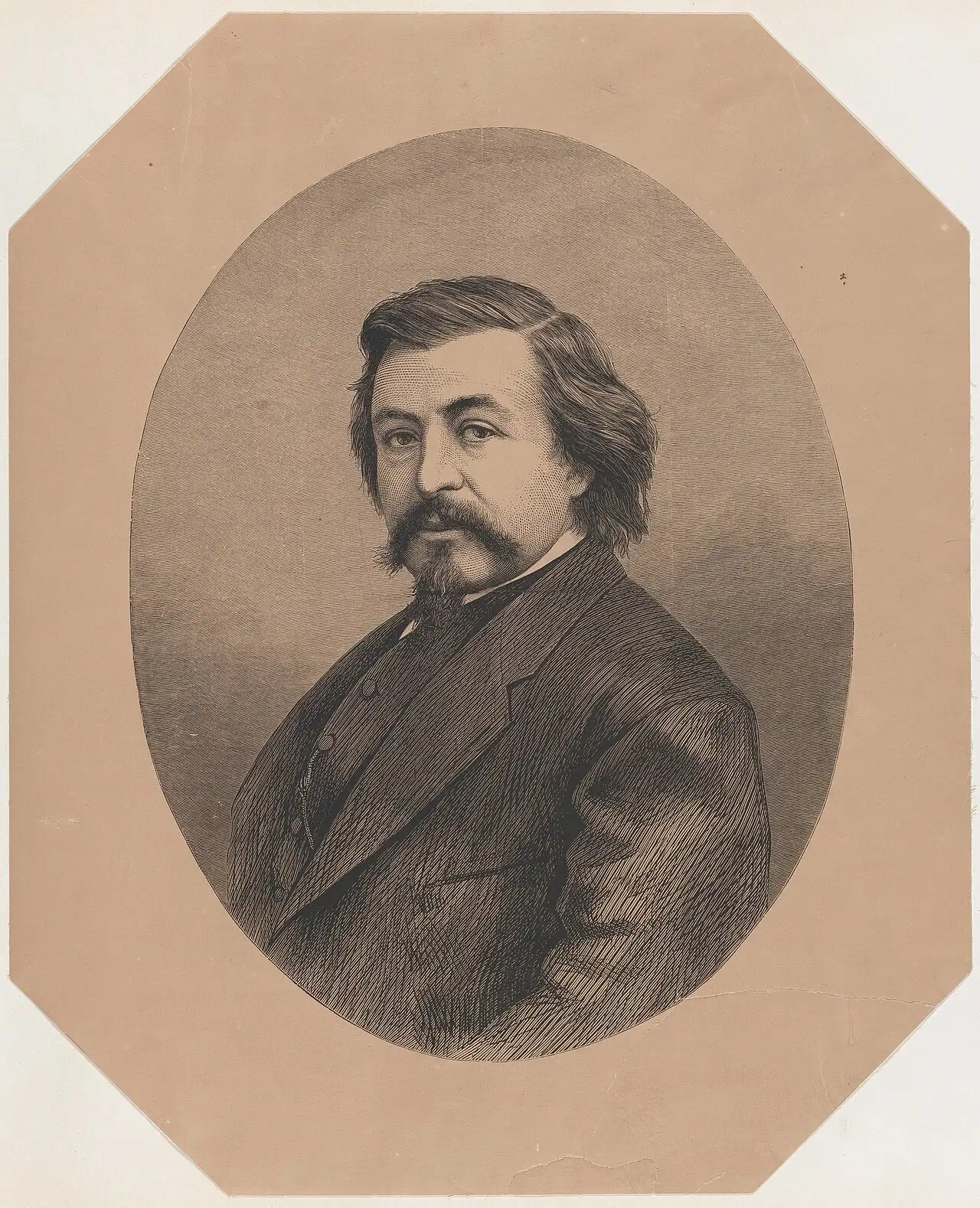
The artist was Thomas Nast, the great political cartoonist of Harper's Weekly — the same man credited with shaping the modern image of Santa Claus and with taking down the corrupt Tammany Hall machine of New York boss William M. Tweed. The cartoon was titled “The Third-Term Panic.” In it, a frightened elephant, labeled “The Republican Vote,” teeters at the edge of a pit, stumbling across broken planks marked with the era's political worries: “Inflation,” “Repudiation,” “Reform.” The elephant has been startled by a donkey wearing a lion's skin and carrying the word “Caesarism” — a symbol of the press alarm that President Ulysses S. Grant might seek an unprecedented third term. Beneath the scene runs an old fable: an ass in a lion's skin who roams the forest, amusing himself by frightening every foolish animal he meets.
The timing was everything. America was still reeling from the Panic of 1873, the economy was staggering, and rumors were swirling that Grant — the Civil War hero — might break the two-term tradition set by George Washington and run again. (The two-term limit wouldn't become law until the 22nd Amendment in 1951.) Nast's cartoon captured the anxieties of the moment: a great, powerful party being stampeded into a hole by scare tactics, economic panic, and its own disarray.
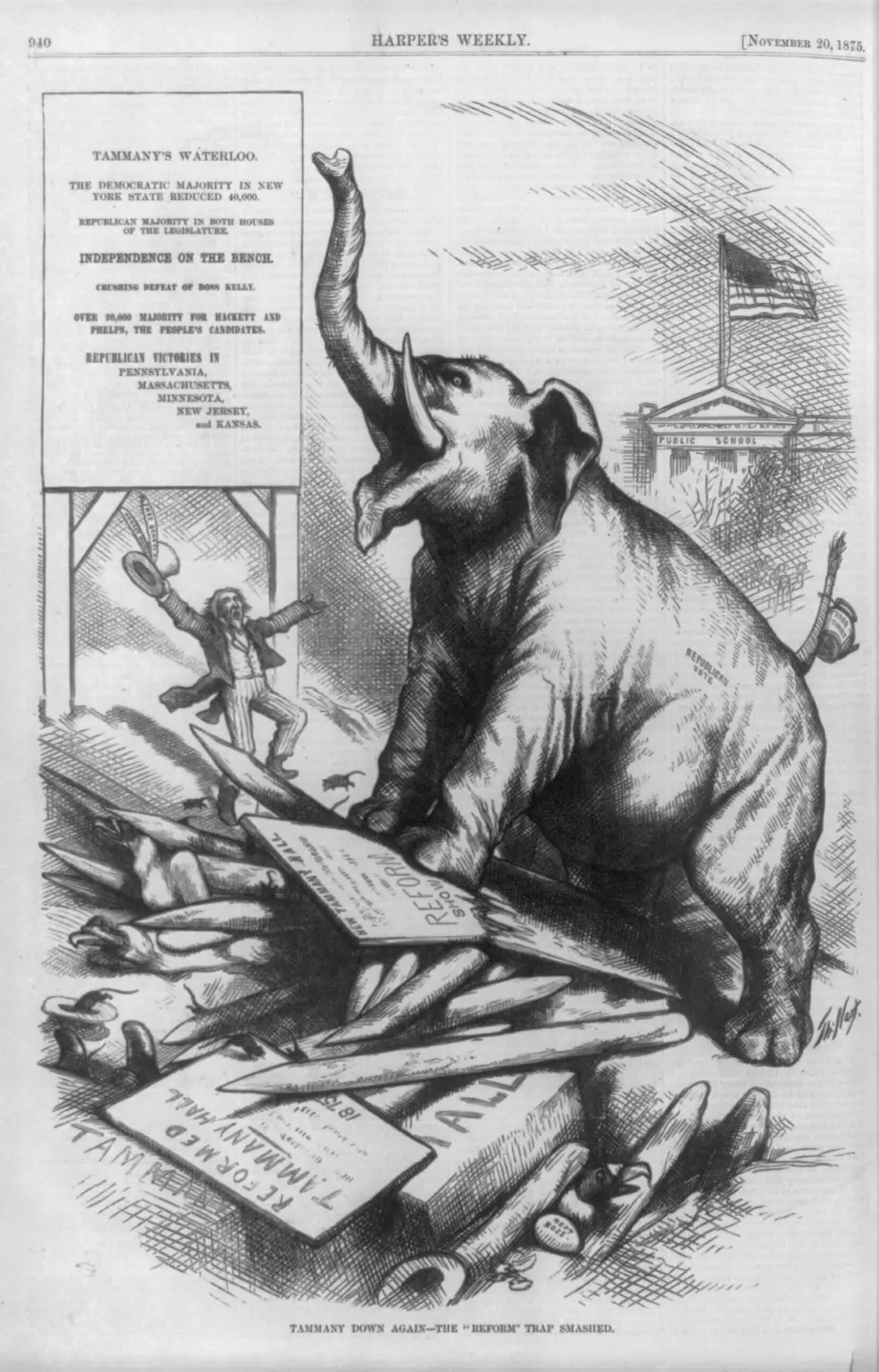
Nast hadn't technically invented the elephant — an Illinois newspaper had used a crude cut of one during Lincoln's 1860 campaign, and Nast himself had drawn one earlier in the decade. But this cartoon was the one that cemented the elephant — its caption even carried a mock-scholarly attribution of the fable to “Shakespeare or Bacon” — as the Republican Party's symbol. Nast kept drawing it again and again, other cartoonists copied him, and within a few years the elephant had pushed aside the old Republican emblem, the eagle. The party itself eventually embraced the big, dignified beast — even though its most famous cartoonist had first drawn it tumbling into a pit.
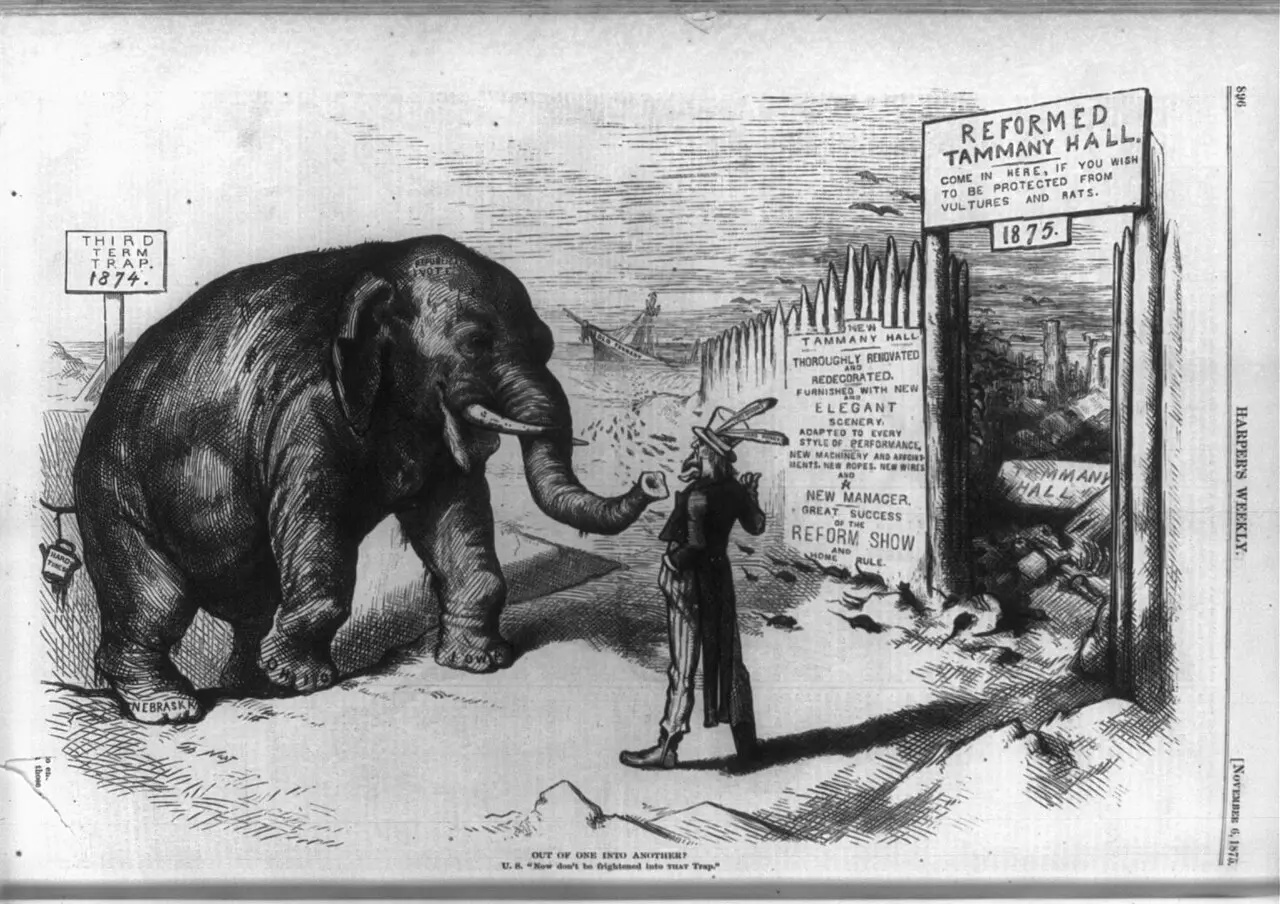
A century and a half later, Nast's panicked pachyderm has outlasted the third-term controversy, the inflation planks, and even the Harper's Weekly that printed it. Sometimes a logo isn't designed at all — it gets drawn in a hurry, in a panic, and simply refuses to leave.
Photo: Thomas Nast, public domain (via Wikimedia Commons).
More images (via Wikimedia Commons): a portrait of Thomas Nast (Metropolitan Museum of Art, CC0); two other Thomas Nast cartoons from Harper's Weekly (public domain).