The First Shots of the Civil War
At 4:30 a.m. on April 12, 1861, Confederate batteries opened fire on Fort Sumter, beginning the American Civil War.
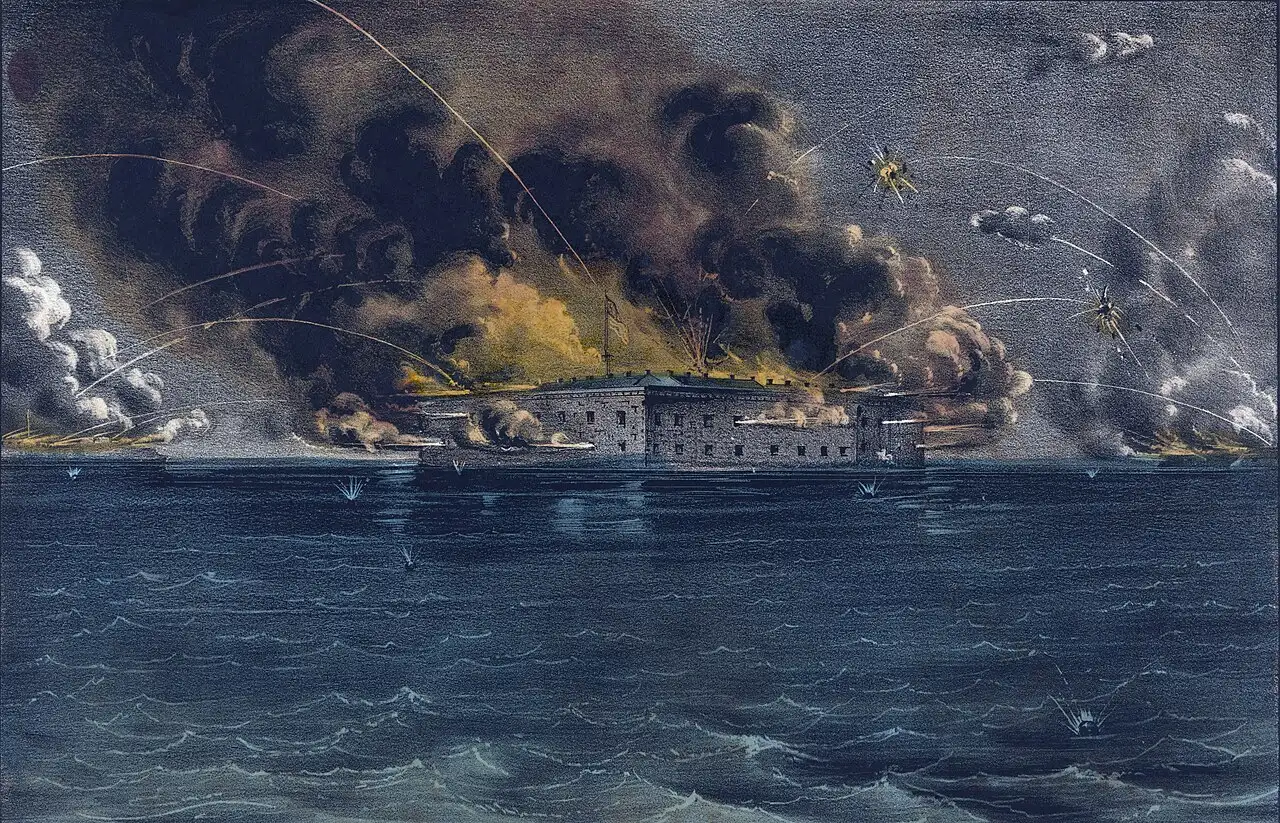
At 4:30 on the morning of April 12, 1861, Confederate batteries ringing Charleston Harbor opened fire on a small brick fortress — and the United States began to tear itself apart.
The fort was Fort Sumter, held by fewer than a hundred U.S. soldiers under Major Robert Anderson. Four months earlier, Anderson had slipped his garrison out of the indefensible Fort Moultrie and into Sumter's island stronghold. South Carolina had seceded that December, and the Confederacy now claimed the fort as its own. Anderson refused to surrender it.
The new president, Abraham Lincoln — inaugurated only the month before — faced an impossible choice. Abandoning Sumter would legitimize secession; reinforcing it would look like an invasion. He chose a middle path: he would send only food, no troops or arms, and notified the South Carolina authorities in advance. Confederate General P.G.T. Beauregard demanded the fort's surrender. Anderson refused. The guns spoke instead.
The bombardment lasted 34 hours. Shells arced through the night and into the next day, setting the fort's wooden buildings ablaze. Anderson's men, outnumbered and outgunned, fought the fires as much as the enemy. By the afternoon of April 13, with the fort burning and ammunition nearly gone, Anderson surrendered. The Union garrison marched out the next day with its flag, its honor — and, remarkably, its lives. No one on either side was killed in the battle.
But the war had begun. Lincoln called for 75,000 volunteers to suppress the rebellion; four more states seceded within weeks. What followed was four years of the bloodiest conflict in American history — hundreds of thousands dead, cities burned, and, in the end, slavery destroyed and the Union preserved.
Fort Sumter itself was pounded into rubble and retaken by the Union in 1865, in the war's final months. Today it stands as a national monument, its scarred walls a reminder of the morning the guns decided what the politicians could not.
It matters because April 12, 1861, is the day America's great argument stopped being an argument. Every compromise had failed, every negotiation had collapsed, and a nation that could not agree on its own meaning went to war with itself. The Civil War settled the question the founders had left open — whether the United States was one nation or a collection of states that could leave — and the answer was paid for in full, in blood, at places like Sumter.
Photo: Currier & Ives' 1861 lithograph of the bombardment of Fort Sumter, showing the fort under shellfire at night. Lithograph by Currier & Ives, 1861, public domain (via Wikimedia Commons).