The Day We First Saw the Moon's Hidden Face
On October 7, 1959, the Soviet Luna 3 probe swung behind the Moon and photographed its far side — the first time any human had ever seen it.
For all of human history, half the Moon was a mystery. The Moon spins at exactly the same rate it orbits the Earth, so the same face has gazed down on every poet, farmer, and astronomer who ever lived — while the other half stayed forever out of sight. Nobody knew what was there. Nobody could know. Until the morning of October 7, 1959.
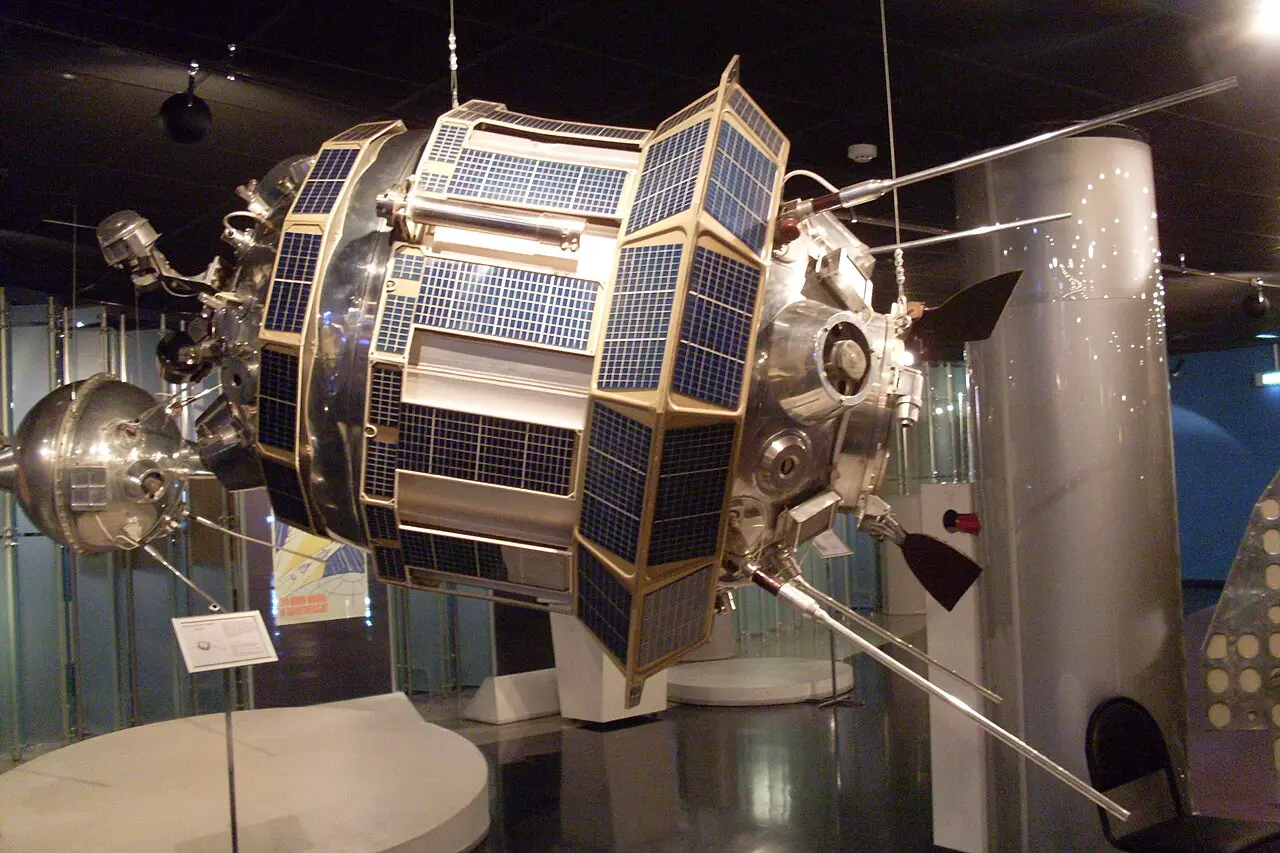
Two years earlier almost to the day, the Soviet Union had stunned the world by launching Sputnik 1, the first artificial satellite, and the Space Race was on. Moscow was determined to keep winning it. Its Luna 1 probe had missed the Moon entirely that January; Luna 2 had reached it in September by crashing into it. Luna 3, launched on October 4, 1959, had a subtler mission: swing around the Moon and photograph it from behind.
The small probe did something no spacecraft had ever done. On October 6 it swept past the Moon, letting lunar gravity fling it around to the far side. Then, in the early hours of October 7, its sensors detected the sunlit far side below, the camera covers flipped open, and the photography sequence began entirely on its own.
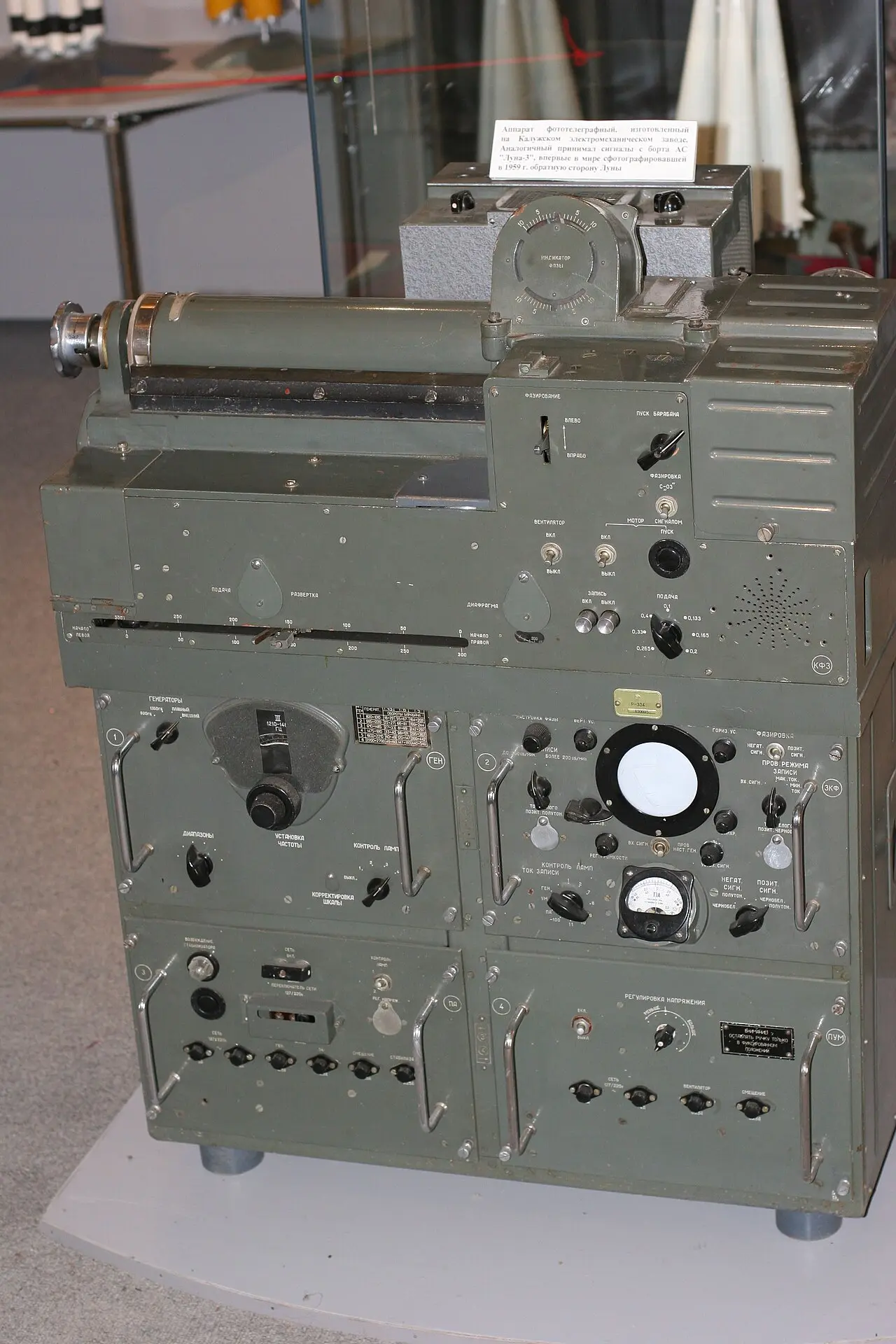
What happened next was part darkroom, part magic trick. Luna 3 carried no digital camera — no such thing existed. It carried 35mm film. Over forty minutes it snapped 29 photographs. Then, with no human hands anywhere near it, the film was developed, fixed, and dried inside the spacecraft. A tiny beam of light swept across the negatives, converting brightness into a radio signal — something like the first interplanetary fax machine — and beamed the pictures back to tracking stations in Crimea and Kamchatka.
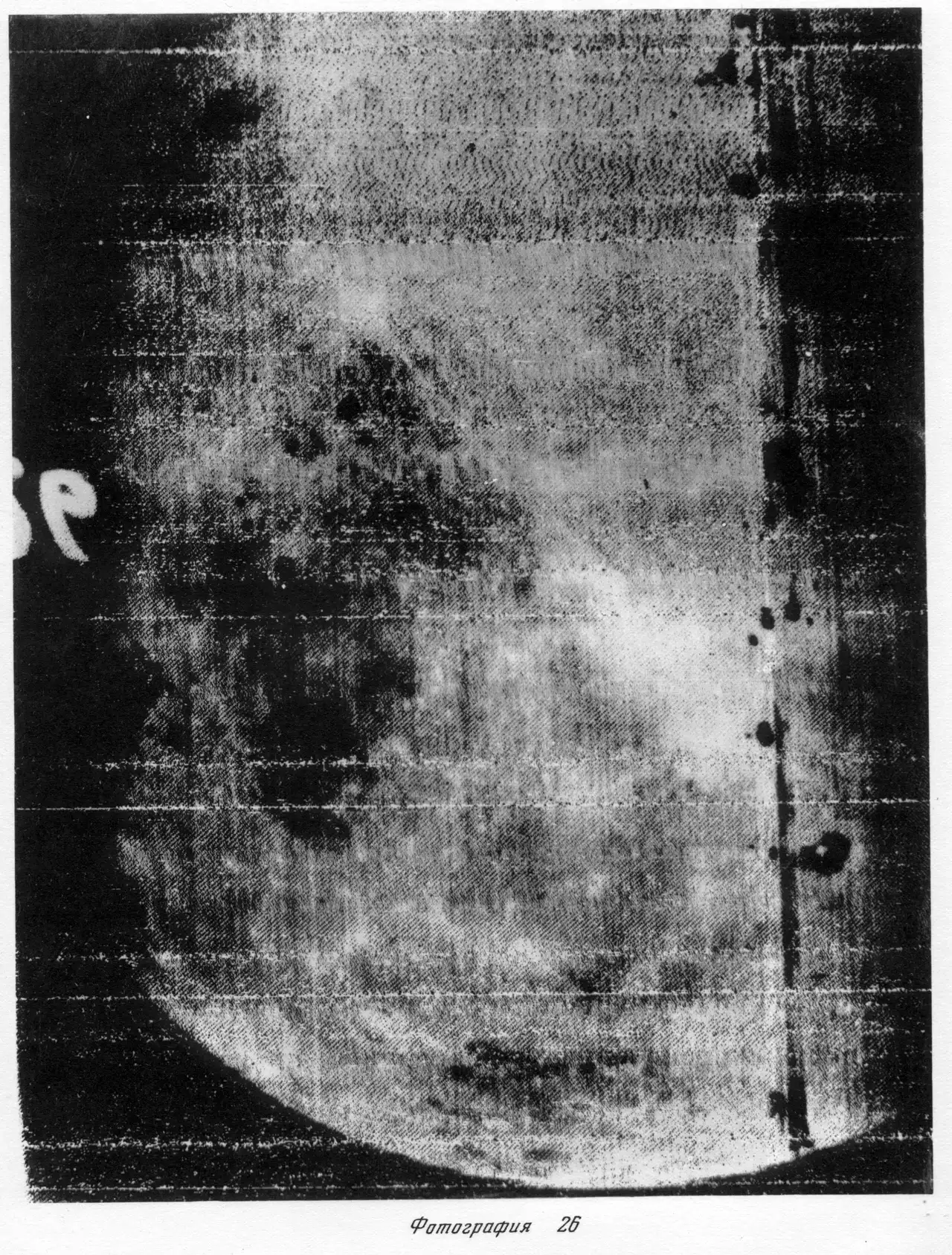
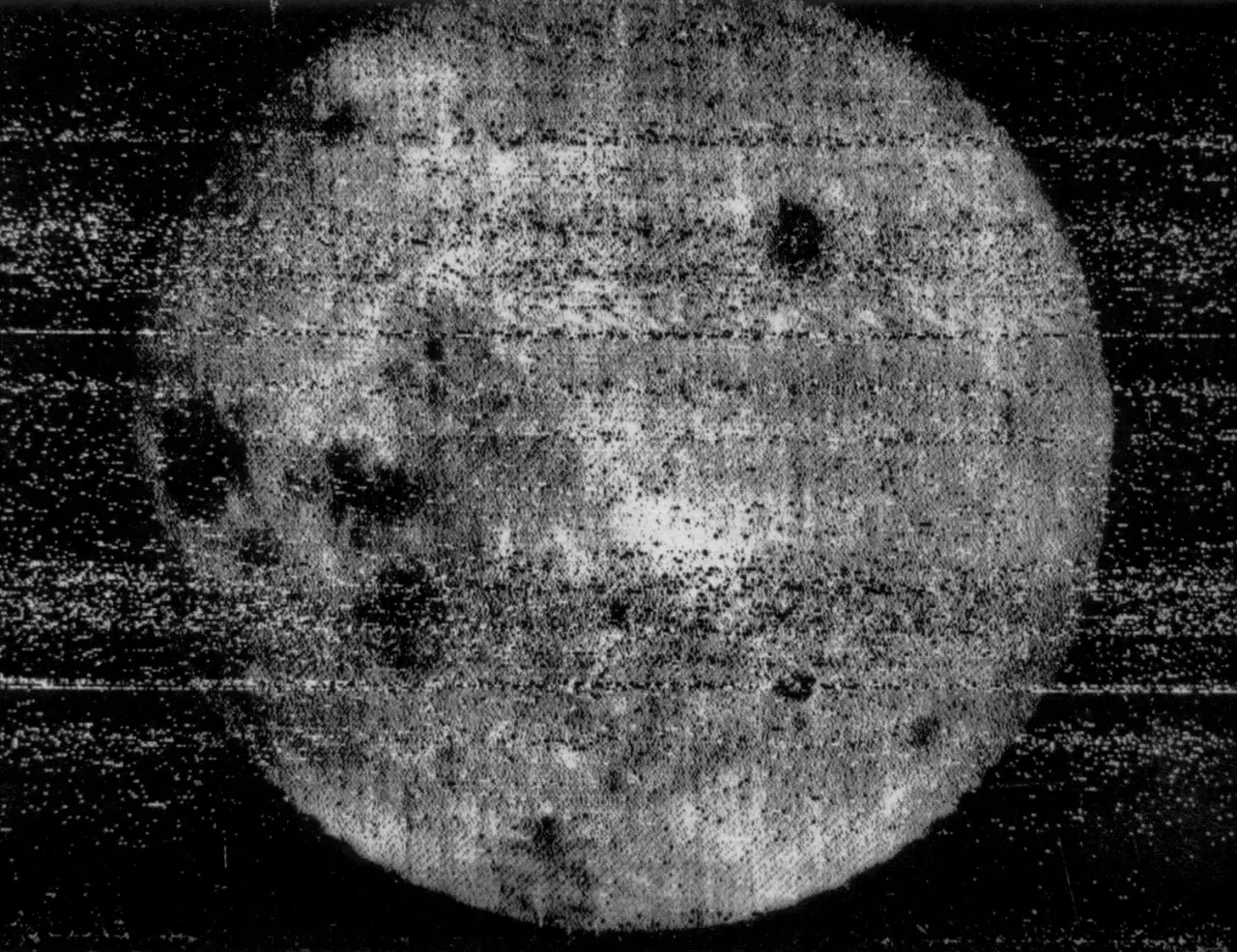
The first frame was exposed at 03:30 Universal Time on October 7. The images were grainy, streaky, and blurry by any modern standard. They were also among the most important photographs ever taken.
The far side looked nothing like the near side. Earth's familiar Moon wears great dark plains — the maria, once mistaken for seas. The hidden half had almost none of them: it was a battered, densely cratered highland, ancient and wild. Soviet scientists spotted features no human eye had ever seen and gave them names — the Sea of Moscow, the crater Tsiolkovskiy. In all, the 29 frames covered about 70 percent of the far side, and about seventeen were clear enough to transmit home. From them, scientists drew the first rough map of the Moon's hidden face. Contact with the little probe was lost within weeks, but its work was done.
Why does it matter? Because Luna 3 proved the unknown could be photographed — that a machine could travel where no eye had ever gone and send back the view. It opened the age of planetary exploration: within a decade, probes would image Mars and Venus the same way. And the mystery it uncovered endures. Scientists are still debating why the Moon's two faces look so different — the far side's thicker crust is the leading clue, but the full answer is still being worked out, more than sixty-five years later.
Every detailed map of the Moon, every plan to explore its south pole, starts here: with 29 grainy frames, developed in the dark, tens of thousands of kilometers from home.
Photo: Soviet Luna 3 photograph of the lunar far side, public domain (via Wikimedia Commons).
More photos: Luna-3 spacecraft replica, Memorial Museum of Astronautics, Moscow (Armael, CC0, via Wikimedia Commons); Luna-3 phototelegraph system, Tsiolkovsky State Museum of the History of Cosmonautics (Yuriy Lapitskiy, CC BY-SA 2.0, via Wikimedia Commons); a frame from the Luna 3 far-side photographs (OKB-1, public domain, via Wikimedia Commons).