
The Couple Who Made Marriage a Right for Everyone
On June 12, 1967, the Supreme Court unanimously struck down every state law banning interracial marriage, freeing the Lovings of Virginia and millions of couples to come.
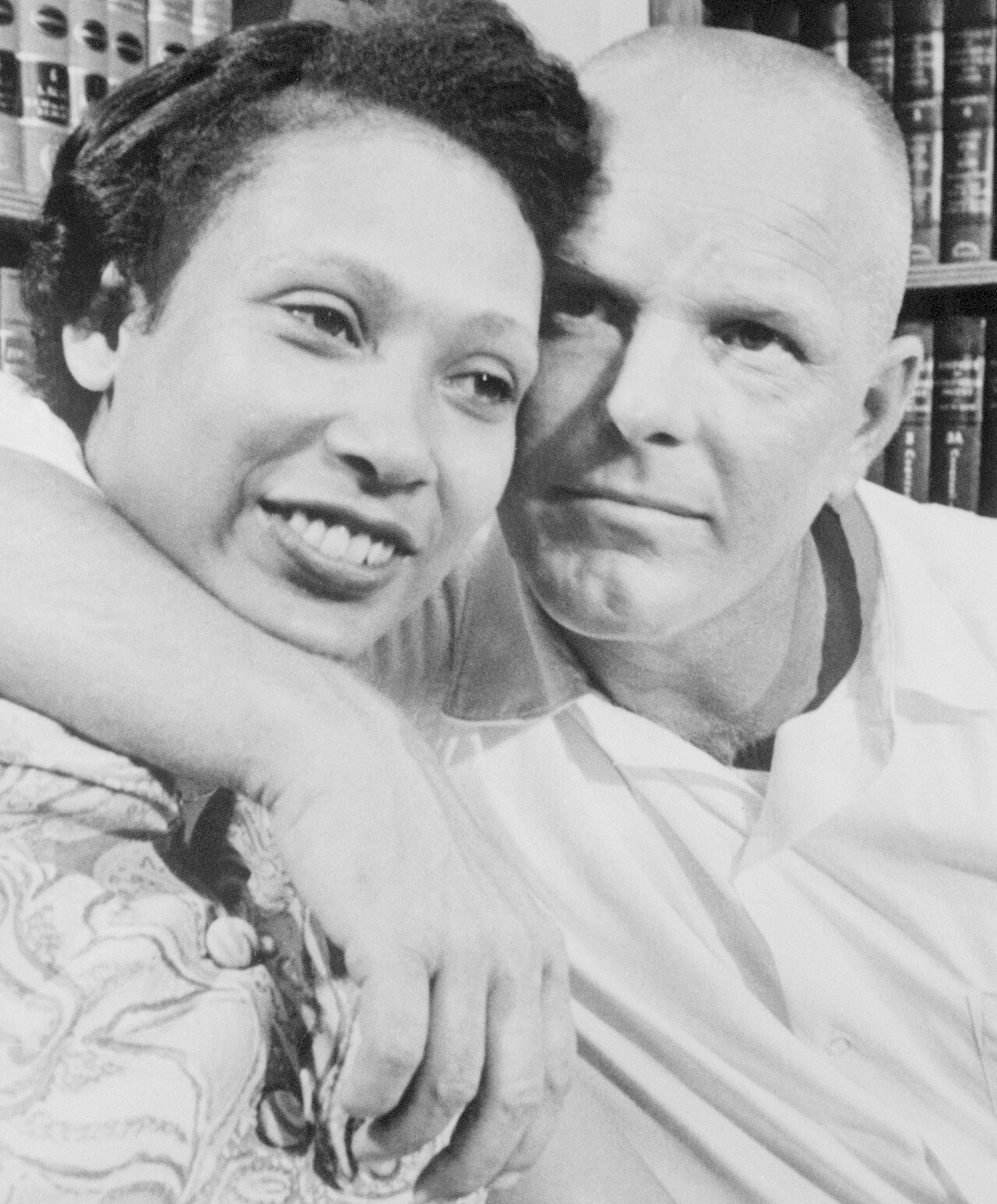
In the early morning hours of a July night in 1958, police officers entered a couple’s bedroom in Central Point, Virginia, and arrested them — not for a crime anyone would recognize today, but for being married to each other.
Richard Loving, a white construction worker, and Mildred Jeter, a woman of Black and Native American descent, had grown up in the same small community. Virginia law said they could never marry, so on June 2, 1958, they crossed into Washington, D.C., and married there. When they returned home to live as husband and wife, Virginia treated their marriage as a felony.
In January 1959 the Lovings pleaded guilty and were sentenced to a year in prison — suspended for 25 years on one condition: that they leave Virginia. They moved to Washington, D.C., raised three children, and longed for home. In 1963 Mildred wrote a letter to Attorney General Robert F. Kennedy asking whether the civil rights debate in Congress might help them. Kennedy’s office forwarded the letter to the American Civil Liberties Union, which assigned two young lawyers, Bernard Cohen and Philip Hirschkop, to the case.
The fight took four years. When the case reached the U.S. Supreme Court, Virginia defended its law as a reasonable way to preserve “racial integrity,” arguing that the punishment applied equally to both races. On June 12, 1967, the Court rejected that argument unanimously, 9–0. Chief Justice Earl Warren wrote that “under our Constitution, the freedom to marry, or not marry, a person of another race resides with the individual, and cannot be infringed by the State.” He called marriage one of the “basic civil rights of man,” fundamental to our very existence and survival.
The ruling did not just clear the Lovings’ names. It struck down the anti-miscegenation laws still on the books in 16 states, and it established a principle — that the state cannot decide whom you may love — that later courts would rely on again and again.
Why it matters: Because of June 12, 1967, every American may marry the person of their choosing regardless of race. Cities and towns across the country now mark June 12 as Loving Day in the couple’s honor, and the decision stands as one of the great milestones of the civil rights movement — proof that an ordinary couple’s quiet courage can rewrite a nation’s law.
Photo: Mildred and Richard Loving in 1967, the couple at the heart of Loving v. Virginia. Photo by United Press International, public domain via Wikimedia Commons.